
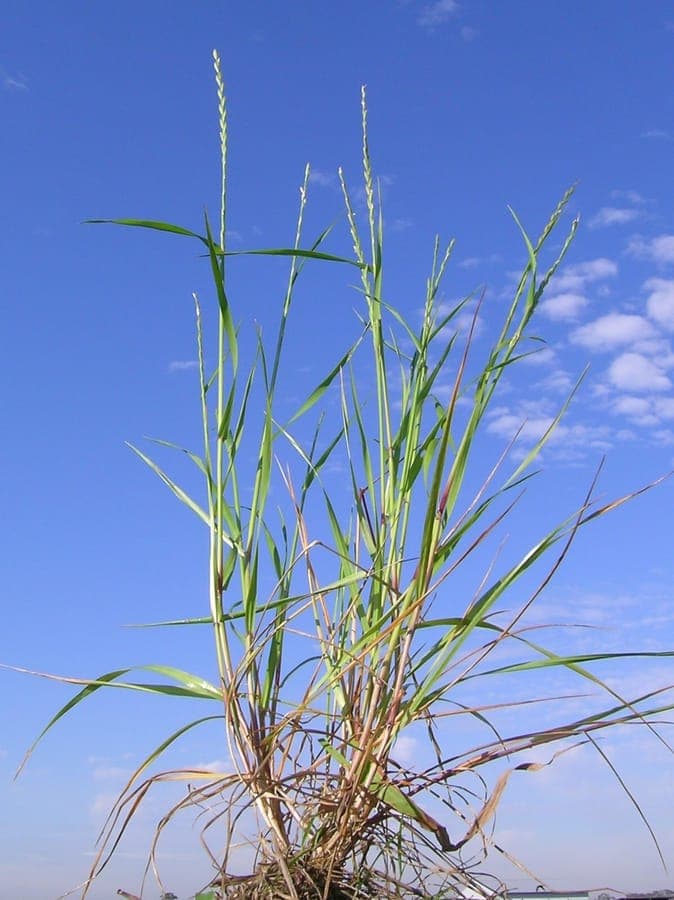
Harry Rose from South West Rocks, Australia / CC BY 2.0, via Wikimedia Commons
Stiff Darnel (Lolium rigidum): complete guide
Lolium rigidum
¿Quieres ver Stiff Darnel (Lolium rigidum): complete guide en tu jardín?
1 minuto, sin tarjeta de crédito
Overview
Stiff darnel (Lolium rigidum) is an interesting grass originating from Southern Europe and much of the Mediterranean region. This is primarily a forage crop and birdseed, but it's gaining appreciation in decorative applications too. It's an annual or winter annual grass distinguished by its very stiff spikelets that stand almost perpendicular to the stems.
This grass is particularly valuable for those interested in wildflower borders, ecological gardens, or as forage for birds and other wildlife. It grows quickly and forms an attractive garden element.
Appearance and growth
Stiff darnel grows to about 30-60 cm tall and forms a slender, upright growth. The leaves are dark green, narrow, and linear. The characteristic spikelets (flowers) are very stiff and grow almost perpendicular to the main stem, making appearance highly distinctive.
The spikelets are initially green, later grayish-brown. They have small awns that wave gently in the wind. Flowering usually occurs from May to June, but in mild conditions may extend longer.
Ideal location
Stiff darnel grows best in full sun, though it also grows reasonably well in partial shade. Plant it in a location with at least four hours of direct sunlight daily. For optimal growth, aim for six hours or more.
This grass is not fussy about location, as long as it's well-drained. It even grows on fairly poor soils, making it very suitable for marginal lands or unmowed grassland.
Soil
Stiff darnel thrives in virtually any well-draining soil. It's robust and tolerates poor sandy soils to more fertile grounds. Heavy clay is less suitable, so ensure some drainage if problematic.
PH range is approximately 5.5 to 7.5. The plant has no special nutrition requirements. A neutral to slightly acidic soil is ideal.
Seed and propagation
Sow directly in the ground from March to May, or September to October for winter annual varieties. Sow thinly as seeds are quite large. Seed prefers direct light contact, so don't sow deeply. Ensure consistently moist seedbed.
Germination usually occurs within 7-14 days at temperatures of 10-15 degrees. For faster growth, 15-20 degrees is better.
Watering
Once seed has germinated, regular water is essential during initial weeks. Thereafter, this grass is quite drought-tolerant once well-rooted. Extra water in dry spells may prove beneficial.
Ensure the plant doesn't sit in permanent water. This can lead to root diseases. Well-drained soil is far more important than abundant water.
Diseño gratis
¿Quieres ver Stiff Darnel (Lolium rigidum): complete guide en tu jardín? Crea un diseño gratis ahora.
Maintenance
Stiff darnel requires minimal maintenance. If it becomes too tall, gently mow it back. This promotes denser growth. Mowing can occur in September or October if grass becomes overgrown.
The plant self-seeds easily, so you can collect seed and resow, or allow it to persist for natural seeding.
Feeding
This grass makes no high demands on nutrition. On poor soils, apply modest organic fertilizer once per season. Too much feeding can lead to lush growth and lodging.
Maintenance calendar
March-May: Direct sow outdoors. Keep seedbed moist. Check regularly for germination.
June-August: Growth and flowering. Minimal maintenance. Water during dry spells.
August-September: Flowering peaks. Collect seed for next year.
October: Mow or trim back for compact form. Winter preparation.
November-February: Dormancy. Minimize maintenance. Winter hardiness assured in ground.
Winter hardiness
Stiff darnel is hardy to about -10 degrees Celsius. In mild winters it will likely overwinter. In harsh winters it may die, but self-seeds readily.
Winter annual varieties exist that are specially selected for winter growth. These are better for overwintering in colder climates.
Companion plants
Stiff darnel looks attractive beside:
- Other ornamental grasses (Briza, Festuca, Melica)
- Purple flowers (Liatris, Verbascum)
- Wildflower borders (Calendula, Papaver)
- Salvia nemorosa - blue contrast
- Knautia - dark red contrast
Pests and diseases
This grass is relatively problem-free. Possible issues include:
- Fungal brands in extremely wet years
- Birds may eat seed
- Some insects may cause leaf damage
Biological control with natural enemies is usually sufficient.
Conclusion
Stiff darnel is an undervalued grass deserving more attention in modern, ecological and wildflower gardens. With its distinctive stiff spikelets, low maintenance needs, and suitability for marginal lands, it offers many possibilities.
Sow it in full sun on well-drained soil, and enjoy its attractive appearance. Natural seeding contributes to garden biodiversity. Available through seed merchants.
Want more about ornamental grasses? Visit gardenworld.app for inspiration and designs.
¿Quieres ver Stiff Darnel (Lolium rigidum): complete guide en tu jardín? Crea un diseño gratis ahora.
Sube una foto, elige un estilo y obtén un diseño fotorrealista con lista de plantas en menos de un minuto.
Más de 10.000 jardines diseñados
Sin tarjeta de crédito


Plantas similares
Festuca glauca: guía completa
Festuca glauca
Descubre la Festuca glauca, una gramínea ornamental de color azul grisáceo. Esta guía cubre el cultivo, cuidado y uso en paisajismo.
Lolium perenne: complete guide
Lolium perenne
Lolium perenne, perennial rye grass, is durable perennial for beautiful lawns. Learn establishment, maintenance and climate tolerance.
Perennial quaking grass: complete guide
Briza media
Briza media, or perennial quaking grass, brings delicate movement and texture to borders. This low-maintenance ornamental grass thrives in partial shade and adds year-round interest.