
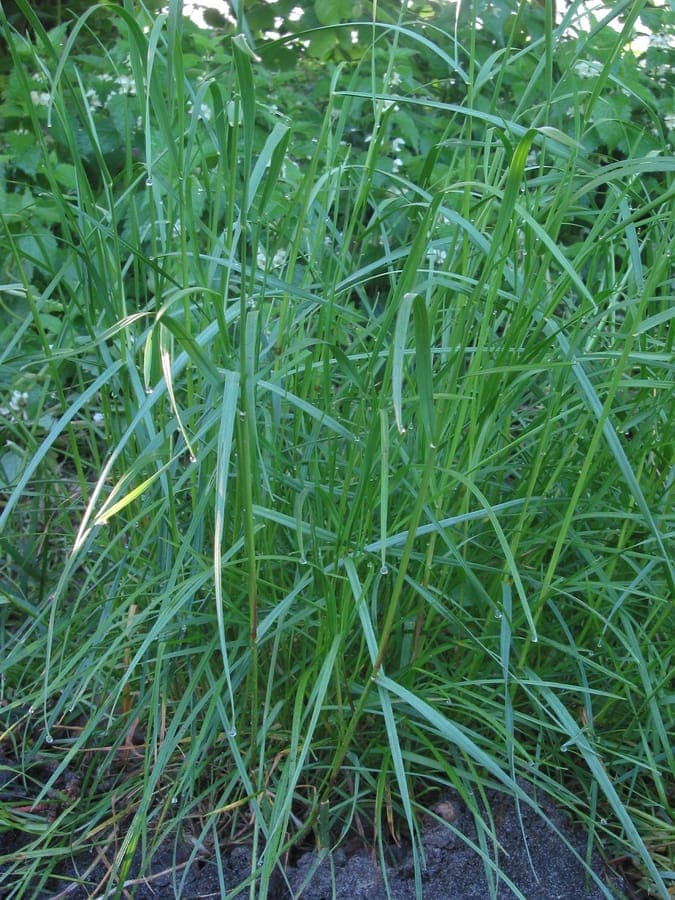
Rasbak / CC BY-SA 3.0, via Wikimedia Commons
Lolium perenne: complete guide
Lolium perenne
¿Quieres ver Lolium perenne: complete guide en tu jardín?
1 minuto, sin tarjeta de crédito
Lolium perenne, commonly known as perennial rye grass or English rye grass, is one of the most important grass species for temperate-climate lawns. This hardy perennial grass from the Poaceae family is native to northern Africa, Europe through Siberia, and the Himalaya. After more than two centuries of selective breeding and improvement, Lolium perenne has become the premier grass for high-quality lawns, sports fields, golf greens, and applications where durability, density, and aesthetic appeal are paramount. This grass offers an exceptional combination of rapid establishment, excellent foot traffic tolerance, naturally deep green color, and minimal maintenance requirements.
Appearance and Growth
Lolium perenne forms dense, compact tufts with erect, finely pubescent culms typically reaching 20 to 60 centimeters tall depending on fertility and climate. Leaves are deep green, glossy, linear, very narrow (approximately 0.2 to 0.4 centimeters wide), with a prominent midvein. The grass rapidly creates a dense, uniform, attractive turf that quickly covers bare soil. Unlike Lolium multiflorum (annual ryegrass), Lolium perenne is completely evergreen, remaining green and actively growing throughout winter in temperate climates. Flowering occurs May-June with characteristic compact panicles. After flowering and seed dispersal, the plant remains actively growing, continuously producing new leaves and tillers.
Ideal Location
Lolium perenne performs optimally in full sun locations receiving five to six hours of direct sunlight daily. While performing best in full sun, the grass tolerates moderate shade (four hours daily), though with somewhat reduced density. For home lawn gardens, sports fields, golf greens, and professional horticultural applications, full sun produces maximum vigor. The grass also prefers consistently moist conditions. Dry, shaded corners are suboptimal; drought-tolerant alternatives work better there.
Soil Requirements
Lolium perenne grows best in well-structured, fertile loamy to sandy loam soils with pH ranging from 6.0 to 7.5. This grass accepts acidic soils (to pH 5.5) and can even grow on slightly alkaline soils (pH to 8.0), though ideal growth occurs in the neutral range. For lawn establishment, incorporate 3 to 5 centimeters of high-quality organic matter (compost or aged sheep manure) into the seedbed. This improves water retention in sandy soils and enhances drainage in clay soils. Consistent nitrogen fertilization is important: applications of 20 to 30 kilograms of nitrogen per hectare one month after sowing and again in June and September produce strong growth.
Diseño gratis
¿Quieres ver Lolium perenne: complete guide en tu jardín? Crea un diseño gratis ahora.
Watering
Lolium perenne requires consistent watering, especially the first six to eight weeks after sowing when young seedlings are vulnerable to desiccation. During establishment, the top 2 to 3 centimeters must remain moist without waterlogging. This typically requires light irrigation two to three times weekly. Once well-established (after two to three months), watering can become less frequent approximately once weekly under normal conditions. However, during dry periods, supplementary irrigation of approximately 2.5 centimeters per week maintains optimal green color and density.
Pruning and Maintenance
Lolium perenne requires regular mowing for optimal density, health, and appearance. During the growing season (April-October in temperate climates), maintain grass at 2.5 to 4 centimeter height with weekly mowing. Cut lower (1.5 centimeters) for sports fields; higher cutting (5 centimeters) for informal lawn gardens promotes deeper rooting and drought resistance. Regular mowing stimulates tillering and promotes extremely dense coverage.
Maintenance Calendar
August-September: Optimal seeding date, prepare seedbed. September-October: Direct sow in prepared soil. October: Begin mowing when grass reaches 5 centimeters. November-March: Mow as needed if temps exceed 10 degrees Celsius. April: Begin regular mowing schedule. May-October: Mow weekly, apply fertilizer. October-December: Gradually reduce mowing frequency.
Winter Hardiness
Lolium perenne is extremely winter-hardy, surviving to USDA zone 3 (minus 35 degrees Celsius). In all temperate climates it survives winter perfectly. The grass remains largely green through winter when temperatures do not become extreme. This evergreen characteristic is one of the major advantages over annual grasses: your lawn remains visually attractive despite winter.
Companion Planting
Lolium perenne is typically sown as a monoculture for lawns. For more naturalistic, wildlife-friendly gardens it can be combined with other grass species and legume associations. Compatible grass species include Festuca rubra (red fescue), Festuca arundinacea (tall fescue), and Poa trivialis (rough bluegrass). For fertile pastures, legumes like Trifolium repens (white clover) and Trifolium pratense (red clover) can be added.
Conclusion
Lolium perenne is unquestionably the classic grass for temperate-climate lawns. It combines rapid establishment, durability, beauty, and ease of care in one excellent package. Whether establishing a home lawn, sports field, or golf green, this proven grass delivers consistent, professional results year after year. Its evergreen character means your lawn remains attractively green even in January. Visit gardenworld.app for personalized garden designs.
¿Quieres ver Lolium perenne: complete guide en tu jardín? Crea un diseño gratis ahora.
Sube una foto, elige un estilo y obtén un diseño fotorrealista con lista de plantas en menos de un minuto.
Más de 10.000 jardines diseñados
Sin tarjeta de crédito


Plantas similares
Sporobolus pungens: complete guide
Sporobolus pungens
Sporobolus pungens is a stoloniferous Mediterranean coastal grass with outstanding salt and drought tolerance, perfect for seaside and dry gardens.
Mediterranean aegilops: complete guide
Aegilops biuncialis
Everything about Aegilops biuncialis, a Mediterranean annual grass with ornamental spikes and outstanding drought tolerance for dry gardens.
Silver bluestem: complete guide
Bothriochloa saccharoides
Full guide to Bothriochloa saccharoides (silver bluestem): site, soil, watering, winter hardiness, pruning, and garden companions.