
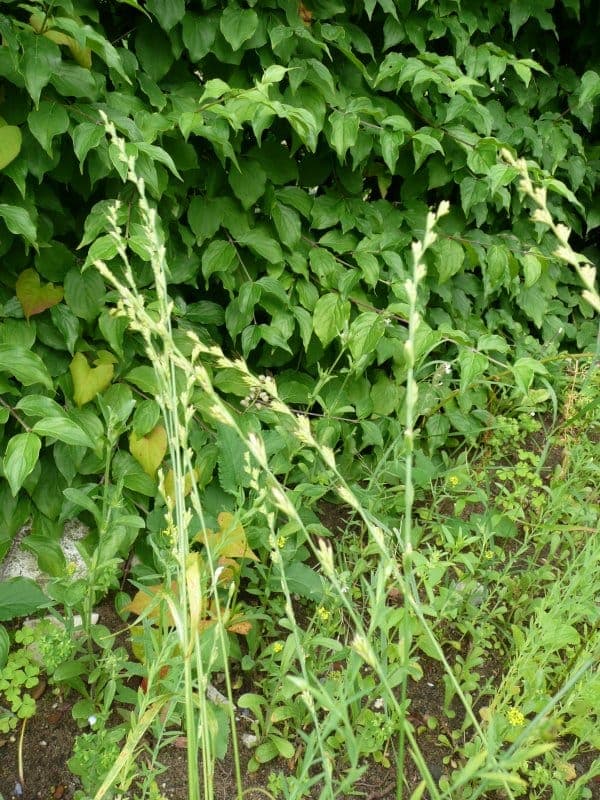
Don Manfredo / CC BY-SA 3.0, via Wikimedia Commons
Lolium remotum: complete guide
Lolium remotum
¿Quieres ver Lolium remotum: complete guide en tu jardín?
1 minuto, sin tarjeta de crédito
Overview
Lolium remotum, commonly known as flax-field ryegrass or remote ryegrass, is an interesting grass species native to alpine meadows of northern Pakistan and the West Himalaya. Belonging to grass family Poaceae, it grows naturally at higher elevations in mountainous areas preferring cool climate and well-draining soils. While not a common lawn grass, it proves useful in mountain gardens, alpine meadows, and specialized grass compositions.
Appearance and Bloom
Lolium remotum forms dense tufts of green foliage reaching approximately 20 to 40 centimeters tall. The grass features narrow, fine leaves in dark green to blue-green color. The plant flowers from May to July with characteristic inflorescence where spikelets are well-spaced along the axis. The flower spike differs from other Lolium species through greater spacing between spikelets. This distinctive spaced spike arrangement provides the key identifying characteristic of this species.
Ideal Location
Flax-field ryegrass thrives in full sun on locations with well-draining soil. The plant prefers mountainous terrain and cool temperatures. Plant where it receives at least 6 to 7 hours daily direct sunlight. The plant proves tough and tolerates less-than-ideal conditions provided drainage remains good.
Soil
For optimal growth, provide:
- Well-draining, firm soil
- Neutral pH (6.5 to 7.0)
- Preference for moderately fertile soil
- Excellent drainage essential
- No stagnant water tolerable
Diseño gratis
¿Quieres ver Lolium remotum: complete guide en tu jardín? Crea un diseño gratis ahora.
Watering
Once established, Lolium remotum remains relatively drought-resistant. Water regularly during the first growing season to establish strong root systems. Later, watering can be reduced except during severe drought. In moist alpine meadow conditions, normal rainwater usually proves sufficient.
Pruning
This grass requires no special pruning. You may mow if desired for neater appearance, though unnecessary. Leave minimum 5 centimeters grass after mowing.
Maintenance Calendar
Spring: Growth begins; regular watering and feeding. Summer: Blooming occurs; minimal care. Autumn: Seeds mature; reduce feeding. Winter: Dormant grass; minimal care needed.
Winter Hardiness
Lolium remotum is very winter-hardy, tolerating temperatures to -20 degrees Celsius and lower. Originating from alpine regions, it perfectly adapts to cold winters. This presents no concern for this species.
Companion Plants
Flax-field ryegrass pairs well with other mountain grasses and alpine herbs. In meadows, it naturally combines with daisy-like flowers. It attracts various bird and insect species, particularly seed-eating birds.
Closing
Lolium remotum represents a fascinating choice for those creating mountain gardens or alpine meadow scapes. Though not a common lawn grass, it adds authentic character to mountain landscapes. Discover more mountain flora and grass plants at gardenworld.app/nl and gardenworld.app/en.
¿Quieres ver Lolium remotum: complete guide en tu jardín? Crea un diseño gratis ahora.
Sube una foto, elige un estilo y obtén un diseño fotorrealista con lista de plantas en menos de un minuto.
Más de 10.000 jardines diseñados
Sin tarjeta de crédito


Plantas similares
Sporobolus pungens: complete guide
Sporobolus pungens
Sporobolus pungens is a stoloniferous Mediterranean coastal grass with outstanding salt and drought tolerance, perfect for seaside and dry gardens.
Mediterranean aegilops: complete guide
Aegilops biuncialis
Everything about Aegilops biuncialis, a Mediterranean annual grass with ornamental spikes and outstanding drought tolerance for dry gardens.
Silver bluestem: complete guide
Bothriochloa saccharoides
Full guide to Bothriochloa saccharoides (silver bluestem): site, soil, watering, winter hardiness, pruning, and garden companions.