
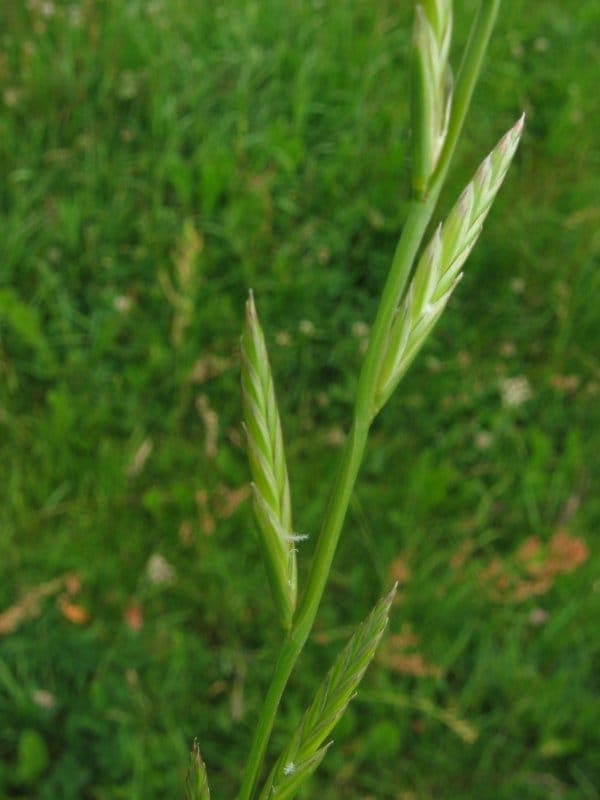
Kristian Peters -- Fabelfroh 09:38, 2 January 2007 (UTC) / CC BY-SA 3.0, via Wikimedia Commons
Lolium multiflorum: complete guide
Lolium multiflorum
¿Quieres ver Lolium multiflorum: complete guide en tu jardín?
1 minuto, sin tarjeta de crédito
Lolium multiflorum, commonly known as Italian rye grass or annual ryegrass, is a valuable grass species from the Poaceae family native to Mediterranean regions and temperate Central Asia. This vigorous annual grass is widely cultivated for lawn restoration, livestock forage, sports field establishment, and wildflower meadow establishment where rapid ground cover is essential. Its robust root systems, attractive deep green color, and exceptional growth rate make it an outstanding choice for both permanent and temporary applications in gardens, sports facilities, and agricultural settings. The plant's ability to establish dense, attractive turf within weeks rather than months distinguishes it from slower-growing perennial alternatives.
Appearance and Growth
Lolium multiflorum forms dense tufts with erect to slightly spreading culms typically reaching 30 to 90 centimeters tall depending on growing conditions and fertility. Leaves are dark green, linear, smooth-edged, measuring approximately 0.4 to 0.6 centimeters wide with a prominent midvein. The grass establishes dense, attractive green coverage remarkably rapidly often within three to five weeks under favorable conditions. This rapid establishment rate is the primary reason for its widespread use in lawn restoration projects. Flowering occurs May-June in northern temperate zones, producing characteristic elongated panicles with numerous small spikelets arranged along a central axis. These flower spikes can reach 30 centimeters in length. After flowering, seeds ripen quickly and the plant typically dies in autumn or overwinters as a winter-green grass in milder regions.
Ideal Location
Lolium multiflorum thrives in full sun to light shade, tolerating four to six hours of direct sunlight daily. Unlike many grasses, it performs reasonably well in partial shade, though flowering and seed production are reduced in deep shadow. For lawn restoration in home gardens, sports fields, and land reclamation projects, full sun produces the most vigorous growth. This moisture-loving grass performs best in areas receiving consistent moisture, particularly during establishment periods. It also tolerates slightly saline soils, valuable for coastal regions and areas with elevated soil salinity. For meadow and pasture applications, the grass adapts to virtually all terrain types.
Soil Requirements
Lolium multiflorum is remarkably adaptable to diverse soil types, from heavy clay through light sand, provided drainage remains reasonable. The grass performs best in fertile, well-structured loamy soils with pH ranging from 6.0 to 7.5. It can grow in slightly acidic soils down to pH 5.5, though growth becomes somewhat slower. For lawn renovation projects, incorporating organic matter such as compost 3 to 5 centimeters deep proves highly beneficial. This improves water retention in sandy soils and enhances soil structure in clay soils. Nitrogen fertilization dramatically accelerates growth: an application of 20 to 40 kilograms of nitrogen per hectare two to three weeks after sowing produces noticeable establishment acceleration.
Diseño gratis
¿Quieres ver Lolium multiflorum: complete guide en tu jardín? Crea un diseño gratis ahora.
Watering
Lolium multiflorum has significant water requirements, especially during germination and early establishment. For newly seeded lawn areas, soil must remain moist in the top 2 to 3 centimeters for the first two to three weeks after sowing. This typically means light irrigation two to three times weekly. Once established, irrigation can become less frequent approximately once weekly depending on weather and soil texture. During dry periods, supplementary irrigation of approximately 2.5 centimeters per week maintains vigorous growth and dense coverage. However, waterlogged conditions promote fungal disease, so balance is essential.
Pruning and Maintenance
Lolium multiflorum requires regular mowing for optimal density and health. When used as lawn turf, maintain grass at 2.5 to 4 centimeters height with weekly or ten-day mowing intervals during the growing season. Sports fields may demand cutting as low as 2 centimeters. Regular mowing promotes multiple lateral shoots and denser coverage. For forage applications, allow grass to reach 10 to 15 centimeters before cutting. After mowing, the grass responds rapidly with new growth, especially if nitrogen is available.
Maintenance Calendar
March-April: Prepare seedbed, incorporate organic matter. April-May: Direct sow in prepared soil, lightly incorporate. May: Initial fertilization. June-July: Begin mowing when grass reaches 5 centimeters. July-September: Regular weekly mowing, post-mowing fertilization. October: Reduce mowing frequency. November-March: Winter dormancy or slow growth.
Winter Hardiness
Lolium multiflorum functions as an annual or short-lived winter annual in most climates, germinating in autumn and dying in late spring or early summer. In mild winter regions (USDA zones 9-10), it may persist as a biennial, flowering across two seasons before dying. In very cold zones (3-5), plants typically succumb to the first hard frost.
Companion Planting
Lolium multiflorum is normally sown as a monoculture. For wildflower meadows, it can be combined with other grass and legume species. Suitable companion species include Festuca arundinacea (tall fescue), Cynosurus cristatus (crested dogstail), and Poa pratensis (Kentucky bluegrass). For pasture systems, ryegrass is traditionally combined with legume associations, which fix atmospheric nitrogen and enhance forage quality.
Conclusion
Lolium multiflorum is an unmatched grass species for rapid, dense ground establishment across diverse applications. From lawn renovation through forage production: this grass delivers consistent results with minimal complications. Its growth speed, soil adaptability, and practical utility make it a valuable addition to many garden and land use scenarios. Visit gardenworld.app for personalized landscape designs incorporating grasses and native species tailored to your specific climate and goals.
¿Quieres ver Lolium multiflorum: complete guide en tu jardín? Crea un diseño gratis ahora.
Sube una foto, elige un estilo y obtén un diseño fotorrealista con lista de plantas en menos de un minuto.
Más de 10.000 jardines diseñados
Sin tarjeta de crédito


Plantas similares
Sporobolus pungens: complete guide
Sporobolus pungens
Sporobolus pungens is a stoloniferous Mediterranean coastal grass with outstanding salt and drought tolerance, perfect for seaside and dry gardens.
Mediterranean aegilops: complete guide
Aegilops biuncialis
Everything about Aegilops biuncialis, a Mediterranean annual grass with ornamental spikes and outstanding drought tolerance for dry gardens.
Silver bluestem: complete guide
Bothriochloa saccharoides
Full guide to Bothriochloa saccharoides (silver bluestem): site, soil, watering, winter hardiness, pruning, and garden companions.