
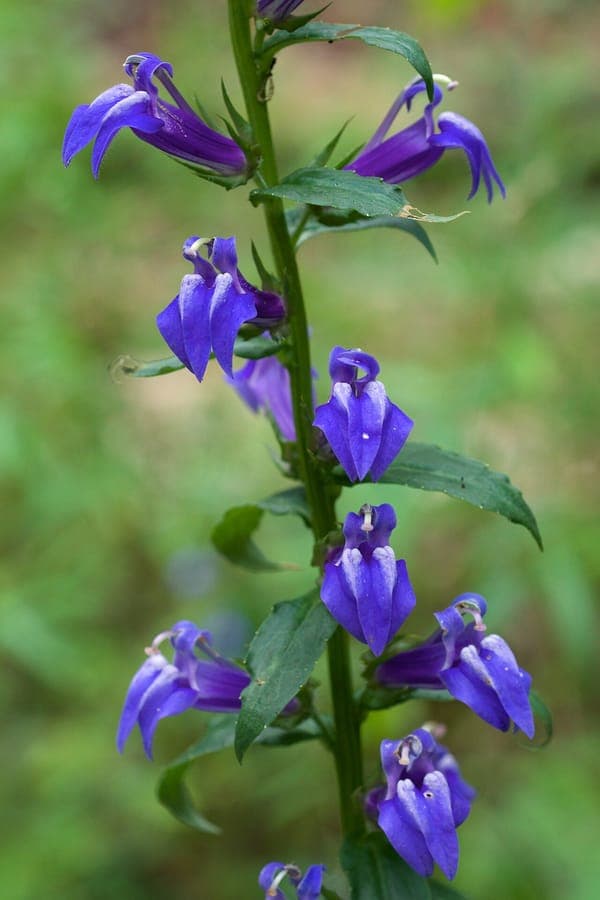
Eric Hunt / CC BY-SA 4.0, via Wikimedia Commons
Lobelia siphilitica: complete guide
Lobelia siphilitica
¿Quieres ver Lobelia siphilitica: complete guide en tu jardín?
1 minuto, sin tarjeta de crédito
Overview
Lobelia siphilitica, commonly called the blue cardinal flower, is a stunning perennial native to eastern and southeastern North America. This herbaceous plant is renowned for its striking deep blue flower spikes that bloom from July through September. It grows naturally along streambanks, wet meadows, and marshy areas where it can access abundant moisture and nutrients. In gardens, it works best as a specimen or in groups along water features and wet borders.
Appearance and bloom
Lobelia siphilitica forms an upright, unbranched stem with lanceolate leaves arranged alternately. The plant reaches 60 to 100 cm in height and produces dense flower spikes starting in July. Each floret is approximately 1.5 to 2 cm across with a characteristic two-lobed lower lip. Flowers are almost always deep blue, though white and pink cultivars exist. After blooming, the plant sets seed that ripens in autumn and often self-seeds reliably.
Ideal location
Place lobelia where it receives at least four hours of direct sun daily, though it also thrives in partial shade. The plant thrives best along pond and streambank edges where soil remains consistently moist. Avoid dry, full-sun locations without supplemental water. Protection from intense afternoon heat in very hot climates is recommended. Taller plants nearby (not too densely planted) can create attractive contrast without overshadowing.
Soil
Lobelia siphilitica prefers moist to wet soil rich in organic matter. It performs best in clay or peat-based soils that hold moisture readily. Add generous amounts of humus or leaf mold at planting time. Soil pH should be neutral to slightly acidic. Avoid heavy soil compaction; a looser structure promotes healthy roots. In drier gardens: add extra peat moss and provide consistent supplemental watering.
Watering
Ensure regular watering, especially during the growing season. Lobelia must never completely dry out. During dry spells, water 2-3 times weekly, at least 5 cm deep. Soil should remain consistently moist, not waterlogged. Once well-established, mature plants need less supplemental water, especially if positioned near ponds or streams. However, pure rainwater is preferable to lime-rich tap water.
Diseño gratis
¿Quieres ver Lobelia siphilitica: complete guide en tu jardín? Crea un diseño gratis ahora.
Pruning
Pruning is not always necessary, but you can remove spent flower spikes to encourage a second bloom (deadheading). At season's end, when foliage dies back, you may gently cut away dead material. Leave some stems standing over winter for insects. Since lobelia self-seeds readily, remove flowers before seed sets if you wish to prevent self-seeding.
Maintenance calendar
May to June: plant and water thoroughly. July to August: regular watering, remove spent flowers for repeat blooming. September to October: adjust watering as growth slows. November to March: plant is dormant; water only during dry spells. Every two to three years: rejuvenate by division or replanting with fresh compost.
Winter hardiness
Lobelia siphilitica is fully hardy to USDA Zone 4. It tolerates temperatures well below -20C, provided soil remains consistently moist. In very dry cold, it faces increased winter damage risk. A protective mulch layer (5-10 cm) in late autumn helps in marginal zones. In temperate regions, it survives winter without protection, especially along watercourses.
Companion plants
Effective combinations include other moisture-loving perennials: Astilbe, primula species, Iris sibirica, Hosta varieties, Filipendula and Liatris. In wetter sites: Caltha palustris, Trollius, Swamp Milkweed (Asclepias incarnata). The blue hue contrasts beautifully with yellow bloomers (Helenium) or white plants (Filipendula alba).
Closing
Lobelia siphilitica is a versatile, moisture-loving perennial that thrives in the right conditions (moist soil, partial shade minimum). It is hardy, low-maintenance, and attracts pollinators and butterflies. At gardenworld.app, you'll find inspiration and guidance for integrating lobelias into water-rich garden designs. At gardenworld.app, we're delighted to help you create your dream garden with careful plant selection and sustainability in mind.
¿Quieres ver Lobelia siphilitica: complete guide en tu jardín? Crea un diseño gratis ahora.
Sube una foto, elige un estilo y obtén un diseño fotorrealista con lista de plantas en menos de un minuto.
Más de 10.000 jardines diseñados
Sin tarjeta de crédito


Plantas similares
Campanula alaskana: complete guide
Campanula alaskana
Discover Campanula alaskana, the delicate alpine bellflower from Alaska. Growing tips, hardy requirements, and design ideas for rock gardens and alpine troughs.
Campanula scouleri: complete guide
Campanula scouleri
Discover Campanula scouleri, the refined Pacific bellflower. Growing tips, care requirements, and design ideas for woodland and mountain gardens.
Doublehorn calicoflower: complete guide
Downingia bicornuta
All about Downingia bicornuta - the doublehorn calicoflower: sowing, location, bloom and care for this rare annual in your garden.