
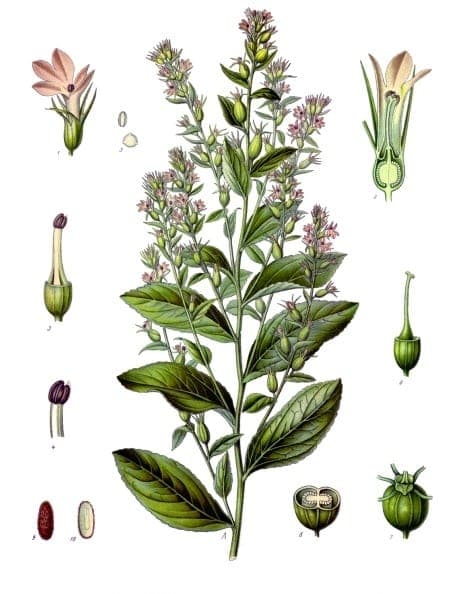
Franz Eugen Köhler, Köhler's Medizinal-Pflanzen / Public domain, via Wikimedia Commons
Indian-tobacco: complete guide
Lobelia inflata
¿Quieres ver Indian-tobacco: complete guide en tu jardín?
1 minuto, sin tarjeta de crédito
Overview
Indian-tobacco (Lobelia inflata), also known as Inflated Lobelia, is a fascinating annual to biennial herbaceous plant native to eastern Canada and northeastern North America. This compact plant reaches heights of 15-60 centimeters and is renowned for its distinctive inflated seed capsules, earning its common name. The plant produces small but attractive purple-blue flowers from July through October.
Appearance and Bloom
The plant develops upright to spreading, branched growth with lance-shaped leaves distributed along the stem. Small flowers approximately 0.5 centimeters in length display purple-blue variations arranged in loose spikes. Most distinctive are the seed capsules developing after flowering: these become noticeably inflated and swollen, giving the plant its characteristic appearance.
Ideal Location
Indian-tobacco thrives in full to partial sun positions. Although the plant survives in shade, flowering peaks with at least four hours of direct daily sunlight. The plant fits well in borders, vegetable gardens, wildflower plantings, and naturalized settings. Container cultivation on balconies and patios is successful. Avoid windy locations, as thin stems are vulnerable to damage.
Soil
Indian-tobacco demonstrates considerable flexibility regarding soil type, though it prefers moderately moist, well-drained conditions. A neutral to slightly acidic soil (pH 6.0-7.0) is ideal. In heavy clay soil, incorporate compost or peat moss to improve structure and drainage. The plant tolerates various soil conditions but grows optimally in soils maintaining regular moisture without waterlogging.
Diseño gratis
¿Quieres ver Indian-tobacco: complete guide en tu jardín? Crea un diseño gratis ahora.
Watering
Once established, Indian-tobacco requires regular water, especially during dry periods. Maintain moist but not waterlogged soil. Ensure good soil drainage prevents root problems. Hot summers may necessitate daily watering. Water at soil level, avoiding foliage, to prevent fungal diseases.
Pruning
Pruning is rarely necessary for this naturally compact species. Regularly remove spent flowers and seed pods to encourage prolonged blooming. Optionally, if the plant becomes overly large, carefully pinch growing tips to stimulate branching and denser growth.
Maintenance Calendar
Spring: Sow seeds indoors four to six weeks before last frost date. Summer: Transplant outdoors once frost danger passes. Monitor moisture and feeding needs regularly. Autumn: Enjoy continued blooming through fall. Winter: Allow seeds to dry and collect for next season. In mild regions, some plants may overwinter.
Winter Hardiness
Indian-tobacco is frost-sensitive and dies at temperatures below freezing. In most European gardens, it is cultivated as an annual. In very mild regions (USDA zones 8-9), plants may survive two years if positioned in sheltered locations.
Companion Plants
Indian-tobacco combines beautifully with other annuals such as alyssum, petunias, and snapdragons in border plantings. The plant works well in naturalization projects and wildflower meadows. In containers, pair it with trailing plants for cascading effects.
Closing Thoughts
Indian-tobacco is a charming choice for gardeners seeking something unusual. With its attractive flowers and distinctive seed pods, it provides visual interest from summer through autumn. Allow self-seeding for natural rejuvenation in subsequent seasons.
¿Quieres ver Indian-tobacco: complete guide en tu jardín? Crea un diseño gratis ahora.
Sube una foto, elige un estilo y obtén un diseño fotorrealista con lista de plantas en menos de un minuto.
Más de 10.000 jardines diseñados
Sin tarjeta de crédito


Plantas similares
Campanula alaskana: complete guide
Campanula alaskana
Discover Campanula alaskana, the delicate alpine bellflower from Alaska. Growing tips, hardy requirements, and design ideas for rock gardens and alpine troughs.
Campanula scouleri: complete guide
Campanula scouleri
Discover Campanula scouleri, the refined Pacific bellflower. Growing tips, care requirements, and design ideas for woodland and mountain gardens.
Doublehorn calicoflower: complete guide
Downingia bicornuta
All about Downingia bicornuta - the doublehorn calicoflower: sowing, location, bloom and care for this rare annual in your garden.