
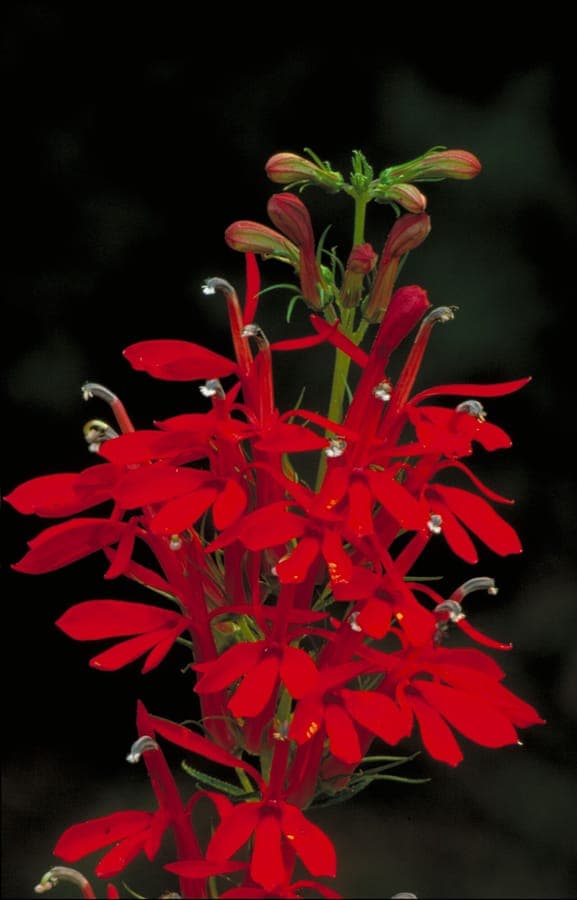
Barnes, Dr. Thomas G. / Public domain, via Wikimedia Commons
Lobelia cardinalis: complete guide
Lobelia cardinalis
¿Quieres ver Lobelia cardinalis: complete guide en tu jardín?
1 minuto, sin tarjeta de crédito
Overview
Lobelia cardinalis, commonly known as cardinal flower or scarlet lobelia, is a hardy perennial native to North America. This member of the Campanulaceae family naturally inhabits moist meadows, streambanks, and wetlands from Canada through to Colombia. The plant is celebrated for its vibrant scarlet-red flowers that attract hummingbirds, bees, and butterflies throughout summer.
Appearance & bloom
Lobelia cardinalis grows as an upright, slender plant with glossy green foliage that sometimes develops reddish tints under intense sunshine. Plants typically reach 60-90 centimeters in height. The flowers are characteristically scarlet to deep red, two-lipped, and arranged in tall, tapering, densely-packed flower spikes. Flowering extends from July through October, providing extended pollinator visitation.
Ideal location
Lobelia cardinalis performs best in full sun to partial shade with 4-6 hours of direct sunlight daily. The plant tolerates light shade, though flowering may diminish. For maximum blooms, choose a full-sun location. In very warm climates, afternoon shade aids moisture conservation.
Soil
This plant thrives in moisture-rich to wet soils and is ideal along pond and stream edges. Lobelia cardinalis performs best on acidic to neutral soils (pH 5.5-7.0) rich in organic matter. Poor drainage is not problematic; indeed, consistently moist soils are preferred.
Watering
Lobelia cardinalis requires consistent moisture. Plant along water margins, in marshy areas, or in specialized bog beds. The plant even tolerates shallow water (2-5 centimeters deep). Ensure soil never dries out, particularly during growth and flowering seasons. Supplemental watering may be necessary during extended dry periods.
Diseño gratis
¿Quieres ver Lobelia cardinalis: complete guide en tu jardín? Crea un diseño gratis ahora.
Pruning
Pruning is not essential, though deadheading spent flowers extends the blooming period and maintains neat appearance. Remove damaged or yellowed foliage. After first blooming wave (August-September), spent flower spikes can be cut back to prevent seed set and extend blooming. In late autumn, cut dead stems to ground level.
Maintenance calendar
Spring: Apply soil amendments, transplant or propagate by division. Summer: Deadhead spent flowers, monitor moisture levels. Autumn: Allow seeds to mature for natural dispersal, cut dead stems in late autumn. Winter: Protect roots with mulch in severe climates.
Winter hardiness
Lobelia cardinalis is fully hardy throughout Europe with minimum temperatures around -20°C. The plant overwinters well with adequate soil drainage (paradoxically, water must drain away in winter). In very wet winters, winter protection with dead leaves prevents root rot.
Companion plants
Pair Lobelia cardinalis with other moisture-loving plants such as Astilbe, Hosta, Primula species, and Ligularia. The red flowers contrast beautifully with yellow and white blooms. Hummingbirds will visit alongside compatible native plants.
Closing thoughts
Lobelia cardinalis is essential for wetland gardeners and bird enthusiasts. The scarlet flowers attract hummingbirds and the extended blooming period provides essential nectar throughout much of the season. This native plant deserves a place in every moisture-rich garden. Source seedlings or plants from native plant nurseries or wetland plant specialists.
On gardenworld.app, design water gardens and wildlife habitats. Visit gardenworld.app for comprehensive inspiration and guidance on designing beautiful wetland gardens.
¿Quieres ver Lobelia cardinalis: complete guide en tu jardín? Crea un diseño gratis ahora.
Sube una foto, elige un estilo y obtén un diseño fotorrealista con lista de plantas en menos de un minuto.
Más de 10.000 jardines diseñados
Sin tarjeta de crédito


Plantas similares
Campanula alaskana: complete guide
Campanula alaskana
Discover Campanula alaskana, the delicate alpine bellflower from Alaska. Growing tips, hardy requirements, and design ideas for rock gardens and alpine troughs.
Campanula scouleri: complete guide
Campanula scouleri
Discover Campanula scouleri, the refined Pacific bellflower. Growing tips, care requirements, and design ideas for woodland and mountain gardens.
Doublehorn calicoflower: complete guide
Downingia bicornuta
All about Downingia bicornuta - the doublehorn calicoflower: sowing, location, bloom and care for this rare annual in your garden.