
H. Zell / CC BY-SA 3.0, via Wikimedia Commons
Yellow Flax: complete guide
Linum flavum
¿Quieres ver Yellow Flax: complete guide en tu jardín?
1 minuto, sin tarjeta de crédito
Overview
Yellow Flax (Linum flavum) is a compact, charming perennial from the Linaceae family, native to rocky mountainous regions from Central Europe to Turkey. This ornamental flax grows as a neat, upright bushy plant, producing throughout the summer abundant clusters of bright yellow, five-petalled flowers. The plant is renowned for its rich golden-yellow bloom and compact, tidy growth habit.
Yellow Flax is exceptionally suited to small gardens, rock gardens, alpine troughs, dry borders, and container gardening. With its restrained growth and cheerful yellow blooms, Linum flavum makes an excellent addition to any sunny, modern garden.
Appearance & bloom
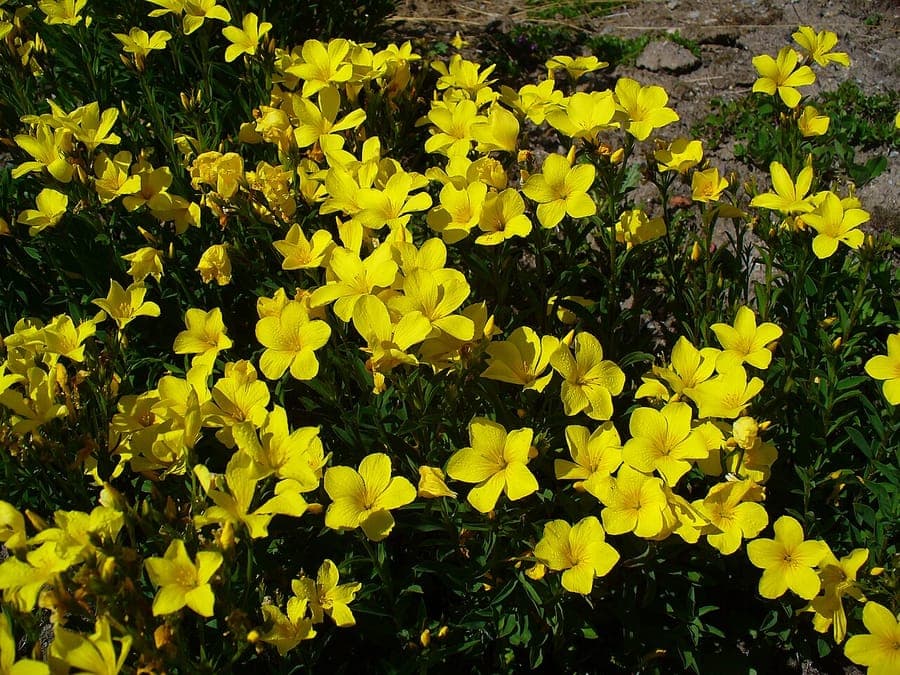
Yellow Flax grows 20-40 centimetres tall, forming a compact, stiffly upright, dome-shaped mound of foliage and stems. The stems are thin, smooth, and green to reddish. The leaves are small, linear, glossy green and densely arranged along the stems, creating a neat, well-defined silhouette. From May through October, the plant produces abundant, bright golden-yellow flowers in loose, open clusters measuring approximately 15-20 millimetres across.
Each flower displays five bright yellow petals and golden stamens, making the blooms exceptionally eye-catching. After flowering, small seed capsules develop. The blooming is extremely continuous, meaning new flowers appear throughout the entire flowering period, ensuring the plant remains almost constantly in bloom for months on end.
Ideal location
Yellow Flax absolutely thrives in full sun positions. The plant requires a minimum of six to eight hours of direct sunlight daily for optimal growth and prolific flowering. South and southwest-facing positions are ideal. In full sun borders, at the front of beds (due to compact height), on rock work and in Mediterranean gardens, Linium flavum truly shines.
Locations with less than four hours of sun will result in reduced vigour and fewer blooms. The plant can survive in partial shade but will underperform significantly.
Soil
Yellow Flax demands very specific soil conditions. A freely draining soil is absolutely essential. Waterlogging is fatal to this plant. Heavy clay soils must be thoroughly amended with coarse sand, gravel and rock particles. The ideal growing medium would comprise approximately 50% original soil and 50% grit, sand and decorative stone.
The plant grows beautifully on neutral to slightly alkaline soils. Wet soils must be absolutely avoided. A slightly nutrient-poor soil is actually preferable to rich soil, as excessive feeding stimulates leafy growth at the expense of flowers.
Diseño gratis
¿Quieres ver Yellow Flax: complete guide en tu jardín? Crea un diseño gratis ahora.
Watering
Yellow Flax is remarkably drought-tolerant once well-established. In the first two to three weeks after planting, water the plant regularly but cautiously until roots are fully established. Thereafter, limit water application to an absolute minimum. Occasional light watering during exceptional droughts is acceptable, but less frequent than every two weeks is ideal.
Avoid excessive moisture at all costs, as this invariably leads to root rot. Dry, ground-level watering is best. Once established (after one full growing season), rarely if ever supplement with additional water.
Pruning
Yellow Flax responds reasonably well to cautious pruning. A very light trim in early spring (April), removing mainly dead or damaged wood, can help maintain a compact form. However, heavy pruning is unnecessary and may actually be counterproductive.
After flowering ends (November), it's wise to lightly trim the plant to remove autumn and frost damage. Remove no more than one-fifth to one-quarter of the plant's height.
Maintenance calendar
January-February: Inspect for winter damage. Remove damaged branches or foliage. March-April: Very light spring trim for shape. Begin cautious watering if winter was exceptionally dry. May-June: Enjoy first blooms. No watering needed unless exceptionally dry. July-August: Peak flowering period. No watering required. Deadhead spent flowers for tidiness. September-October: Flowering continues. Reduced growth rate. November-December: Diminished growth. Light trim. Protect against frost if necessary.
Winter hardiness
Yellow Flax is hardy to approximately -15 degrees Celsius, sometimes lower. In mild climates, the plant remains largely evergreen. In harsher winters, aerial parts may die back, but the plant typically regenerates from its roots the following spring. This hardiness is adequate for most of Europe.
Companion plants
Yellow Flax pairs beautifully with other drought-tolerant plants, especially those offering colour contrast:
Excellent companions include:
- Lamb's ears (Stachys byzantina) - silvery foliage
- Red or purple helichrysum - colour contrast
- Dwarf lavenders
- Alpine phlox (Phlox subulata) - complementary flowering
- Senecio (Senecio jacobaea subsp. jacobaea) - fine, silvery foliage
- Compact rosemary (Rosmarinus officinalis Prostratus)
Closing thoughts
Yellow Flax offers a perfect combination of compact growth, extended flowering period and extremely low maintenance demands. For gardeners who desire bright yellow flowers in compact spaces, Linium flavum is an ideal choice. With watering restricted to occasional applications and minimal pruning, the plant flourishes beautifully. For gardenworld.app users constantly seeking low-fuss yellow flowers for small gardens, Yellow Flax is an absolute must-have!
Want more yellow blooms? Discover more on gardenworld.app!
¿Quieres ver Yellow Flax: complete guide en tu jardín? Crea un diseño gratis ahora.
Sube una foto, elige un estilo y obtén un diseño fotorrealista con lista de plantas en menos de un minuto.
Más de 10.000 jardines diseñados
Sin tarjeta de crédito


Plantas similares
Lewis's flax: complete guide
Linum lewisii
Everything about Linum lewisii (Lewis's flax): location, soil, watering and maintenance. An elegant blue-flowered prairie plant for sunny, dry garden borders.
Tree Flax: complete guide
Linum arboreum
Discover Tree Flax (Linum arboreum), a Mediterranean shrub with golden-yellow flowers and fine needle-like foliage. Perfect for sun-soaked dry gardens and rocky terraces.
Sea flax: complete guide
Linum maritimum L.
Sea flax is a Mediterranean coastal shrub with delicate yellow flowers. Learn how to grow and care for this salt-tolerant plant in your garden.