
Robert Flogaus-Faust / CC BY 4.0, via Wikimedia Commons
Tree Flax: complete guide
Linum arboreum
¿Quieres ver Tree Flax: complete guide en tu jardín?
1 minuto, sin tarjeta de crédito
Tree Flax (Linum arboreum) is a Mediterranean shrubby plant from the Linaceae family, prized for its drought tolerance and vibrant golden-yellow flowers. This uncommon cultivated species originates from the Aegean region and southwest Turkey, thriving on rocky slopes with minimal rainfall.
While primarily suited to southern climates, Tree Flax can be cultivated in Mediterranean-like garden settings with full sun exposure and excellent drainage. It forms a compact, upright shrub offering significant botanical interest.
Appearance and bloom
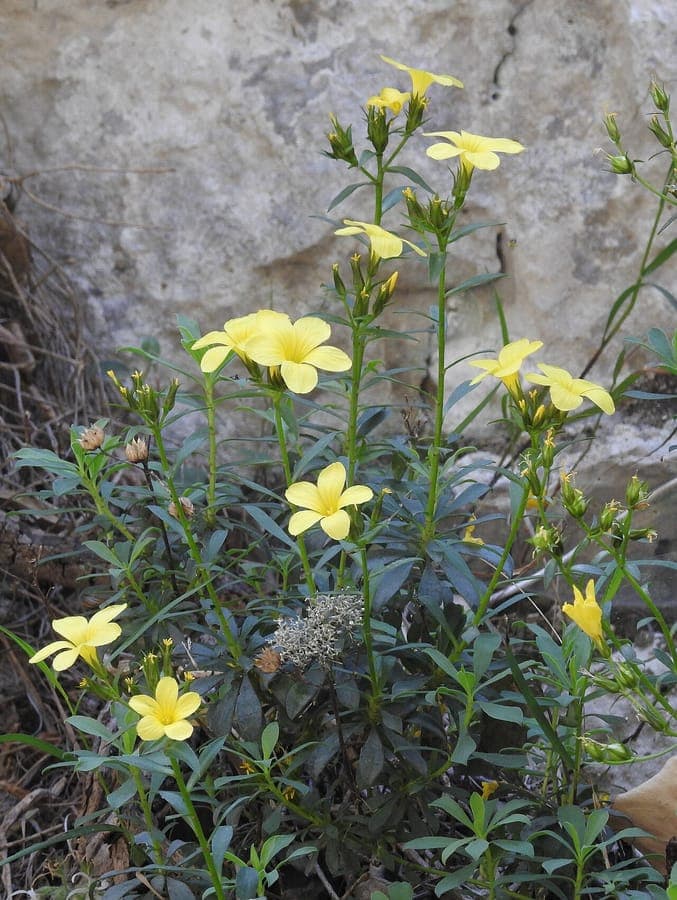
Tree Flax develops as a compact shrub with slender, almost needle-like leaves characteristic of the Linum genus. The plant achieves modest height and forms a rounded to semi-upright shape. Golden-yellow flowers emerge during warm months, drawn by intense sunshine.
The flower display consists of individual five-petaled blooms produced in clusters. These golden hues provide striking contrast against fine foliage. The flowering season extends from late spring through early autumn under ideal conditions.
Ideal location
Select a site receiving full sun exposure - at least six to eight hours daily. Shade dramatically reduces flowering. The plant thrives in warm, sheltered positions, ideally against a south-facing wall or warm stonework.
In cooler climates, winter protection becomes necessary. Position near heat-retaining surfaces like stone or brick to better withstand winter frosts.
Soil
Well-draining soil is absolutely critical for Tree Flax. Heavy clay that retains moisture causes rot and plant death. Sand, gravel, and minimal organic matter create ideal soil texture.
In high-rainfall areas, amend soil with gravel or brick fragments for extra drainage. Container growing with additional perlite or potshards works well. pH can range from neutral to slightly acidic.
Watering
Water sparingly once established. Excess moisture proves more damaging than drought for this species. Water only when soil feels completely dry. In European rainy climates, supplemental irrigation is rarely needed.
Container cultivation allows better water control than open beds. Ensure pots and plantings drain excellently. During hot, dry summers, weekly watering may be necessary.
Diseño gratis
¿Quieres ver Tree Flax: complete guide en tu jardín? Crea un diseño gratis ahora.
Pruning
Minimal pruning is needed. Remove only dead or damaged branches. After flowering, long shoots can be lightly trimmed for shape maintenance, though optional.
Heavy pruning damages this plant. Allow natural growth form. Only selective branch removal prevents undesired shapes.
Maintenance calendar
January to February: Check for winter damage; remove dead wood. Plant may need dormancy rest. March to May: Growth begins. No feeding usually needed on poor soils. June to September: Flowering season. Provide sparse water during dry periods. Monitor for pests. October to December: Growth slows. Provide frost protection if necessary. Winter preparation.
Winter hardiness
Tree Flax is moderately cold-hardy and survives many northern regions with winter protection. In southern Netherlands (Limburg, North Brabant), survival is likely. In northerly regions, container cultivation with indoor overwintering is recommended.
Mineral mulch around plants protects roots. Frost and snow can damage foliage; care requires protection but no extra feeding after frost.
Companion planting
Plant Tree Flax alongside other Mediterranean drought-tolerant plants like lavender, rosemary, and cistus. Silver-leaved plants like Artemisia provide beautiful textural contrast.
This specimen grows harmoniously with other Aegean plants, creating botanically authentic compositions. Low-growing roses and citrus shrubs also complement beautifully.
Closing remarks
Tree Flax offers a unique choice for Mediterranean garden style. Though uncommon, it provides botanical interest, yellow summer color, and drought endurance. With careful placement and excellent drainage, this Linaceae family member delivers years of plant appreciation.
Gardenworld recommends: Seek Tree Flax through specialized nurseries offering Mediterranean plants. Plant sourcing is possible via online retailers focused on southern flora. For inspiration creating Mediterranean gardens, visit gardenworld.app and explore pre-designed gardens with sun-loving species for your terrace or patio. Step today into a world of sunny, warm garden enjoyment!
¿Quieres ver Tree Flax: complete guide en tu jardín? Crea un diseño gratis ahora.
Sube una foto, elige un estilo y obtén un diseño fotorrealista con lista de plantas en menos de un minuto.
Más de 10.000 jardines diseñados
Sin tarjeta de crédito


Plantas similares
Lewis's flax: complete guide
Linum lewisii
Everything about Linum lewisii (Lewis's flax): location, soil, watering and maintenance. An elegant blue-flowered prairie plant for sunny, dry garden borders.
Sea flax: complete guide
Linum maritimum L.
Sea flax is a Mediterranean coastal shrub with delicate yellow flowers. Learn how to grow and care for this salt-tolerant plant in your garden.
Linum corymbulosum: complete guide
Linum corymbulosum
Meet clustered flax, a refined Mediterranean plant with delicate flowers. Perfect for dry, sunny spots in your front garden design.