
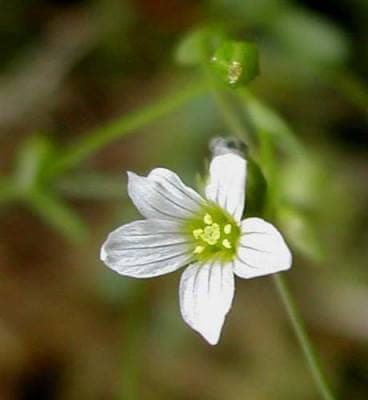
No machine-readable author provided. Aroche assumed (based on copyright claims). / CC BY-SA 2.5, via Wikimedia Commons
Linum catharticum: complete guide
Linum catharticum
¿Quieres ver Linum catharticum: complete guide en tu jardín?
1 minuto, sin tarjeta de crédito
Overview
Linum catharticum, commonly known as Bitter flax or Purging flax, is a charming tiny plant native to Europe through West Siberia and Iran, and also found in North Africa in Morocco. This delicate plant belongs to the Linaceae family and serves as a valuable addition to wildflower meadows, alpine gardens, and natural garden landscapes. The plant is valued for its minuscule elegant flowers and its ability to grow in poor meadows.
Linum catharticum grows as a very small, herbaceous plant typically reaching only 10-40 cm tall. The plant forms a compact, upright growth pattern with fine, small leaves. It is a valuable choice for gardeners seeking small-scale, elegant plants. The plant stands out for its ability to appear elegant and miniature without requiring much pruning or maintenance.
Outside Europe, Linum catharticum is less widely distributed, but increasing numbers of gardeners are discovering the charming tiny flowers of this plant. If you are seeking an interesting miniature flower for wildflower meadows or alpine gardens, Linum catharticum certainly deserves consideration.
Appearance & Bloom
Linum catharticum is an extremely delicate plant with very small, lance-shaped leaves arranged along slender, fine stems. The leaves are green and give the plant an extremely fragile, bird-like appearance. The plant grows compactly and forms a neat package of small foliage.
The flowers are the true highlight of Linum catharticum - despite their minuscule size, they are truly enchanting. The flowers are white in color with pink or red veins that are extremely fine, almost invisible at first glance. They appear from May to September in great abundance on fine stems, making the plant appear covered with minuscule snowflakes. Each flower is only a few millimeters across, but in terms of detail and elegance, they more than compensate for this.
After blooming, the plant produces small seed pods containing seed that can be harvested for seed dispersal.
Ideal Location
Linum catharticum thrives best in locations with sun to half-shade. The plant requires at least 5-6 hours of direct sunlight daily. In very warm climates, it feels more comfortable in partial shade.
Place the plant in areas with well-drained soils in open locations. The plant enjoys good air circulation and open conditions. This plant is perfect for wildflower meadows, alpine gardens, or as ground cover in gravel beds.
Diseño gratis
¿Quieres ver Linum catharticum: complete guide en tu jardín? Crea un diseño gratis ahora.
Soil
Linum catharticum prefers poor, well-draining soils. The ideal soil is sandy to gravelly with very low fertility. The plant grows best in grassy soils like those in natural meadows. The pH can be neutral to slightly acidic (pH 6.0-7.5).
The plant's preference for poor soils means that rich, cultivated soils will make it perform poorly. Adding gravel or sand helps drainage and reduces fertility if needed. In containers, use well-draining, poor potting mix.
Watering
Linum catharticum is lean-water tolerant. The plant requires moderate water, especially in early growth stages. Once established, the plant can tolerate long periods with limited water.
In very dry climates, water carefully during growth stages. Avoid waterlogging - the plant prefers dry to moderately moist conditions. In rainy climates, natural rainfall is likely sufficient.
Pruning
Linum catharticum requires virtually no pruning. The plant will maintain a neat package on its own. Remove only dead or very yellowed leaves as you notice them. After seed ripening, you can remove the entire plant or let it overwinter as an annual.
Maintenance Calendar
April-May: Plant grows; moderate water.
June-August: Blooming period; minimal water.
September-October: Seed ripens and is dispersed.
November-March: Plant may sleep in very cold areas.
Winter Hardiness
Linum catharticum is hardy to USDA zone 5 (minimum temperatures around -28°C). This makes it suitable for many temperate climates. In very warm climates (zones 9-11), the plant may sometimes function as an annual.
The plant is best adapted to climates with normal winters and abundant rainfall. In very dry climates, the plant will likely not flourish without challenges.
Companion Plants
Linum catharticum looks beautiful alongside other meadow plants and alpine plants:
- Centaurea cyanus (cornflowers)
- Papaver rhoeas (poppies)
- Knautia arvensis (knautia)
- Succisa pratensis (devil's bit)
- Festuca grasses (sheep fescue)
Closing Thoughts
Linum catharticum offers a unique opportunity for gardeners working with wildflower meadows and alpine gardens. With its minuscule elegant flowers and ability to grow in poor soils, this plant is ideal for natural garden landscapes. Through gardenworld.app, you can find more ideas for integrating wildflowers into your garden design.
This plant is available from wildflower seed suppliers. Sow it directly into your meadows or alpine garden and enjoy its minuscule elegant flowers throughout the growing season! Through gardenworld.app, you can integrate this tiny gem into your overall garden design.
¿Quieres ver Linum catharticum: complete guide en tu jardín? Crea un diseño gratis ahora.
Sube una foto, elige un estilo y obtén un diseño fotorrealista con lista de plantas en menos de un minuto.
Más de 10.000 jardines diseñados
Sin tarjeta de crédito

