
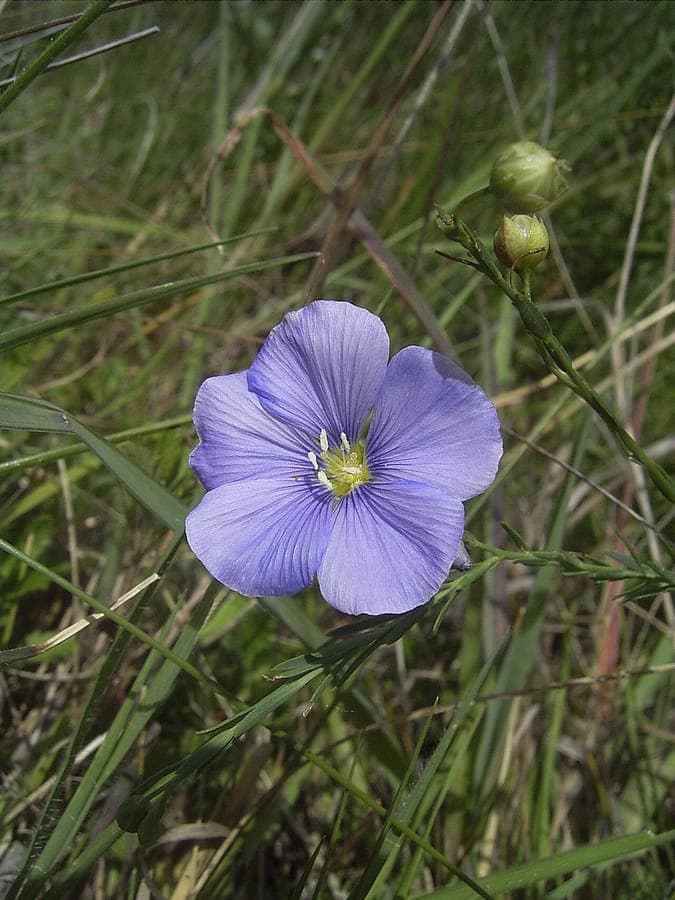
Denis Barthel / CC BY-SA 3.0, via Wikimedia Commons
Linum austriacum: complete guide
Linum austriacum
¿Quieres ver Linum austriacum: complete guide en tu jardín?
1 minuto, sin tarjeta de crédito
Overview
Linum austriacum, commonly known as Asian flax or Austrian flax, is a charming steppe plant native to East Europe to West and Central Asia. This hardy plant belongs to the Linaceae family and is valued for its brilliant blue flowers and its ability to grow in dry, calcareous soils. The plant serves as a valuable addition to steppe and Mediterranean gardens with limited water availability.
Linum austriacum grows as a compact, upright plant that typically reaches heights of 20-60 cm. The plant forms dense clusters of fine foliage and produces abundant blue flowers throughout summer. It is an excellent choice for gardens with dry soils, such as rock gardens, steppes, or Mediterranean landscapes. The plant stands out for its remarkable ability to tolerate long periods of drought without extensive irrigation.
Outside Southeast Europe and Central Asia, Linum austriacum is less widely distributed, but increasing numbers of gardeners are discovering the beauty of this hardy plant. If you are seeking an interesting flowering plant for dry zones, Linum austriacum certainly deserves consideration.
Appearance & Bloom
Linum austriacum is an elegant plant with fine, needle-like leaves densely arranged along upright stems. The leaves are green, narrow, and give the plant a very graceful appearance. The plant grows in a rounded, compact shape, making it ideal for perennial plantings and steppe gardens.
The flowers are the true highlight of this plant. They appear from June to August in great abundance at the tops of stems. The flowers are a brilliant blue color - a pure, clear azure tint - and have a delicate form with five petals. Each flower is small but striking, and the plant produces so many flowers that the entire specimen appears to swim in a sea of blue. The flowers attract pollinators and contribute to the overall beauty of steppe and Mediterranean gardens.
After blooming, the plant produces small seed pods that can be harvested for seed dispersal.
Ideal Location
Linum austriacum thrives best in locations with full sun. The plant requires at least 6-8 hours of direct sunlight daily for optimal growth and blooming. In very warm climates, some afternoon shade may be beneficial, but generally the plant prefers full sunlight.
Place the plant in open, windy locations - the plant enjoys good air circulation. It also tolerates wind well, making it suitable for exposed gardens. Avoid low-lying, moist places where water may accumulate.
Soil
Linum austriacum prefers well-draining, dry soils. The ideal soil is sandy to gravelly with low fertility. The plant grows excellently in calcareous soils with pH of 6.5-8.5. The plant has very low nutrient requirements.
The key is drainage - the plant tolerates no waterlogging and will rot in wet soils. If you have heavy clay soil, add gravel, sand, or clay amendments to improve drainage. In containers, use potting mix with extra gravel or sand mixed through.
Diseño gratis
¿Quieres ver Linum austriacum: complete guide en tu jardín? Crea un diseño gratis ahora.
Watering
Once established, Linum austriacum is very drought-tolerant. The plant requires minimal irrigation - in fact, regular excessive watering can be harmful. During the growth phase (spring), water moderately. Once blooming begins, you can further reduce watering.
In very dry climates or during extreme drought, you may provide some careful watering, but the plant will likely perform well on rainwater alone. Ensure water never stagnates around the plant.
Pruning
Linum austriacum requires minimal pruning. After blooming, you can remove spent flowers to prevent seed formation and keep the plant tidy (deadheading). This also promotes longer blooming in some cases.
In autumn, when the plant begins to senesce, you can remove dead stems close to ground level. Avoid heavy pruning - the plant grows slowly and prefers a more natural form.
Maintenance Calendar
January-February: Minimal maintenance; check drainage.
March-April: Begin careful watering; expect new growth.
May-June: Blooming begins; reduce watering.
July-August: Peak flowering; minimal care.
September-October: Blooming fades; possible deadheading.
November-December: Plant goes dormant; very minimal care.
Winter Hardiness
Linum austriacum is hardy to USDA zone 5 (minimum temperatures around -28°C). This makes it suitable for many temperate climates. In very cold regions with temperatures below -28°C, the plant may suffer damage, especially if snow cover is insufficient.
In warm, humid climates, the plant is less suitable due to its preference for dry weather. The plant thrives best in climates with cold winters and warm, dry summers.
Companion Plants
Linum austriacum looks beautiful alongside other steppe plants:
- Nepeta (catmint, for purple-blue combination)
- Artemisia absinthium (wormwood)
- Salvia nemorosa (meadow sage)
- Helichrysum italicum (curry plant)
- Lavandula (lavender)
Closing Thoughts
Linum austriacum offers a unique opportunity for gardeners working with dry soils and steppes. With its brilliant blue flowers and remarkable ability to tolerate long drought periods, this plant is ideal for water-wise gardens. Through gardenworld.app, you can find more ideas for integrating steppe plants into your garden design. Whether you want to create a Mediterranean garden or plant dry soils, Linum austriacum certainly deserves your attention.
This plant is available from many plant nurseries and online plant retailers. Plant it in your steppe or Mediterranean garden and enjoy its blue flowers throughout the summer! Through gardenworld.app, you can integrate this graceful plant into your overall garden design.
¿Quieres ver Linum austriacum: complete guide en tu jardín? Crea un diseño gratis ahora.
Sube una foto, elige un estilo y obtén un diseño fotorrealista con lista de plantas en menos de un minuto.
Más de 10.000 jardines diseñados
Sin tarjeta de crédito

