
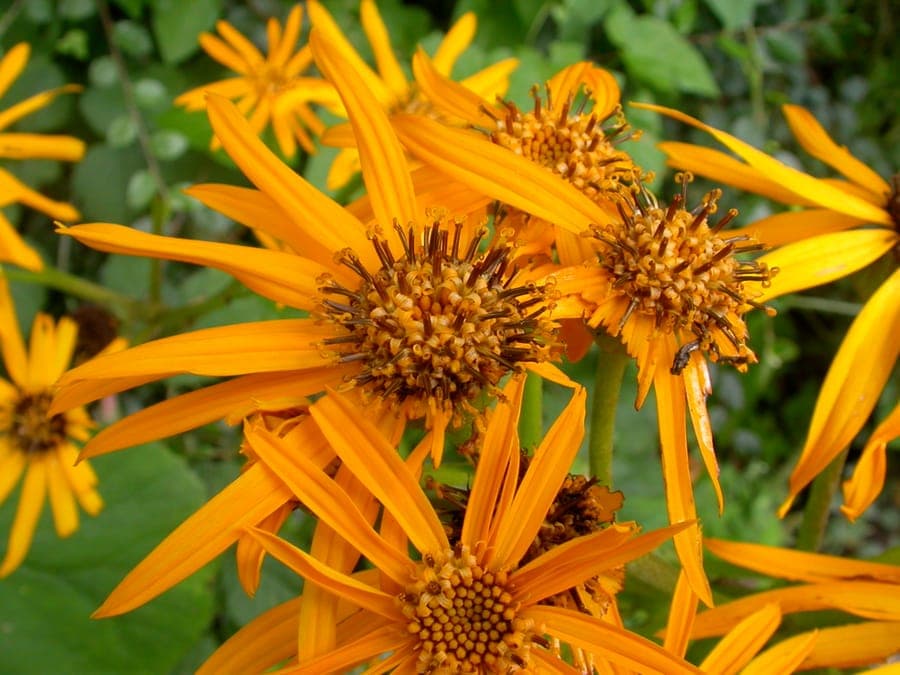
Pieter Pelser / CC BY 3.0, via Wikimedia Commons
Ligularia (Ligularia dentata): complete growing guide
Ligularia dentata
¿Quieres ver Ligularia (Ligularia dentata): complete growing guide en tu jardín?
1 minuto, sin tarjeta de crédito
Overview
Ligularia (Ligularia dentata) is a striking herbaceous perennial from the daisy family (Asteraceae), native to Himalayan mountain regions and East Asia. This hardy plant is prized for its large, corrugated leaves that bring architectural interest to shaded gardens.
Ligularia suits gardeners seeking bold, dramatic plants for semi-shaded locations. The plant forms dense leaf clumps and bears golden flower spikes from August through October.
With its moisture-loving nature, ligularia excels in damp garden corners, waterside settings, and other moist microclimates in European gardens.
Appearance and Bloom
Ligularia dentata reaches 100-150 cm height with sturdy, grooved stems. Leaves are distinctive: large (to 40 cm wide), heart-shaped, with coarse teeth around margins. Dark green leaves with lighter veins create interesting texture.
From July-September, golden flower spikes emerge with small flowers in dense clusters (2-5 cm diameter). Each flower head contains dozens of florets. Flowers are fragrant: honey-scented, attracting bees.
Bloom period: July through October in temperate climates, depending on sowing date and region.
Ideal Location
Ligularia thrives in part-shade to full shade: 2-4 hours direct sunlight, or dappled light. Full sun causes leaf scorch in warm climates.
The plant suits:
- Shade borders under trees
- Waterside settings and pond margins (thrives in moist soil)
- Woodland gardens and "wild" garden styles
- Mixed borders as a structural plant
Ligularia brings height and depth to dark garden corners.
Soil
Ligularia requires moisture-rich, well-structured soil. Dry sand is unsuitable.
Key soil requirements:
- Moisture retention: Critical. Soil should never dry completely. 50-70% moisture optimal.
- Fertility: Moderate to high. A 3-4 kg compost application per m² in spring is beneficial. Organic matter aids moisture retention.
- Drainage: Good drainage required (waterlogging causes root rot); however soil must remain consistently moist.
- pH: Neutral to slightly acidic (6.0-7.0) is ideal.
Tip: Mulch (5-7 cm dried leaves or compost) significantly aids moisture retention during dry seasons.
Watering
Ligularia requires regular, consistent moist watering.
Watering schedule:
- Summer (June-September): Water daily or every 2 days, depending on rainfall. Soil should never dry out.
- Spring & autumn: 2-3 times weekly suffices.
- Winter: Water less, but don't let soil dry completely.
Method: Soil moisture test with finger (3-5 cm deep): water if noticeably dry. Drip irrigation is ideal.
Tip: In warm, dry seasons, give extra attention to watering; wilting is the biggest stress factor.
Diseño gratis
¿Quieres ver Ligularia (Ligularia dentata): complete growing guide en tu jardín? Crea un diseño gratis ahora.
Pruning and Maintenance
Ligularia requires minimal maintenance:
- Deadheading: Remove spent flowers to stimulate further blooming and prevent self-seeding.
- Cutting back: Not needed during growth. Cut stems back after blooming in October/November.
- Leaf cleaning: Large leaves collect dust; gently wipe with damp cloth helps.
- Pests: Very rare. Occasionally slugs damage young foliage; beer traps help.
- Disease: Can occur with poor air circulation; proper spacing essential.
Maintenance Calendar
March-April: Soil prep, sow (start indoors) or plant seedlings. May-June: Regular watering, support young plants with stakes. July-September: Peak bloom season, deadheading stimulates further flowers, watering critical. October-November: Harvest seed (optional), cut back after blooming. December-February: Winter dormancy; minimal care.
Winter Hardiness
Ligularia dentata is winter hardy to at least -15°C in temperate climates. The plant survives cold winters in the Netherlands, Belgium, and France without protection.
Overwintering: Stems and leaves disappear in winter; rhizomes remain underground. Mulch (7-10 cm) in October provides extra protection in very cold climates.
Seed storage: Harvest ripened seed pods in October, dry, store in paper in cool dry place. Viability 1-2 years.
Companion Planting
Ligularia benefits from polyculture:
Good companions:
- Hostas: Similar moisture needs and shade preferences.
- Astilbe, darmera: Moisture lovers with complementary bloom times.
- Brunnera, heuchera: Underplanting beneath ligularia, contrasting leaf forms.
- Ferns: Complementary textures and moisture needs.
Poor companions:
- Drought plants: Lavender, rosemary unsuitable (water competition).
- Full-sun flora: Low-growing sedums not appropriate.
Closing Remarks
Ligularia offers shade-loving gardeners a spectacular, dramatic plant with impressive foliage and long-lasting blooms. The combination of structure (large leaves) and color (golden flowers) makes it valuable in "dark corners."
Even in wet conditions (waterside, low-lying areas) ligularia thrives, where many plants struggle. Once established, ligularia persists for years.
Plan your garden layout via gardenworld.app for optimal shade placement. With consistent moisture, ligularia becomes a focal point in your shaded garden. Happy growing!
For more tips on shade plants and garden design: visit gardenworld.app and explore your growing potential.
¿Quieres ver Ligularia (Ligularia dentata): complete growing guide en tu jardín? Crea un diseño gratis ahora.
Sube una foto, elige un estilo y obtén un diseño fotorrealista con lista de plantas en menos de un minuto.
Más de 10.000 jardines diseñados
Sin tarjeta de crédito

