
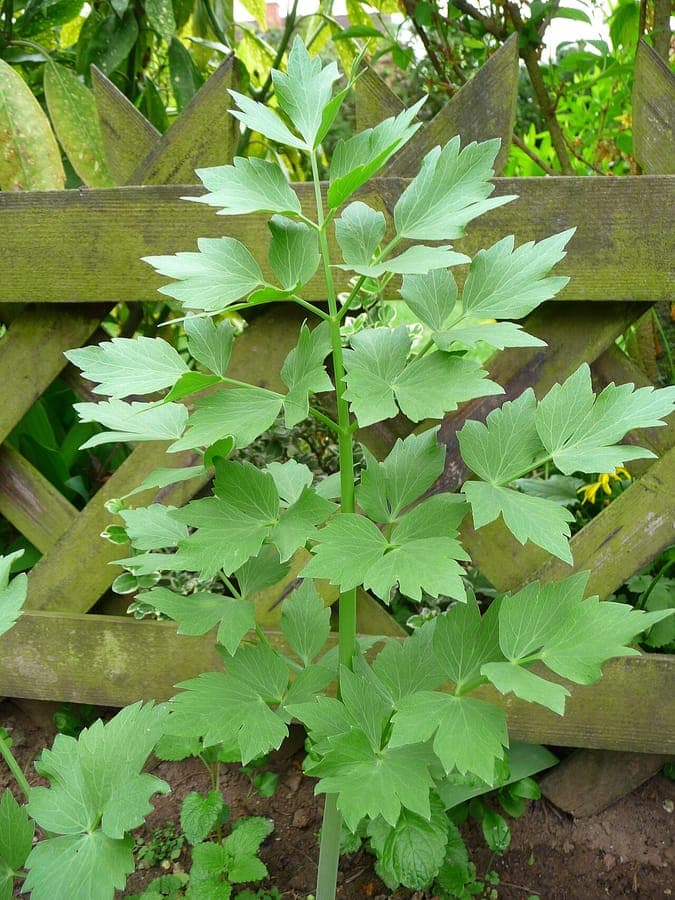
4028mdk09 / CC BY-SA 3.0, via Wikimedia Commons
Lovage: complete guide
Levisticum officinale
¿Quieres ver Lovage: complete guide en tu jardín?
1 minuto, sin tarjeta de crédito
Overview
Lovage (Levisticum officinale), sometimes called garden lovage or maggie plant, is a stately, perennial herb renowned for its robust aroma and rich heritage in traditional medicine and culinary traditions. Originating from southern Europe and the Mediterranean, this plant has graced gardens since medieval times. It reaches impressive heights of 90-150 cm and produces yellow flowers in umbels. On gardenworld.app, lovage fits perfectly as a structural plant in herb gardens or as an accent in larger plantings where height and drama are desired.
Lovage is celebrated for its refined celery-like flavor and strong medicinal properties. The entire plant - from roots to seeds - is utilized in traditional cuisines and herbal remedies. Plant it where you can easily access leaves for harvesting, but position it so its height doesn't overshadow neighboring plants.
Appearance and bloom
Lovage grows as an upright, strongly branched herb reaching 90-150 cm (3-5 feet) tall. Leaves are tri-pinnate (divided into three sections repeatedly), delicate and feathery with deep green color. The stem is hollow, light green, and smooth. The entire plant has a characteristic celery-like scent that intensifies when leaves are rubbed.
Flowers appear in July-August in yellow, umbrella-shaped umbels containing numerous small flowers. This attractive inflorescence attracts bees and other pollinators. Seeds ripen in September-October: elongated, rounded fruits with prominent ribbed structure. The entire plant is aromatic and dries well for later use.
Ideal location
Lovage thrives in full sun to light half-shade. Plant it where it receives at least 5-6 hours of direct sunlight. The plant appreciates shelter from strong winds, especially since it becomes tall and heavy. Don't position it too close to shade-needing neighbors, as lovage grows quite substantial.
On gardenworld.app, place lovage at the herb garden's edge, against north-facing walls for wind protection, or as background accent in mixed plantings. It fits perfectly in kitchen gardens and medicinal plant areas.
Soil and nutrition
Lovage is undemanding and grows in virtually any garden soil provided drainage is reasonable. Neutral to slightly acidic earth (pH 6.0-7.5) is ideal. The plant thrives in nutrient-rich soils and benefits from organic compost or animal manure added at planting. In poor soils, provide supplemental fertilization during the growing season.
Once established, lovage requires minimal extra feeding. Incorporate organic compost annually around the plant base to support vigorous growth without overdoing fertility.
Diseño gratis
¿Quieres ver Lovage: complete guide en tu jardín? Crea un diseño gratis ahora.
Watering
Water lovage regularly in its first year, especially during dry periods, keeping soil consistently moist around roots. Once well-established, the plant tolerates moderate drought and requires less supplemental watering. In normal rainfall and moisture-rich soils, active watering isn't necessary.
During very dry summers, you can provide supplemental water, especially if the plant is flowering or setting seed. After harvesting foliage, watering stimulates new leaf growth.
Pruning and maintenance
Lovage requires minimal pruning but benefits from regular harvesting. Gently pinch leaves from the tops of stems to encourage growth and maintain compact form. Remove yellow or damaged leaves. If the plant becomes overly large, you can halve it after flowering.
Remove flowers if you prefer only leaf harvest, as flowering weakens vegetative growth. Leave some flowers for seed production and medicinal applications.
Maintenance calendar
April-May: Plant new seedlings. Begin regular harvesting of young leaves.
June-July: Plant grows rapidly. Regular leaf harvesting. Monitor for pests.
August-September: Flowering and seed-setting. Harvest seed heads when mature.
October-November: Plant dies back. Harvest remaining foliage and roots. Add compost.
December-March: Plant rests underground. Prepare for next season.
Winter hardiness
Lovage is reasonably hardy in USDA zones 4-9, tolerating temperatures down to approximately -15°C (-5°F). In the Netherlands and Belgium, it functions as a perennial surviving most winters, though extreme cold and wet winters can prove problematic. In northern France and Germany, the plant may die during severe winters.
Mulch the plant with leaves in late autumn to protect roots against extreme cold. In very wet areas, you might replant annually to prevent losses.
Companion planting
Lovage pairs well with:
- Other herbs: Parsley, dill, and rhubarb form a functional herbal palette.
- Pollinators: Lovage flowers attract bees, so plant alongside other nectar sources.
- Structural plants: Reeds or small trees provide background structure.
- Evergreens: Rosemary or lavender offer foliage contrast.
On gardenworld.app, visualize a complete medicinal/culinary herb garden with lovage as a key component.
Final tips
Lovage is a fascinating, useful plant with both culinary and medicinal value. Plant it prominently where you can easily harvest leaves for teas, soups, and traditional applications. Harvest leaves just before flowering for optimal flavor. Seeds can be dried and stored for later use in infusions.
For a comprehensive medicinal herb garden design on gardenworld.app, lovage provides height, structure, and functionality. With photorealistic visualization, see exactly how the plant grows and how you can benefit from it. Design your herbal paradise now.
¿Quieres ver Lovage: complete guide en tu jardín? Crea un diseño gratis ahora.
Sube una foto, elige un estilo y obtén un diseño fotorrealista con lista de plantas en menos de un minuto.
Más de 10.000 jardines diseñados
Sin tarjeta de crédito


Plantas similares
Garden parsley: complete guide
Petroselinum crispum
How to grow garden parsley: sunlight, soil pH, watering and care tips. Perfect for UK and US gardeners in zones 6-9.
Angelica archangelica: complete guide
Angelica archangelica
Discover the imposing garden angelica: a stately medicinal plant with stunning biennial architecture. Growing guide with location, soil and harvesting.
Chervil: complete guide
Anthriscus cerefolium
Learn how to grow chervil (Anthriscus cerefolium) successfully in your garden. Tips on light, soil, watering, and companion planting.