
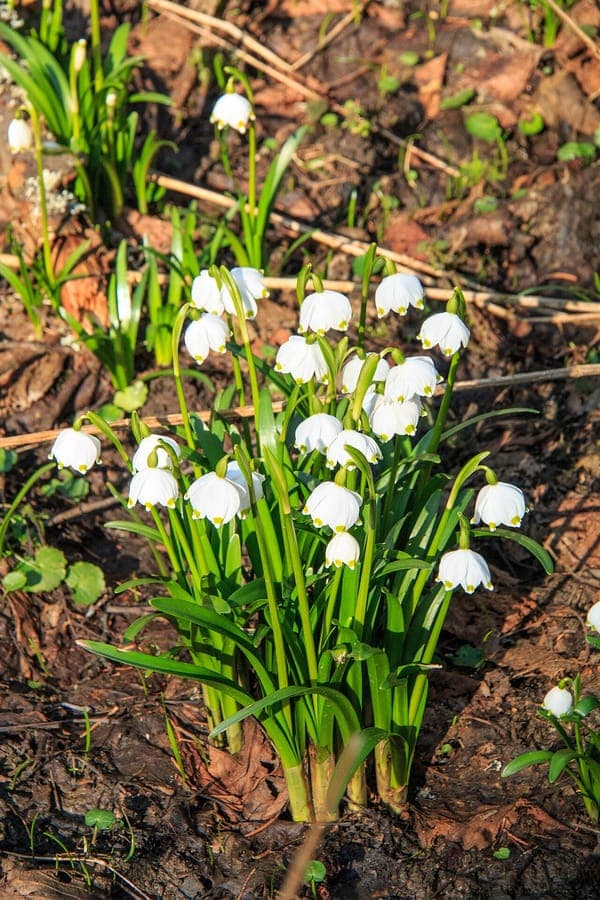
Petr1888 / CC BY-SA 4.0, via Wikimedia Commons
Spring snowflake: complete guide
Leucojum vernum
¿Quieres ver Spring snowflake: complete guide en tu jardín?
1 minuto, sin tarjeta de crédito
Overview
The Spring snowflake (Leucojum vernum) is among the very earliest spring bloomers, appearing when the garden still slumbers in winter. This refined, early-flowering bulb resembles snowdrops but distinguishes itself through larger stature, multiple blooms per bulb, and distinct elegance. Native to the mountain regions of Central Europe - from the Alps to Poland - it naturally grows in moist woodlands and meadows. On gardenworld.app, it fits perfectly in early-season designs incorporating snowmelt zones and forest-floor aesthetics.
The Spring snowflake's bloom marks the genuine season's beginning. While snowdrops appear fragile, the Spring snowflake radiates confident beauty. Plant it in bold masses beneath woodlands, in valley landscapes, or among moisture-loving groundcovers. A single planting location of 50-100 bulbs delivers a breathtaking natural effect.
Appearance and bloom
The Spring snowflake grows from a small bulb, reaching 15-30 cm (6-12 inches) tall. Leaves are narrow, linear, and bright green, often with a blue-green sheen. Flowers appear very early in the season, typically January through March depending on local climate. Each bulb typically produces 2-3 flower stems, each bearing 1-2 drooping blooms.
Every flower is white with green tips on the floral segments - the characteristic 'pepper-and-salt' appearance that distinguishes Spring snowflake from relatives. The flowers hang elegantly and convey refined beauty. Foliage remains green long after blooming, making the plant ideal for positioning under deciduous trees.
Ideal location
The Spring snowflake grows best in moisture-rich, humus-laden sites in full sun to half-shade. Plant it preferentially beneath woodlands or in snowmelt zones where water collects. It tolerates half-shade well, especially from deciduous trees still leafless during blooming season.
On gardenworld.app, use the Spring snowflake as early-season accentuation in moist garden corners or natural valley situations. It pairs beautifully along pathways or as foreground planting before later-blooming groundcovers.
Soil and nutrition
The Spring snowflake is undemanding but loves humus-rich, moisture-retentive soil. Neutral to slightly acidic earth (pH 6.0-7.0) is ideal. Heavy clay is well-tolerated provided drainage is adequate. The plant benefits from added organic matter at planting.
Fertilization is usually unnecessary. Incorporate organic compost at planting time. In poor sandy soils, add slightly more compost. Otherwise, the Spring snowflake requires no extra feeding.
Diseño gratis
¿Quieres ver Spring snowflake: complete guide en tu jardín? Crea un diseño gratis ahora.
Watering
Once established, the Spring snowflake requires minimal supplemental water thanks to its preference for moisture-rich soils. Ensure it doesn't dry out during the growth and flowering season (January-March). After blooming, it tolerates normal garden water management.
During exceptionally dry winters, you may water cautiously, but this is usually unnecessary. The plant tolerates winter moisture well and requires no special water treatment.
Pruning and maintenance
The Spring snowflake requires no pruning. Allow foliage to naturally die back after flowering - this strengthens the bulb. Remove dead leaves only if they become damaged.
Don't remove seed pods: Spring snowflake often self-seeds subtly and naturally in moist gardens, creating a beautiful generational effect. This is actually one of this plant's loveliest attributes.
Maintenance calendar
October-November: Plant bulbs in humus-rich soil. Water thoroughly.
December-February: Flowering period. Enjoy! Monitor for bulbs heaving from soil in hard freezes.
March-April: Foliage gradually disappears. Flowering ends. No action needed.
May-September: Summer dormancy. Normal moisture management. Bulb strengthening.
September-October: Prepare for next season. Check for adequate drainage.
Winter hardiness
The Spring snowflake is extremely winter-hardy, thriving in USDA zones 3-8. It tolerates temperatures down to -30°C (-22°F) effortlessly. Throughout the Netherlands, Belgium, France, and Germany, winter protection is completely unnecessary. Bulbs overwinter safely underground.
Newly planted bulbs can receive light mulch protection during extreme cold snaps, but established plantings are completely self-reliant.
Companion planting
The Spring snowflake pairs beautifully with:
- Other early bulbs: Snowdrops and wild crocuses create a stunning brocade of early color.
- Helleborus species: Christmas rose and Lenten rose provide structure and depth.
- Foliage structure: Ferns and small groundcovers add texture.
- Woodland understory: Corydalis and other moisture-loving shade plants form a natural moss-like tapestry.
On gardenworld.app, visualize these early-season combinations in woodland-style settings.
Final tips
The Spring snowflake is indispensable for gardens seeking early seasonal effect. Plant it in bold masses (at least 25-50 bulbs per location) and allow it to self-seed for natural abundance in subsequent years. The subtle white flowers with green tips bring refinement and the promise of renewed growth.
For a professional garden design integrating Spring snowflake into moist, woodland-valley-like settings, create a design on gardenworld.app. With photorealistic visualization, see how this plant transforms your garden from winter to spring. Design now and create your own early-season wonderland.
¿Quieres ver Spring snowflake: complete guide en tu jardín? Crea un diseño gratis ahora.
Sube una foto, elige un estilo y obtén un diseño fotorrealista con lista de plantas en menos de un minuto.
Más de 10.000 jardines diseñados
Sin tarjeta de crédito


Plantas similares
Summer snowflake: complete guide
Leucojum aestivum
Summer snowflake (Leucojum aestivum) is an elegant spring bulb with refined white flowers tipped in green. Discover planting, care, and ideal garden combinations.
Narciso: guía completa
Narcissus pseudonarcissus
Todo sobre el narciso (Narcissus pseudonarcissus): plantación, cuidado, naturalización y los mejores cultivares. Consejos prácticos para una primavera radiante.
Dogtooth-violet: complete guide
Erythronium dens-canis
How to grow Erythronium dens-canis: ideal light, soil pH, watering needs and companion plants. Perfect for woodland gardens and shady borders.