
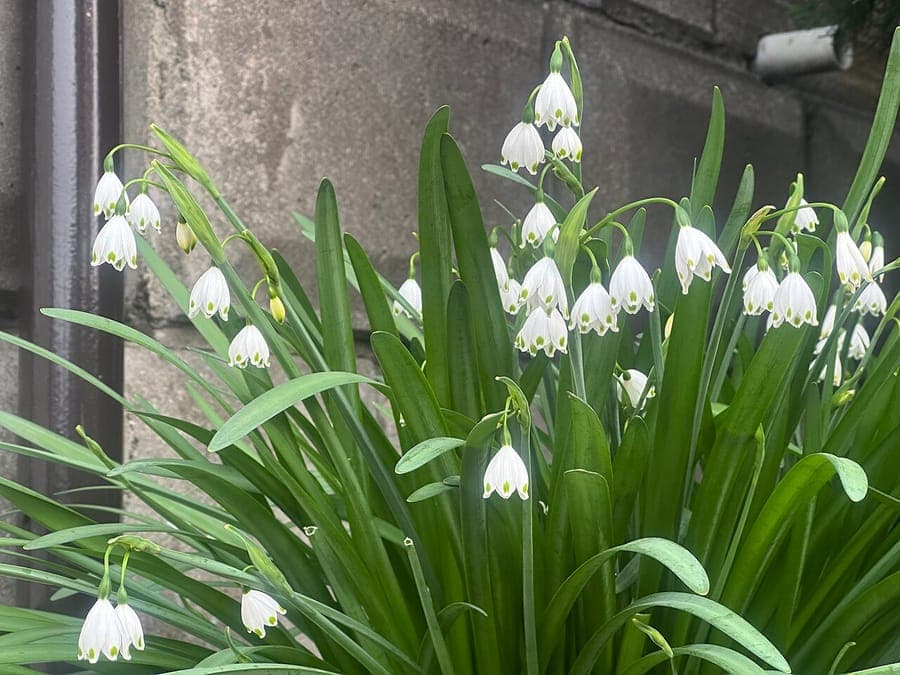
Nesnad / CC BY 4.0, via Wikimedia Commons
Summer snowflake: complete guide
Leucojum aestivum
¿Quieres ver Summer snowflake: complete guide en tu jardín?
1 minuto, sin tarjeta de crédito
Overview
Despite its paradoxical name, the Summer snowflake (Leucojum aestivum) is an elegant spring-flowering bulb from the daffodil family. This refined plant blooms in April and May with graceful white flowers bearing green tips - a subtle, elevated beauty that stands apart from showier tulips and daffodils. Native to Europe and southwestern Asia, it grows naturally in wet meadows and along watercourses, thriving in moisture-rich soils where few other bulbs venture.
The name 'aestivum' (summer) refers to when the plant produces seed, not when it flowers - a botanical nuance that distinguishes this species. On gardenworld.app, the Summer snowflake fits perfectly in gardens where you want refinement and elegance without the bombastic presence of larger spring bulbs. Combine it with scabiosa, beech hedges, and other moisture-loving groundcovers for a natural, woodland-valley aesthetic.
Appearance and bloom
The Summer snowflake grows from an underground bulb, reaching 30-60 cm (12-24 inches) tall. The leaves are elongated and green, often somewhat dull in color. Flowers appear in April-May on slender green stems in loose racemes. Each flower is small, roughly 1-1.5 cm in diameter, white with green tips - a 'pepper-and-salt' effect that is particularly elegant and refined.
This contrast between white and green distinctly sets the Summer snowflake apart from related species. The flowers hang slightly downward, making them best appreciated from below or at eye level to fully admire their delicate details. After flowering, foliage gradually disappears as the plant prepares for seed production - a natural process requiring minimal intervention.
Ideal location
The Summer snowflake thrives in moist to wet soils, where many garden plants fail. Plant it preferentially in low-lying areas, along water features, or in swales where water naturally accumulates. The plant tolerates both full sun and partial shade, though it becomes more robust in sunnier locations.
On gardenworld.app, position the Summer snowflake strategically in areas where you want to optimize water drainage. It flourishes beautifully in damp valley situations where few other bulbs succeed. Ensure a location that won't dry out excessively during warm months.
Soil and nutrition
The Summer snowflake is undemanding regarding fertility but highly moisture-loving. A moisture-retentive to wet clay soil is ideal. It thrives in neutral to slightly acidic soils (pH 6.0-7.0). Moderate waterlogging is tolerated reasonably well, provided the soil never remains permanently saturated.
Fertilization is usually unnecessary. In particularly poor soils, apply organic compost or animal manure in early spring to strengthen bulbs after flowering. Otherwise, the Summer snowflake is self-sufficient and requires no extra feeding.
Diseño gratis
¿Quieres ver Summer snowflake: complete guide en tu jardín? Crea un diseño gratis ahora.
Watering
Once established, the Summer snowflake rarely needs supplemental water thanks to its natural preference for wet habitats. In dry springs, water if moisture levels become critical, especially during growth and flowering (March-May). Ensure it doesn't dry out during this crucial period.
In normal years and moisture-rich soils, active watering isn't necessary. Indeed, preventing stagnation is sometimes more important. During summer dormancy, consistent moisture is pleasant but not strictly essential.
Pruning and maintenance
The Summer snowflake requires virtually no pruning. Allow foliage to naturally die back and disappear after flowering - this process strengthens the bulb for next season. Remove dead leaves only if they become damaged or diseased.
Seed heads can be removed to prevent self-seeding, but since the Summer snowflake rarely self-sows in most gardens, this is usually unnecessary. The plant is refreshingly low-maintenance and requires minimal annual intervention.
Maintenance calendar
January-March: Plant bulbs in moist soil. Monitor for waterlogging.
April-May: Flowering period. Enjoy the refined white blooms. Water if drought occurs.
June-July: Foliage disappears. Bulb strengthening. Optionally remove seed heads.
August-October: Summer dormancy. Normal water management. Prepare for next season.
November-December: Bulb rest. Check for overwatering in bulb beds.
Winter hardiness
The Summer snowflake is exceptionally winter-hardy, thriving in USDA zones 4-8. It tolerates temperatures down to -25°C (-13°F) without problems. Throughout the Netherlands, Belgium, France, and Germany, winter protection is unnecessary. Bulbs rest safely underground through winter without any supplemental care.
Young plantings and container-grown material can receive temporary snow or mulch protection during exceptional cold snaps, but established bulb colonies withstand the harshest winters effortlessly.
Companion planting
The Summer snowflake pairs beautifully with:
- Other moisture-loving bloomers: Marsh marigold (Caltha palustris) and kingcups create yellow contrast.
- Foliage plants: Hostas and ferns provide striking leaf-texture contrast.
- Other spring ephemerals: Daffodils and crocuses flower simultaneously and complement each other.
- Wet-soil groundcovers: Sedges and reed species create a natural, water-rich setting.
On gardenworld.app, visualize these plant combinations in a moist garden corner or valley area.
Final tips
The Summer snowflake brings refinement and elegance to moisture-rich garden areas where many plants struggle. Plant it in bold masses (minimum 15-25 bulbs) for maximum effect rather than as isolated specimens. The white flowers with green tips are subtle and deserve a prominent location.
For a professional garden design perfectly integrating Summer snowflake into moist, low-lying zones, create a design on gardenworld.app. With photorealistic visualization, see exactly how these elegant bulbs fit into your garden. Design now and create a refined, moisture-rich garden landscape.
¿Quieres ver Summer snowflake: complete guide en tu jardín? Crea un diseño gratis ahora.
Sube una foto, elige un estilo y obtén un diseño fotorrealista con lista de plantas en menos de un minuto.
Más de 10.000 jardines diseñados
Sin tarjeta de crédito


Plantas similares
Spring snowflake: complete guide
Leucojum vernum
Spring snowflake (Leucojum vernum) is among the earliest spring bloomers, bringing refined white flowers. Learn planting, care, and ideal garden combinations for early color.
Narciso: guía completa
Narcissus pseudonarcissus
Todo sobre el narciso (Narcissus pseudonarcissus): plantación, cuidado, naturalización y los mejores cultivares. Consejos prácticos para una primavera radiante.
Campanilla de invierno: guía completa
Galanthus nivalis
Descubre la campanilla de invierno, una delicada flor de invierno temprano. Esta guía cubre el cultivo, cuidado y naturalización.