
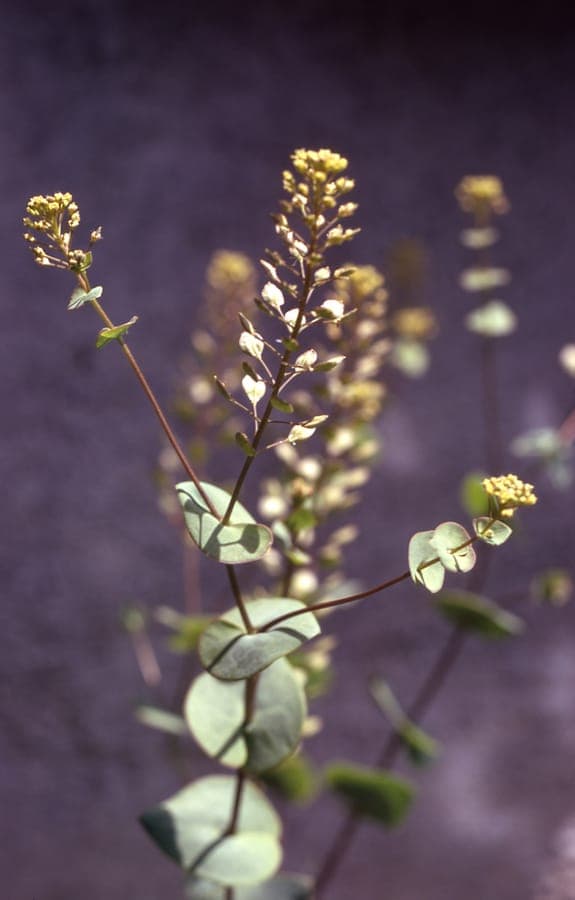
JW Stockert / Public domain, via Wikimedia Commons
Perfoliate pepperwort: complete guide
Lepidium perfoliatum
¿Quieres ver Perfoliate pepperwort: complete guide en tu jardín?
1 minuto, sin tarjeta de crédito
Overview
Perfoliate pepperwort (Lepidium perfoliatum) is a remarkable perennial from the Brassicaceae family, native to Eastern and Southern Europe through Southwestern Siberia and Pakistan. This plant is known for its unique leaf structure where the stem appears to grow through the leaf, making it highly distinctive.
Appearance and Bloom
The plant grows as a notable shrub 40-70 cm tall and 30-50 cm wide. The most distinctive feature is that the stem leaves are perfoliate - the stem appears to pierce through the middle of the leaf, hence the name "perfoliatum." From April to May, small yellow flowers appear in dense clusters, very different from other Lepidium species. These unexpected yellow blooms are elegantly subtle and attract pollinators.
Ideal Location
Perfoliate pepperwort grows best in sunny locations with at least 5-6 hours of direct sunlight. Protection from intense midday heat in very warm climates is helpful. The plant also grows in partially shaded spots, though blooming will be less prolific. Using gardenworld.app, design gardens where this characteristic plant stands out.
Soil
Well-drained soil is essential. Sandy, gravelly, or chalky soils are ideal. Heavy clay must be significantly amended. A pH of 6.5-8.0 is perfect. The plant tolerates poor, dry soils well, making it suitable for difficult locations.
Watering
Once established, perfoliate pepperwort is extremely drought-tolerant. Water sparingly, even in full summer. More water than necessary is harmful. During very dry periods, watering once every two weeks is sufficient. Avoid wet roots.
Diseño gratis
¿Quieres ver Perfoliate pepperwort: complete guide en tu jardín? Crea un diseño gratis ahora.
Pruning
Minimal pruning is needed. Remove spent flowers from May to June to prevent excessive seeding. Dead foliage can be removed in spring. The plant naturally forms an orderly shape.
Maintenance Calendar
- March: Check for winter damage, remove dead leaves
- April-May: Blooming period, remove spent flowers
- June-August: Minimal care, rarely water
- September-October: Prepare plant for winter
- November-February: Winter rest, no watering
Winter Hardiness
Perfoliate pepperwort is hardy to -15°C (USDA zone 6b), though borderline. In regions with harsher winters or very wet conditions, caution is advised. Wet winters are riskier than frost. Grit drainage around the plant in wet regions helps.
Companion Plants
Perfoliate pepperwort pairs well with:
- Silver sage (Salvia argentea): similar dry preferences
- Pink (Dianthus): compatible size
- Fine sorrel (Rumex acetosella): texture contrast
- Sea lavender (Limonium): yellow flower contrast
- White artemisia (Artemisia): interplay of yellow and silver
Avoid moisture-loving plants.
Conclusion
Perfoliate pepperwort is a unique plant for gardeners seeking something special. The yellow flowers and especially the perfoliate leaves make this plant highly distinctive. For gardens with dry locations and special interest in botanical curiosities, visit gardenworld.app to design with this characteristic plant.
Where to Buy
Perfoliate pepperwort is sometimes difficult to find, but available at specialty plant nurseries. Ask for healthy specimens with clearly visible perfoliate leaves.
¿Quieres ver Perfoliate pepperwort: complete guide en tu jardín? Crea un diseño gratis ahora.
Sube una foto, elige un estilo y obtén un diseño fotorrealista con lista de plantas en menos de un minuto.
Más de 10.000 jardines diseñados
Sin tarjeta de crédito


Plantas similares
Dittander: complete guide
Lepidium latifolium L.
Dittander is a hardy perennial with white flowers, thriving on dry sites with minimal care needed. Very valuable for birds, bees and pollinators.
Heart-pod hoary cress: complete guide
Lepidium draba
Master the care of heart-pod hoary cress with this comprehensive guide. Growing tips, maintenance schedule, and perfect companion plants.