
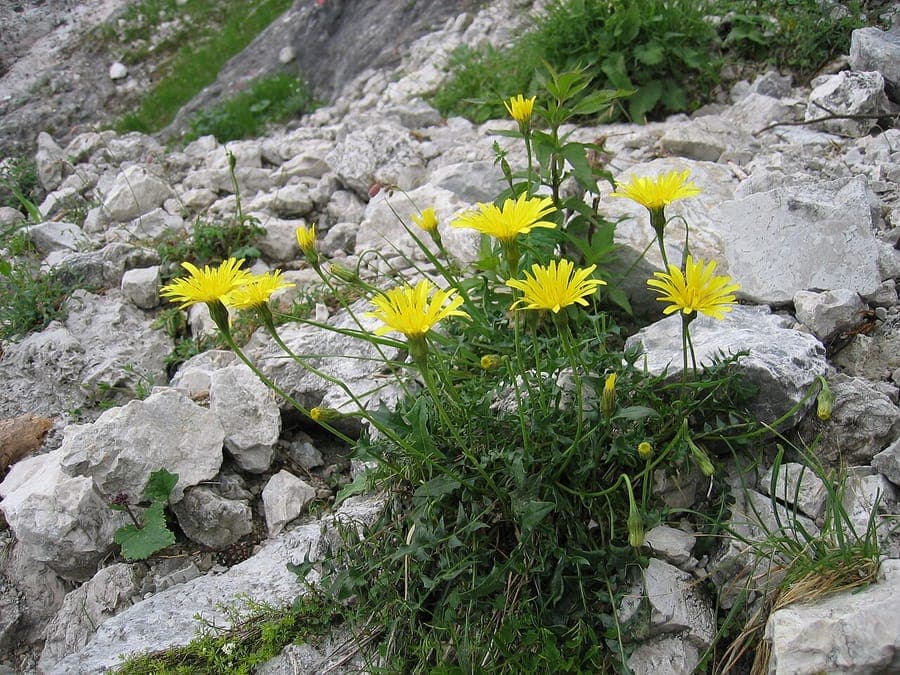
User:Tigerente / CC BY 2.5, via Wikimedia Commons
Rough Hawkbit: complete guide
Leontodon hispidus
¿Quieres ver Rough Hawkbit: complete guide en tu jardín?
1 minuto, sin tarjeta de crédito
Overview
Rough hawkbit (Leontodon hispidus), also called hairy hawkbit, is an attractive perennial plant from the Asteraceae (daisy) family. This robust European plant grows naturally in grasslands and heath areas from Europe to the Caucasus. In gardens, it is valued for its yellow flowers, long blooming period, and dependable nature. The plant is highly popular with bees and other pollinators, making it an excellent choice for wildlife-friendly and ecological gardens.
Want a garden full of pollinators and yellow summer bloomers? On gardenworld.app, you can have a garden plan designed featuring abundant blooming wildflowers like hawkbit. The site helps you create a vibrant, ecological garden.
Appearance & Bloom Cycle
Rough hawkbit forms a ground rosette with rough, hairy, somewhat toothed leaves reaching 10-20 cm long. Leaves are often covered with stiff hairs. Flowering stems rise to 30-60 cm height bearing one to several yellow flower heads measuring 2-3 cm diameter. Each flower consists of many tiny florets in a typical daisy pattern. Blooming starts in May and can continue to October, especially if spent flowers are regularly removed. After blooming, seed heads with plume-like appendages form.
Ideal Location
Rough hawkbit grows best in sunny locations. The plant tolerates light shade but blooms more prolifically in full sun. At least 5-6 hours of direct sunlight daily is desired for optimal growth and flowering. Wind is not problematic; the plant is extremely robust against harsh weather.
Soil Requirements
The plant makes few demands on soil quality. Rough hawkbit grows well on poor to moderately fertile soils, on sandy to clayey ground. A pH of 6.0 to 8.0 is acceptable. The plant is very drought-tolerant and grows well on dry slopes, rock gardens, and other challenging locations. Well-drained soil is important; waterlogged soils can cause problems.
Diseño gratis
¿Quieres ver Rough Hawkbit: complete guide en tu jardín? Crea un diseño gratis ahora.
Watering
Once established, rough hawkbit is very drought-resistant. Regular watering during the first growing season aids establishment. Afterwards, supplemental water is only needed in very dry summers. The plant requires minimal maintenance regarding moisture.
Pruning & Support
Rough hawkbit requires no support. The plant is very compact and remains upright without assistance. Regular removal of spent flowers (deadheading) encourages continued blooming and prevents unwanted self-seeding in some settings. The plant can be cut back to ground level in spring to stimulate fresh growth.
Maintenance Calendar
- March-April: Soil preparation and planting young plants
- April-May: First blooms appear, regular watering
- May-October: Continuous blooming, remove spent flowers
- September-October: Seed formation, leave some flowers for self-seeding
- October-March: Winter dormancy, minimal care
Winter Hardiness
Rough hawkbit is fully winter-hardy to USDA zone 4 (-30°C). In the Netherlands, Belgium, and Germany, no winter protection is needed. The plant returns reliably from winter better than many annual species.
Sowing & Planting
Sow seeds in spring or autumn directly into garden, or stratify in cold frame during winter. Sowing depth: very shallow, seed needs light to germinate. Spacing: 30 cm apart. Germination time: 2-3 weeks. Plants can also be propagated via root cuttings in autumn or spring.
Companion Plants
Rough hawkbit grows well with other yellow summer bloomers such as bird's-foot trefoil, rock pink, and other drought-tolerant plants. The plant attracts bees, butterflies, and other pollinators.
Seed Production & Propagation
The plant self-seeds readily under normal conditions. Seed heads can be collected and dried for propagation. The plant also spreads via root shoots.
Rough hawkbit is a valuable addition to any wildlife-friendly garden. It extends the yellow flowering period and supports pollinators throughout the season. Gardenworld.app is happy to help you design an ecological garden full of pollinator-rich flowers.
¿Quieres ver Rough Hawkbit: complete guide en tu jardín? Crea un diseño gratis ahora.
Sube una foto, elige un estilo y obtén un diseño fotorrealista con lista de plantas en menos de un minuto.
Más de 10.000 jardines diseñados
Sin tarjeta de crédito

