
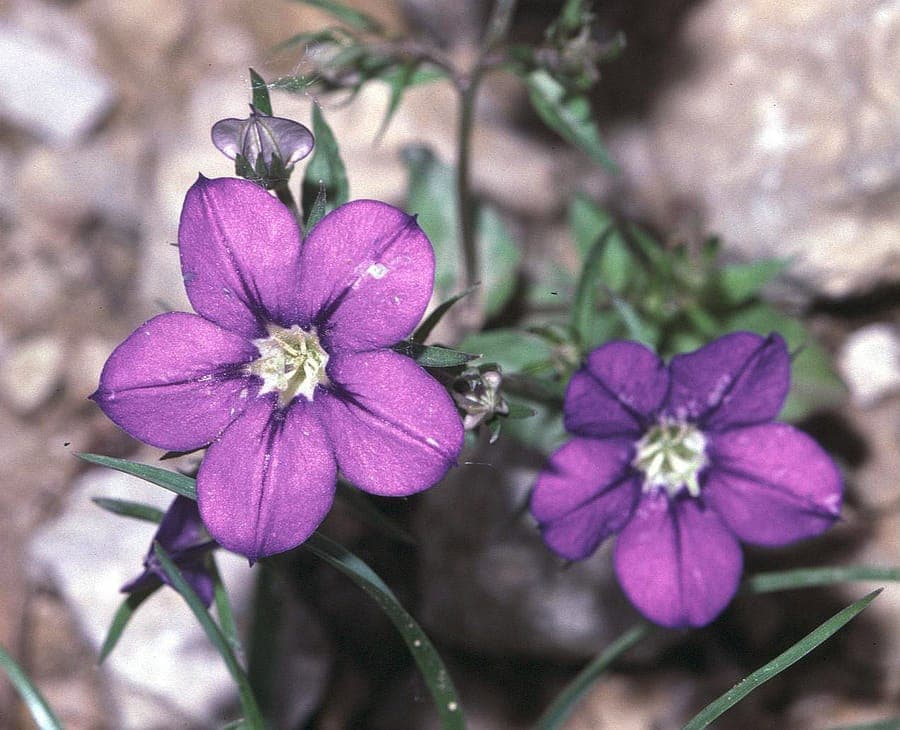
Fornax at German Wikipedia. Uploader to Commons is Körnerbrötchen. / Public domain, via Wikimedia Commons
European venus' looking glass (Legousia speculum-veneris): complete guide
Legousia speculum-veneris
¿Quieres ver European venus' looking glass (Legousia speculum-veneris): complete guide en tu jardín?
1 minuto, sin tarjeta de crédito
Overview
European venus' looking glass (Legousia speculum-veneris) is a charming annual wildflower from Europe and Asia. With small intensely purple flowers and dark violet centers, this plant is essential for natural wildflower borders. It grows quickly from seed and offers beautiful blooms in the first year.
Appearance and Bloom
European venus' looking glass grows 20-40 cm tall, sometimes lower in poor soils. The flowers are approximately 1-2 cm in diameter with intensely purple petals and often a dark violet mirror or spot in the center, hence the name. Blooming begins in May and lasts until July in a temperate summer. The stems are herbaceous and branching. Leaves are small, lance-shaped and inconspicuous.
Ideal Location
European venus' looking glass thrives best in sunny to partially shaded locations. Although it tolerates shade, plants in full sun produce more flowers and stronger growth. Plant in borders, wildflower mixes, rockeries or along grass paths. It grows well among other low annuals.
Soil
European venus' looking glass is not fussy about soil. It grows even in poor, lean soils where many other flowers struggle. Good drainage is important; it prefers not too wet conditions. It can be incorporated into wildflower seed mixes for natural borders.
Watering
Once established this plant has moderate water needs. Water regularly during dry periods in the first weeks after sowing until firmly rooted. Afterwards it prefers drier conditions. It is drought-resistant and can grow without extra watering once established.
Diseño gratis
¿Quieres ver European venus' looking glass (Legousia speculum-veneris): complete guide en tu jardín? Crea un diseño gratis ahora.
Pruning
Pruning is not necessary. Remove spent flowers and stems towards the end of bloom to prevent seed formation and keep the plant tidy. If you want self-seeding, leave some flowers to set seed.
Maintenance Calendar
May: direct sowing in ground or seed trays. June-July: regular moisture checks, thin seedlings. August-September: monitor bloom, no feeding needed. October: seed collection if desired, plant removal. November-April: winter rest, prepare next season.
Winter Hardiness
European venus' looking glass is an annual that prefers mild winters. In Northern Europe it can overwinter if sown in autumn (pre-sown), enabling spring bloom. In very cold climates sow in spring.
Companion Plants
Combine with other wildflowers and annuals:
- Poppies (Papaver rhoeas) - red flowers, contrast
- Cornflower (Centaurea cyanus) - blue flowers, classic pairing
- Arnica (Arnica montana) - yellow flowers, texture
- Annual Gentian (Gentiana) - blue, nice contrast
- Flax (Linum) - fine texture, different flowers
- Corn Cockle (Agrostemma) - pink flowers, tall forms
- Ornamental grasses (Briza) - texture and movement
Conclusion
European venus' looking glass offers natural beauty and is perfect for wildflower lovers. With minimal care it grows from seed and provides years of joy through self-seeding. Sow directly in spring or early autumn for successful wildflower borders. Discover at gardenworld.app how to integrate front yard designs with wildflowers. Visit local garden centers for wildflower seeds and expert advice on wildflower borders.
The charming purple flowers of European venus' looking glass add natural elegance to gardens that want to stand out from conventional borders.
¿Quieres ver European venus' looking glass (Legousia speculum-veneris): complete guide en tu jardín? Crea un diseño gratis ahora.
Sube una foto, elige un estilo y obtén un diseño fotorrealista con lista de plantas en menos de un minuto.
Más de 10.000 jardines diseñados
Sin tarjeta de crédito


Plantas similares
Campanula alaskana: complete guide
Campanula alaskana
Discover Campanula alaskana, the delicate alpine bellflower from Alaska. Growing tips, hardy requirements, and design ideas for rock gardens and alpine troughs.
Campanula scouleri: complete guide
Campanula scouleri
Discover Campanula scouleri, the refined Pacific bellflower. Growing tips, care requirements, and design ideas for woodland and mountain gardens.
Doublehorn calicoflower: complete guide
Downingia bicornuta
All about Downingia bicornuta - the doublehorn calicoflower: sowing, location, bloom and care for this rare annual in your garden.