
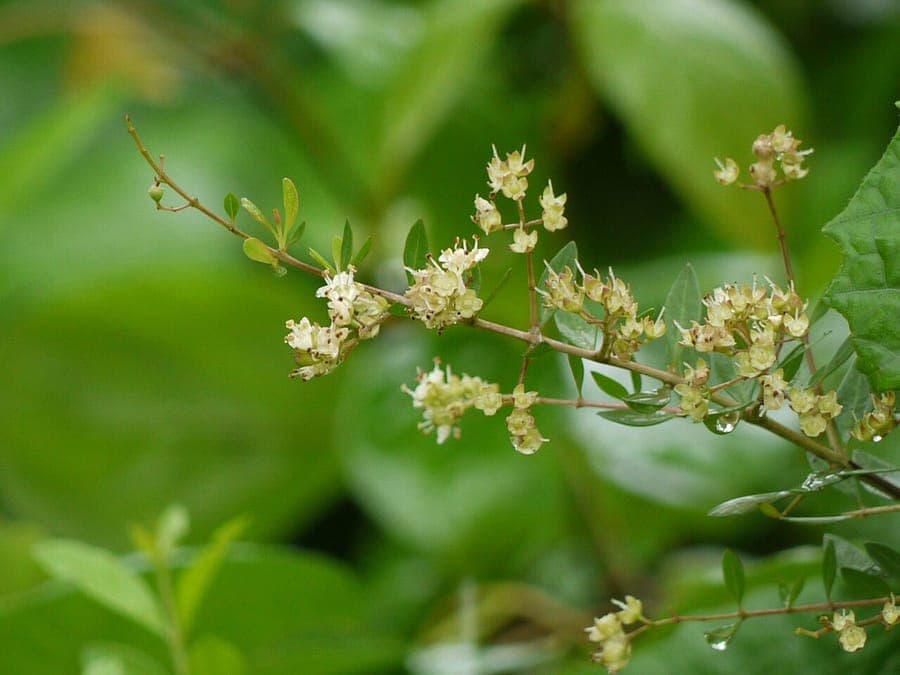
Dinesh Valke from Thane, India / CC BY-SA 2.0, via Wikimedia Commons
Lawsonia inermis: complete guide
Lawsonia inermis
¿Quieres ver Lawsonia inermis: complete guide en tu jardín?
1 minuto, sin tarjeta de crédito
Overview
Lawsonia inermis, commonly known as Henna or Henna shrub, is a valuable plant native to North Africa, the Middle East, and South Asia. Though primarily famous for the red pigment in its leaves traditionally used for body art, it is also a beautiful ornamental shrub with fragrant white flowers. The plant has a rich history spanning over a thousand years across various cultures.
Appearance and bloom
Lawsonia inermis grows as a compact to medium-sized shrub, typically 1-3 meters tall. The plant has small, elliptical, glossy green leaves arranged along the branches. Interestingly, all parts of the plant are fragrant, especially in warm weather.
Flowers appear in rich clusters at branch tips, typically white or cream-colored, though some selections may have light pink flowers. They are highly fragrant and attract bees and butterflies. Blooming occurs from May through September depending on climate.
After flowering, brown seed pods appear. The leaves contain the red pigment lawsone traditionally used for henna dyeing.
Ideal location
Give Lawsonia inermis a warm, sunny spot with at least 6 hours of direct sunlight daily. It grows best in warm, dry climates and tolerates warm walls well. In colder climates, it grows better in pots that can be brought indoors. The plant does not thrive in very shaded conditions.
Soil
Lawsonia inermis performs best in well-drained, slightly acidic to neutral soil. Sandy, gravelly soil is ideal. Add organic matter for structure, but ensure the soil drains well. The plant is susceptible to root rot in wet soil.
Diseño gratis
¿Quieres ver Lawsonia inermis: complete guide en tu jardín? Crea un diseño gratis ahora.
Watering
Once established, Lawsonia inermis is drought-tolerant. Water regularly during the growing season, especially in the first year. Reduce water during the dry season. The plant prefers dry to moderately moist conditions. Avoid waterlogging.
Pruning
Pruning helps keep the plant bushy and compact. Prune after flowering or in early spring. You can lightly prune to shape it, but avoid heavy pruning that removes much old wood.
Maintenance calendar
Spring: Prune previous year's growth. Water regularly. Summer: Watch for white flowers and fragrance. Water moderately. Autumn: Flowering period, enjoy the scent. Winter: Minimal activity, protect from frost in cold climates.
Winter hardiness
Lawsonia inermis is marginally hardy and grows best in USDA zones 9-11. In colder zones, it can grow in pots brought indoors. The plant cannot tolerate frost.
Companion planting
Lawsonia inermis pairs well with other Mediterranean plants such as rosemary, thyme, and lavender. It can also be used as a hedge in warm climates. The fragrant flowers make it a nice choice near seating areas.
Conclusion
With its beautiful white flowers, pleasant fragrance, and millennia-old usage tradition, Lawsonia inermis is a unique and valuable addition to Mediterranean gardens. For more information on traditional plants and herbs, visit gardenworld.app/en.
¿Quieres ver Lawsonia inermis: complete guide en tu jardín? Crea un diseño gratis ahora.
Sube una foto, elige un estilo y obtén un diseño fotorrealista con lista de plantas en menos de un minuto.
Sin tarjeta de crédito


Plantas similares
Winged loosestrife: complete guide
Lythrum alatum
Everything about Lythrum alatum, the winged loosestrife. Care, location, pruning and garden pairings for this native North American wetland perennial.
Dnieper loosestrife: complete guide
Lythrum borysthenicum
Everything about Lythrum borysthenicum, the Dnieper loosestrife: location, bloom season, care in pond margins and bog gardens. Full growing guide included.
Grand redstem: complete guide
Ammannia robusta
Everything about Ammannia robusta: pond margins, bog gardens, soil, care and propagation. Practical advice for water garden enthusiasts in temperate climates.