
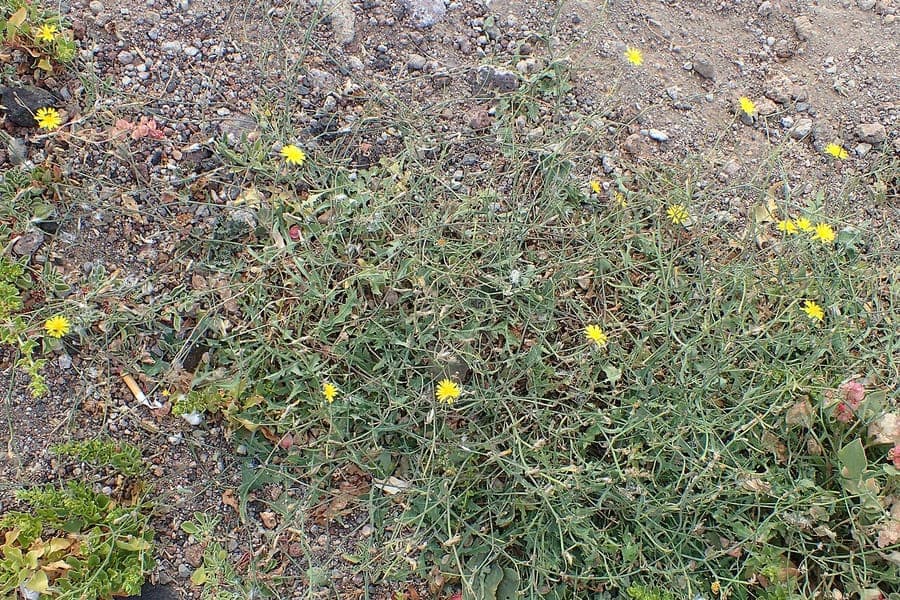
Krzysztof Ziarnek, Kenraiz / CC BY-SA 4.0, via Wikimedia Commons
Launaea (Launaea nudicaulis): complete growing guide
Launaea nudicaulis
¿Quieres ver Launaea (Launaea nudicaulis): complete growing guide en tu jardín?
1 minuto, sin tarjeta de crédito
Overview
Launaea (Launaea nudicaulis) is a fascinating wild salad crop from the daisy family (Asteraceae), native to North Africa and the Middle East. This plant is renowned for its excellent drought tolerance and nutritional value. In its native regions, launaea is cultivated as a vegetable and eaten as part of traditional dishes.
For gardeners interested in wild plants, exotic vegetables, or water conservation, launaea offers an exciting growing option. The plant produces nutritious, slightly bitter leaves suitable for salads and light cooking.
Appearance and Bloom
Launaea nudicaulis is a compact plant reaching 20-40 cm in height, usually with nearly naked stems (hence "nudicaulis"). Leaves are highly variable: from almost completely absent to wax-like smooth with grayish coating. This blue-green color is characteristic and aids moisture retention in dry climates.
The plant forms a dense leaf rosette near ground level when young, later developing more stems. Flowers are small, yellow, in heads of 1-1.5 cm. These appear from May to October in temperate climates.
Flower formation is less showy than vegetative leaf growth; however, flowers are important for seed production.
Ideal Location
Launaea thrives in full sun to part shade, ideally receiving 4-6 hours of direct sunlight. In very warm climates (southern Mediterranean), light afternoon shade helps prevent stress in extremes.
Launaea is excellent for dry beds, rock gardens, containers, and xeriscapes. It also works well in mixed borders as a "filler" plant due to its compact form.
With its very low water requirements, launaea is ideal for water-scarce regions.
Soil
Launaea is extremely undemanding and grows in virtually any soil type, including poor, sandy, and rocky soil. This makes it ideal for marginal garden spaces.
Key soil requirements:
- Fertility: Low demands. Minimal compost needed (1-2 kg per m² suffices).
- Drainage: Critical. Waterlogging causes death. Sandy, well-draining soil is ideal.
- pH: Highly tolerant (5.5-8.0).
- Container soil: Cactus soil or sandy potting mix works excellently.
Tip: Launaea actually prefers slightly poor soil; excessive feeding can hinder growth.
Diseño gratis
¿Quieres ver Launaea (Launaea nudicaulis): complete growing guide en tu jardín? Crea un diseño gratis ahora.
Watering
Launaea is extremely drought tolerant and requires minimal water. This makes it a perfect choice for water-conserving gardens.
Watering schedule:
- Summer: Water once weekly, or even less in regions with summer rains.
- Spring & autumn: 2-3 times monthly suffices.
- Winter: Virtually no water needed (only in very dry periods).
- Container: 1-2 times weekly, but dry substrate tolerates better than wet.
Method: Minimal watering to encourage deep rooting. Water containers very cautiously.
Tip: Launaea can survive months without water thanks to deep roots. Overwatering is a much greater risk than underwatering.
Pruning and Maintenance
Launaea requires minimal maintenance:
- Weeding: Not needed; plant dominates in poor soil.
- Thinning: Not needed; plant forms no dense seedlings.
- Leaf harvesting: Gently pinch outer leaves during growth period. Handle carefully - leaves are brittle.
- Pests: Extremely rare. Thanks to deep roots, plant escapes most stressors.
- Disease: Extremely rare due to dry growing conditions.
Maintenance Calendar
April-May: Sow (direct in ground or start in pots). June-July: Sporadic watering, first leaf harvests possible. August-September: Continued growth in warmer climates. October-November: Leaf harvest, seed formation. December-March: Dormancy in temperate climates; continued growth in warm regions.
Winter Hardiness
Launaea nudicaulis is not winter hardy in temperate climates. The plant dies at -3 to -5°C. In subtropical/Mediterranean climates, the plant may survive (with protection) for some months.
Growing season: April-October in temperate climates.
Seed storage: Harvest in October, dry, store in paper in dry place. Viability 2-3 years.
Companion Planting
Launaea thrives in xeriscapes with other drought-loving plants:
Good companions:
- Rosemary, lavender, sage: Same drought tolerance.
- Sedum, aloe: Complementary growth patterns.
- Other salad plants: Endive, chicory preferably without water competition.
Poor companions:
- Water lovers: Hostas, astilbe, impatiens unsuitable.
Closing Remarks
Launaea offers experimentally-minded gardeners a chance to try wild, exotic vegetables. Its extreme drought tolerance makes it especially valuable in an era of water scarcity and climate change.
Although less known than lettuce or chicory, launaea has the same nutritional value and interesting bitter flavor. Once tasted, many users become fascinated.
Plan your garden layout via gardenworld.app, and experiment with launaea in the dry corners of your garden. With minimal care, this plant can persist for years. Happy growing!
For more tips on exotic vegetables and water-wise gardens: visit gardenworld.app and explore your growing potential.
¿Quieres ver Launaea (Launaea nudicaulis): complete growing guide en tu jardín? Crea un diseño gratis ahora.
Sube una foto, elige un estilo y obtén un diseño fotorrealista con lista de plantas en menos de un minuto.
Más de 10.000 jardines diseñados
Sin tarjeta de crédito


Plantas similares
Lettuce (Lactuca sativa): complete growing guide
Lactuca sativa
Learn how to grow fresh lettuce at home with this comprehensive guide. Tips for continuous harvesting, ideal growing conditions, and popular varieties for spring to fall production.
Belgium endive: complete guide
Cichorium intybus
Everything you need to know about growing Belgium endive: light, soil, watering, pruning and seasonal care. Ideal for cottage and wildlife gardens.