
Leif Stridvall / CC BY-SA 2.5, via Wikimedia Commons
Yellow Vetchling: complete guide
Lathyrus aphaca
¿Quieres ver Yellow Vetchling: complete guide en tu jardín?
1 minuto, sin tarjeta de crédito
Overview
The Yellow Vetchling, botanically known as Lathyrus aphaca, is an elegant climbing plant originating from the Mediterranean region and extending to Central Asia. This annual legume belongs to the Fabaceae family and displays the characteristic stalked leaves and yellow flowers typical of the Lathyrus genus. The plant is less commonly grown in European gardens than its better-known relatives, but certainly deserves attention for its elegant growth and attractive color.
It is a plant that perfectly adapts to warmer periods and is drought-tolerant. On gardenworld.app, you can discover how to integrate this Mediterranean beauty into your garden and bring a touch of Mediterranean summer to your front yard.
Appearance & Blooming
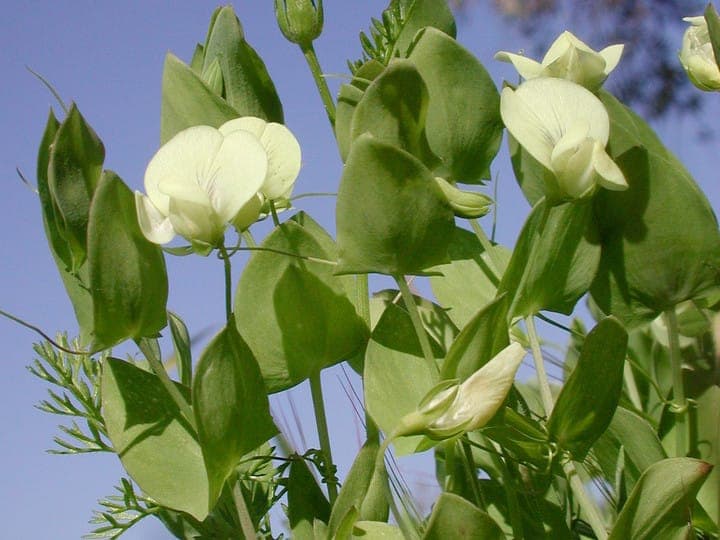
The Lathyrus aphaca grows as a delicate climber to about 30-60 cm in height. The plant features characteristic small, yellow flowers that appear in pairs along the stems. Most striking about this plant are the broad, wing-like leaf stalks that are actually transformed leaves. The true leaflets are minimal and largely reduced to tendrils. The blooming period extends from May to July, with pods containing small, round seeds.
Ideal Location
This plant thrives best in full sun with well-drained, light soil. It does not demand much in terms of soil fertility. The plant loves to climb along supports, screens or other structures where it can grow upward. The Mediterranean origin means it loves warmth and plenty of light. A south-facing balcony or trellis is ideal.
Soil
Yellow Vetchling grows best in well-draining, sandy to light clay soil with moderate fertility. The plant tolerates calcareous soils well, which is typical for Mediterranean plants. Preference for moderately fertile soil; too much nitrogen results in lots of foliage but fewer flowers. pH 6.0-7.5 is ideal.
Diseño gratis
¿Quieres ver Yellow Vetchling: complete guide en tu jardín? Crea un diseño gratis ahora.
Watering
Because it is a drought-tolerant plant, you don't need to water much. Regular watering during the growing period (May-July) ensures better blooming. However, ensure well-draining soil to prevent root rot. Once established, the plant can thrive without extra water, especially during natural rainfall periods.
Maintenance
This is a very low-maintenance plant. Regularly remove faded flowers to extend blooming. If the plant grows too vigorously, you can pinch it back. The plant does not need pruning, but you can remove unnecessary stems for better shape.
Maintenance Calendar
April: Sow or plant May-July: Blooming period; water regularly July-August: Seed formation; reduce watering September: End of growing season
Winter Hardiness
The Lathyrus aphaca is only annual and not winter-hardy. In temperate climates (USDA zones 5-8), you can only grow this plant seasonally. In warmer regions (zone 9+), the plant may possibly overwinter, but this is not the normal use.
Companion Plants
This plant fits well in a Mediterranean combination next to other heat-lovers such as lavender (Lavandula), Spanish iris (Iris xiphium), white mallow (Malva sylvestris), and other Southern European plants. On gardenworld.app, you can further customize this for your specific garden.
Closing
Yellow Vetchling brings subtle Mediterranean elegance to your garden. Although only annual, this plant certainly deserves a place in your summer planting. With minimal care and good drainage, you can bring this delicate climber to full bloom. Discover on gardenworld.app how to incorporate this plant into your garden design.
¿Quieres ver Yellow Vetchling: complete guide en tu jardín? Crea un diseño gratis ahora.
Sube una foto, elige un estilo y obtén un diseño fotorrealista con lista de plantas en menos de un minuto.
Más de 10.000 jardines diseñados
Sin tarjeta de crédito


Plantas similares
Tall Silky Lupine: complete guide
Lupinus elatus
Tall silky lupine is a fast-growing Californian perennial with silvery foliage and blue-purple flower spikes, ideal for a prairie-style garden.
Garfield Lupine: complete guide
Lupinus garfieldensis
The Garfield lupine is a rare, fast-growing American perennial for alkaline, dry grassland gardens, with striking blue flower spikes.
Lupinus elegans: complete guide
Lupinus elegans
Lupinus elegans, the elegant lupine, is a spectacular blooming plant from Mexico with blue flower spikes. Care, cultivation and garden use.