
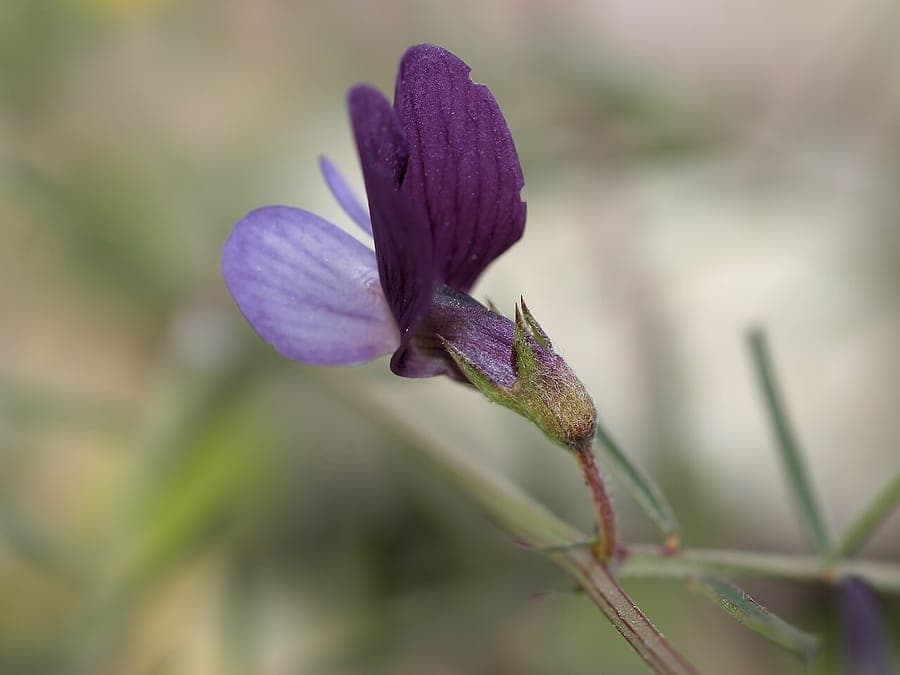
Hans Hillewaert / CC BY-SA 3.0, via Wikimedia Commons
Angular pea: complete guide
Lathyrus angulatus
¿Quieres ver Angular pea: complete guide en tu jardín?
1 minuto, sin tarjeta de crédito
Overview
Angular pea, scientifically known as Lathyrus angulatus, is an elegant annual or biennial climbing or sprawling plant native to the Mediterranean region. This member of the Fabaceae family (legumes) is a beautiful plant especially renowned for its vibrant purple flowers and interesting seed pod shapes.
Lathyrus angulatus grows naturally in Mediterranean countries including Spain, France, Italy, Morocco, and Algeria. The plant thrives on rocky slopes and dry, sunny locations. It has also been introduced to the west coast of North America where it has successfully established itself.
The name "angulatus" refers to the characteristic angular shape of the seed pods. This distinguishes this species from many other Lathyrus species with rounder pods.
Appearance and Bloom
Angular pea is a slender, trailing plant typically reaching 30 to 60 centimeters in height when supported. The plant grows as a soft, herbaceous plant without woody stems. The stems are thin and elegant, often lightly hairy.
The leaves are compound, with small leaflets and characteristic tendrils at the tips that help the plant cling to support. The leaf color ranges from bright green to greenish-gray.
The flowers are this plant's greatest attraction. They appear in numerous, loosely grouped clusters along the plant from May to July. The flowers are predominantly purple or magenta in color, sometimes with subtle white or pink variations. The flower form follows the classic legume pattern, with the upper petal (banner) particularly prominent.
After blooming, characteristic seed pods develop. These are distinctly angular or edged, which distinguishes this species. Ripe pods split open to release seeds.
Ideal Location
Angular pea requires at least 6-8 hours of direct sunlight daily. Full sun produces the best flowering. In partial shade, the plant will grow but flower less profusely.
The plant prefers warm, sheltered locations. Planting against south or west-facing walls or screens is ideal in the Netherlands and Belgium. This protects against cold winds and helps keep the plant warm.
Angular pea is not extremely winter-hardy. In warm climates (zones 8-10) it can persist for years, but in most Dutch gardens it is replanted annually.
Soil
Angular pea prefers well-draining, moderately fertile soils. A slightly acidic to neutral pH (6.0-7.0) is optimal. The plant can tolerate fairly dry conditions and prefers light soils with some sand.
Soil preparation is important. Work organic matter into the soil for better moisture retention without waterlogging. In heavy clay soils, adding coarse sand significantly improves drainage.
The plant does not prefer overly fertile soils, as this leads to excessive foliage and reduced flowering. Moderate fertility is better than nutrient excess.
Diseño gratis
¿Quieres ver Angular pea: complete guide en tu jardín? Crea un diseño gratis ahora.
Watering
Young plants require regular watering until they are well-established. This typically takes 3-4 weeks after planting. Thereafter, angular pea is fairly drought-tolerant.
Although drought-tolerant, the plant flowers better with regular water during growth and blooming periods. Watering once weekly in normal weather is appropriate. In extremely hot periods, more water may be needed.
Ensure moist but not waterlogged soil. Waterlogging, especially in autumn and winter, can lead to rot. Good drainage is crucial.
Pruning and Support
Angular pea grows as a trailing plant and needs support structure for optimal presentation. Thin twigs, string, or fine mesh provides good support.
Deadheading (removing spent flowers) encourages further bloom. This can be done by pinching off spent flower clusters.
At season's end, when the plant declines, it can be completely removed. Seed can be collected for next year, or relied upon for self-seeding.
Maintenance Calendar
March-April: Sow indoors or directly in soil. Prepare location.
May-June: Plant young plants outdoors. Add support structures. Begin watering schedule.
July-August: Peak flowering period. Deadheading encourages more bloom. Continue watering.
September-October: Flowering declines. Seed can be collected. Watering can be reduced.
November-December: Plant dead or declining significantly. Remove at season's end.
January-February: Preparation for next sowing. Store seed in cool, dry conditions.
Winter Care
Angular pea is not winter-hardy in cold climates. In the Netherlands and Belgium, it typically only survives mild winters. Mulch protection can help winter survival in warm years.
In subtropical or warm temperate climates, the plant may persist for multiple years. In colder regions, it is usually grown as an annual.
Seed saving is the best way to maintain this plant year to year. Seed remains viable for years under cool, dry conditions.
Companion Plants
Angular pea combines well with other Mediterranean and drought-tolerant plants. Lavender (Lavandula), Sage (Salvia), and Catmint (Nepeta) form beautiful combinations.
Taller growing plants like Sedum or Coreopsis provide background structure. Yellow or orange flowers contrast nicely with angular pea's purple color.
In summer borders, with other annual climbers like Ipomoea (morning glory) or Tropaeolum (nasturtium), create creative combinations.
Closing Thoughts
Angular pea is a beautiful annual plant for gardeners seeking elegant purple flowers and Mediterranean charm. Though not winter-hardy in cold climates, it grows easily from seed and blooms abundantly.
The plant is not always readily found in garden centers, but specialized seed companies stock this species. Online European seed sources always carry it.
Want to create a Mediterranean garden atmosphere? Visit gardenworld.app for customized garden designs that make the most of warm, sunny gardens.
For more plant profiles, explore gardenworld.app.
¿Quieres ver Angular pea: complete guide en tu jardín? Crea un diseño gratis ahora.
Sube una foto, elige un estilo y obtén un diseño fotorrealista con lista de plantas en menos de un minuto.
Más de 10.000 jardines diseñados
Sin tarjeta de crédito


Plantas similares
Tall Silky Lupine: complete guide
Lupinus elatus
Tall silky lupine is a fast-growing Californian perennial with silvery foliage and blue-purple flower spikes, ideal for a prairie-style garden.
Garfield Lupine: complete guide
Lupinus garfieldensis
The Garfield lupine is a rare, fast-growing American perennial for alkaline, dry grassland gardens, with striking blue flower spikes.
Lupinus elegans: complete guide
Lupinus elegans
Lupinus elegans, the elegant lupine, is a spectacular blooming plant from Mexico with blue flower spikes. Care, cultivation and garden use.