
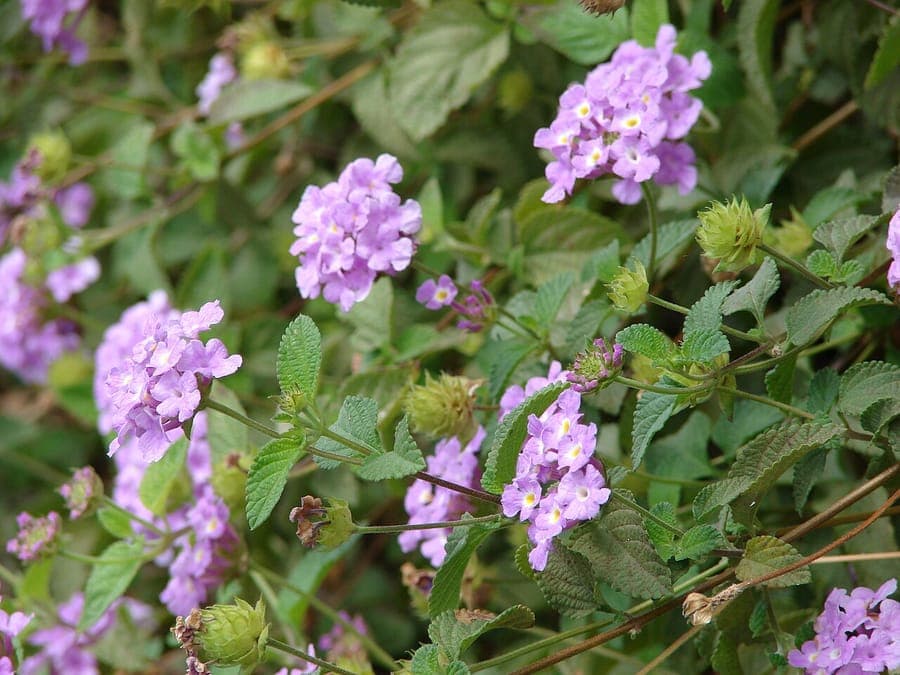
Forest & Kim Starr / CC BY 3.0, via Wikimedia Commons
Lantana (Lantana montevidensis): complete growing guide
Lantana montevidensis
¿Quieres ver Lantana (Lantana montevidensis): complete growing guide en tu jardín?
1 minuto, sin tarjeta de crédito
Overview
Lantana (Lantana montevidensis) is a striking flowering plant from the verbena family (Verbenaceae), native to South America. In temperate climates, this tender perennial is grown as an annual or seasonal plant, but thrives as a compact shrub in warmer regions. Lantana is prized for its prolific yellow to orange flowers that bloom continuously from summer through fall.
The plant is extremely popular with flower enthusiasts, butterfly garden experts, and gardeners seeking maximum color impact. With minimal maintenance and tolerance for diverse soils, lantana suits beginners and experienced growers alike.
Appearance and Bloom
Lantana montevidensis forms a compact, spreading plant reaching 30-60 cm in height, with flexible, semi-trailing stems. Small, rough-surfaced leaves are dark green with fragrant aroma when touched.
Flowers emerge in tight clusters (flower heads) about 1-2 cm diameter, containing dozens of tiny tubular blooms packed together. Color is typically yellow with orange or red tinges. Remarkably, flowers change color as they age - yellow transitions to orange, then red, creating a multicolored effect on the same cluster.
Bloom period: June through October (or until first frost). In warm regions, blooming extends further. The plant flowers prolifically without deadheading.
Ideal Location
Lantana thrives in full sun, requiring minimum 6 hours of direct sunlight daily. More sun equals more flowers. In warm climates (southern France, southern Italy), light afternoon shade may prevent flower scorch.
Lantana is excellent for containers, hanging baskets, beds, and borders. Its trailing growth habit makes it perfect for hanging baskets and raised walls. Lantana also excels as a balcony plant due to its compact form.
Soil
Lantana is undemanding and grows in most soil types, provided they drain well. Heavy clay requires some amendment.
Key soil requirements:
- Fertility: Moderate. No intensive feeding required. One compost application in spring usually suffices.
- Drainage: Critical. Waterlogging causes root rot. Sandy or loamy soil with sand admixture (20-30%) is ideal.
- pH: Tolerates diverse pH (5.5-7.5).
- Container soil: Mix universal potting soil with sand (20-30% by volume) for best results.
Tip: For containers, use well-draining mix; lantana prefers slightly drier conditions.
Watering
Lantana is relatively drought tolerant thanks to its compact root system. Regular but moderate water supply is needed.
Watering schedule:
- Summer (June-September): Water 1-2 times weekly. In exceptionally hot periods (>30°C), daily watering may be needed.
- Spring & autumn: 2-3 times weekly suffices.
- Container plants: Check daily; dry substrate hinders growth. In heat, daily water may be necessary.
Method: Finger test (2 cm deep): water only if dry. Underwatering better than overwatering.
Tip: Mulch around plant base (5 cm) helps moisture retention in extreme heat.
Diseño gratis
¿Quieres ver Lantana (Lantana montevidensis): complete growing guide en tu jardín? Crea un diseño gratis ahora.
Pruning and Maintenance
Lantana requires less maintenance than many flowers:
- Deadheading: Not strictly necessary; plant flowers continuously. Removing spent blooms stimulates extra production.
- Shaping: No vigorous pruning required. After frost or seasonally, cut back to 30 cm for compactness.
- Pests: Generally robust. Whitefly may occur in dry seasons; use insecticidal spray or beneficial insects if detected.
- Disease: Rare with good drainage and air circulation.
Maintenance Calendar
March-April: Start from seed indoors, or purchase seedlings. Plant after last frost. May-June: Water regularly; first bloom appears. Deadheading stimulates more flowers. July-August: Peak bloom season. Watering critical in dry periods. September-October: Continued blooming until frost. Reduce watering. Harvest seeds for next season (optional). November-February: Store seeds in dry place. Bring potted plants indoors for next season's starting material.
Winter Hardiness
Lantana montevidensis is not winter hardy. The plant dies at -2 to 0°C. In southern regions with Mediterranean climates, the plant may survive in very protected locations, but below -1°C is unlikely.
Growing season: May-October in temperate zones.
Winter preparation: Harvest seeds in October (dry seed heads), store in paper or envelope in cool place. Mother plants can be brought indoors in September for seed starting next season in bright, cool room.
Companion Planting
Lantana benefits from polyculture:
Good companions:
- Lavender, rosemary: Similar water needs; both attract bees.
- Sunflowers, zinnias: Same full-sun preferences, complementary bloom times.
- Herb combinations: Sage, oregano, other Mediterranean flora pair well.
- White and silver foliage: White leaves provide striking contrast to lantana's vibrant colors.
Poor companions:
- Shade plants: Tall hostas or astilbe under lantana won't thrive (full sun required).
- Water-loving plants: Densely planted moisture-lovers suppress lantana growth.
Closing Remarks
Lantana is a reliable summer bloomer that returns annually with minimal effort from seed or seedlings. Its intense colors and long bloom period make it a classic in European gardens.
The plant is also a blooming magnet for butterflies, bees, and beneficial insects - ideal for those wanting a vibrant, wildlife-friendly garden. For balcony gardeners, lantana in hanging baskets has become a classic due to its space-saving form.
Plan your garden layout via gardenworld.app to optimize sun exposure. With good drainage and minimal care, lantana brings summer joy. Happy growing!
For more tips on summer flowers and garden design: visit gardenworld.app and explore your growing potential.
¿Quieres ver Lantana (Lantana montevidensis): complete growing guide en tu jardín? Crea un diseño gratis ahora.
Sube una foto, elige un estilo y obtén un diseño fotorrealista con lista de plantas en menos de un minuto.
Más de 10.000 jardines diseñados
Sin tarjeta de crédito


Plantas similares
Lantana: complete guide
Lantana camara
Discover lantana, the exotic shrub with colorful flower clusters. Learn how to cultivate this tropical plant, handle overwintering, and enjoy stunning blooms all summer.
Hybrid verbena: complete guide
Verbena hybrida
Learn everything about hybrid verbena (Verbena hybrida), a colorful garden flower with a long flowering season, many color variations, and easy maintenance, perfect for borders and containers.