
Alvesgaspar / CC BY-SA 3.0, via Wikimedia Commons
Lantana: complete guide
Lantana camara
¿Quieres ver Lantana: complete guide en tu jardín?
1 minuto, sin tarjeta de crédito
Overview
Lantana (Lantana camara) is a stunning tropical shrub from Central and South America that produces spectacular, colorful flower clusters. This exotic plant has earned a place in gardens worldwide thanks to its exceptional blooming period and remarkable appeal to butterflies and bees.
Within the gardenworld.app philosophy, we regularly use lantana for summer arrangements in warm, sunny corners where intense color is desired. Though not hardy in temperate climates, it remains a wonderful choice for container cultivation and terrace design.
Appearance and Bloom
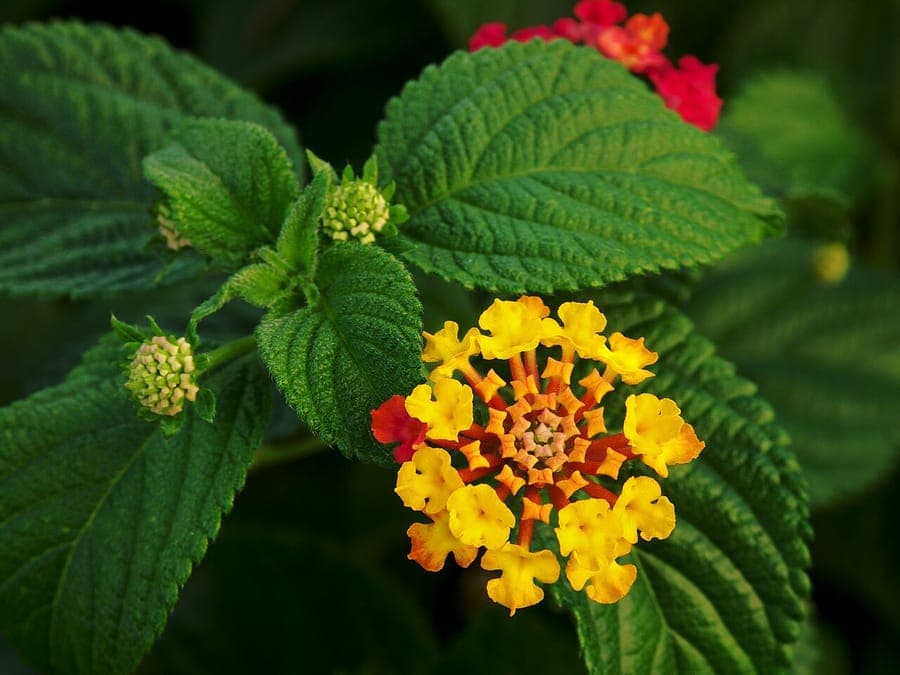
Lantana reaches heights of 1-3 m depending on cultivar and growing conditions. The foliage displays coarse growth with distinct venation. Flowers appear in characteristic, tightly clustered balls, often in combinations of yellow, orange, red, and pink. Remarkably, blooming flowers change color as they age, creating a multicolored effect.
Flowering extends from June to October in temperate climates, with more intense blooms in warm summers. Butterflies, bees, and other pollinators find lantana irresistible.
Ideal Location
Lantana performs optimally in full sun, requiring minimum 6-8 hours of direct sunlight daily. In shade, flowering is significantly reduced. Place in sunny, sheltered locations, preferably against walls that absorb and radiate heat. Wind can be problematic; a protected spot is preferable.
As a container plant, it can be easily moved to optimal sunny positions. In greenhouses and winter gardens, lantana grows beautifully thanks to managed warmth and light.
Soil Type
Lantana grows in virtually any soil type provided adequate drainage. Heavy clay soils require improvement with sand and compost. The plant tolerates poor soils well but grows better in organically enriched soil. Optimal is slightly acidic to neutral pH (6.0-7.0).
For container cultivation, use airy, well-draining potting soil with 30% perlite or sand mixed in. Waterlogging must be absolutely avoided. Regular compost additions stimulate flowering.
Watering
During the growing season, water regularly but allow soil to dry between waterings. Soil must never be saturated. In very warm periods, daily moisture checks are necessary. Once well established, lantana is reasonably drought-tolerant.
In autumn, gradually reduce watering to prepare for dormancy. During rest periods (winter), water sparingly, only enough to prevent complete drying. For container plants, water regularly but always allow drainage.
Diseño gratis
¿Quieres ver Lantana: complete guide en tu jardín? Crea un diseño gratis ahora.
Pruning and Maintenance
Timely pruning promotes a fuller plant with more blooms. In early spring (February-March), prune heavily to 30-50 cm height, stimulating dense branching. Throughout the season, regularly remove spent flowers (deadheading) to encourage continued blooming.
Wild growth can be gently trimmed during summer. For container plants: prune first for size after winter, then gradually enlarge. This ensures optimal blooming.
Maintenance Calendar
February-March: Heavy pruning strategy; move plant from winter quarters; repot in fresh soil; initial feeding. April-May: Growth accelerates; feed regularly; monitor moisture. June-July: Bloom begins; feed every 2-3 weeks; daily watering. August-September: Peak flowering; feed twice weekly; intensive watering. October-November: Flowering declines; reduce feeding; limit water. December-January: Winter dormancy; minimal water; cool location; no feeding.
Winter Hardiness
Lantana is not hardy in temperate climates (USDA zones 9-11, thus below -3°C). In the Netherlands, Belgium, and northern France, it serves as an annual terrace plant or container plant requiring overwintering.
In mild winters, young material might possibly survive under thick mulch, but this is unreliable. Overwintering occurs best in a greenhouse, winter garden, or cool house at 5-10°C with minimal light. Several frost degrees will kill the plant.
Companion Planting
Lantana combines fantastically with other summer bloomers. Group multiple lantanas in different colors for dramatic effects. Combine with sun-loving ornamental grasses, silver-leaved plants (Senecio), Osteospermum, and other warm-season flowering plants.
In container arrangements, underplant with trailing purple scaevola, white lobelia, or silver-leaved Plectranthus. Lantana's intense blooming complements pastels beautifully.
Closing Thoughts
Lantana brings tropical energy and intense color to northern gardens. For gardenworld.app, it is an essential summer plant for warm terraces and sunny borders. Though winter overwintering is required, the spectacular blooming makes all efforts worthwhile.
With proper pruning, regular feeding, and watering, you create magnificent, full plants bursting with flowers from summer to fall. Whether choosing container plants or ground plantings in protected microclimates, lantana transforms every sunny surface into a tropical paradise.
¿Quieres ver Lantana: complete guide en tu jardín? Crea un diseño gratis ahora.
Sube una foto, elige un estilo y obtén un diseño fotorrealista con lista de plantas en menos de un minuto.
Más de 10.000 jardines diseñados
Sin tarjeta de crédito


Plantas similares
Bigbract verbena: complete guide
Verbena bracteata
Full guide to Verbena bracteata, the creeping North American vervain. Growth habit, care, soil needs, and use as ground cover in drought-tolerant gardens.
Purpletop vervain: complete guide
Verbena incompta
Verbena incompta, a South American charmer. Discover long blooming period and care for sunny borders.
Verbena canescens: complete guide
Verbena canescens
Discover the elegant American gray vervain with purple flowers and exceptional drought tolerance. Perfect shrub for sunny, dry borders.