
Gabriel Collares / CC BY 4.0, via Wikimedia Commons
Lagerstroemia indica: complete guide
Lagerstroemia indica
¿Quieres ver Lagerstroemia indica: complete guide en tu jardín?
1 minuto, sin tarjeta de crédito
Overview
Lagerstroemia indica, commonly known as Crepe-myrtle, is a beautiful ornamental shrub belonging to the Lythraceae family. Native to South China, the Himalayas, and Southeast Asia, this plant is a true classic in gardens worldwide. With its striking flowers, interesting bark patterns, and vibrant autumn colors, Lagerstroemia adds dimension and charm to any garden space.
Appearance and bloom
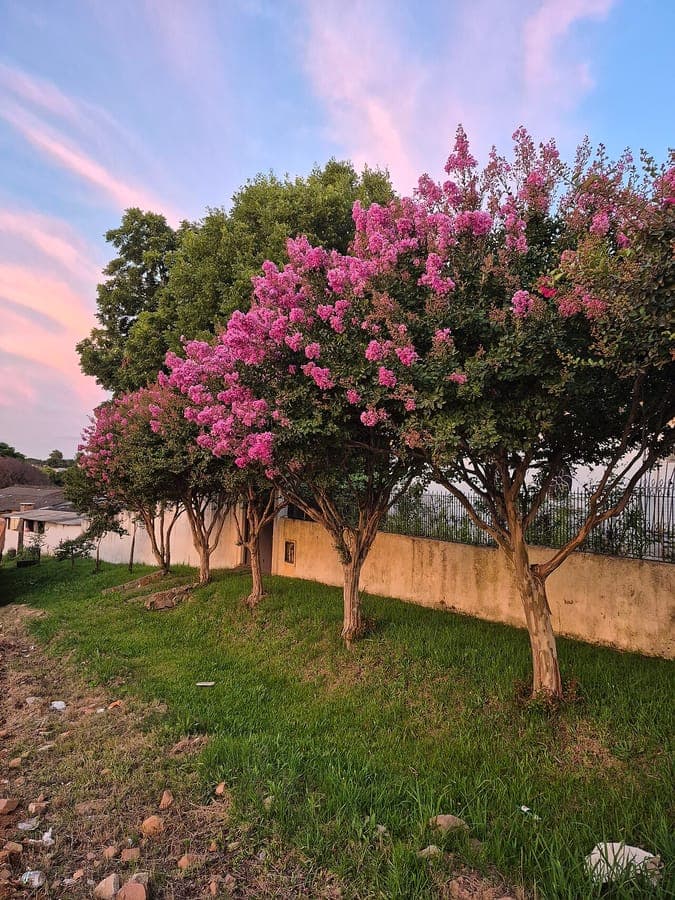
Lagerstroemia indica grows as a multi-stemmed shrub or small tree with an open, symmetrical crown. The plant typically reaches heights of 6-10 meters depending on variety and growing conditions. What truly makes this plant exceptional is its distinctive bark: grayish, brown, or pink tones that give the trunk an appearance of smooth, muscular marble.
Flowers appear in rich clusters at the tips of young branches, typically in purple, pink, white, or even red. The individual flowers feature distinctive crinkled flower crowns resembling crepe fabric, hence the name "Crepe-myrtle". The blooming period extends from June through September, with peak bloom in July and August.
Leaves are small and elliptical, turning yellow, orange, and red in autumn for spectacular fall display. Light brown seed pods appear after flowering.
Ideal location
Place your Lagerstroemia in a warm, sunny spot. This plant thrives in full sun and requires at least 6-8 hours of direct sunlight daily for optimal flowering. Protection from strong winds helps prevent flower damage. In temperate climates, position this plant in the sunniest part of your garden; in warmer regions, a spot against a south-facing wall works well.
Soil
Lagerstroemia indica is not overly particular about soil type but performs best in well-drained, slightly acidic to neutral soil. Incorporate organic matter such as compost or peat during planting to improve soil structure. A pH between 5.0 and 7.5 is ideal. Ensure heavy clay soils drain well to prevent root rot.
Diseño gratis
¿Quieres ver Lagerstroemia indica: complete guide en tu jardín? Crea un diseño gratis ahora.
Watering
While mature plants are drought-tolerant, water young plants regularly during their first growing season. Water deeply and less frequently rather than shallowly and often. Once established, watering is only necessary during dry spells. Excessive moisture can lead to fungal diseases.
Pruning
Pruning is important for healthy form and abundant bloom. In late winter or early spring, remove dead, diseased, or crossing branches. You may also lightly prune the plant to maintain a compact shape. Many gardeners prune their Lagerstroemia back severely in late winter, resulting in vigorous young growth and more flowers in summer.
Maintenance calendar
Spring: Begin pruning when first buds appear. Add compost as soil amendment and feed with balanced fertilizer. Summer: Check water regularly, especially for young plants. Enjoy the blooms. Autumn: Admire fall colors as growth slows. Winter: Plant is dormant. Remove dead or damaged branches.
Winter hardiness
Lagerstroemia indica is reasonably cold-hardy but prefers warmer climates. In USDA zones 7-11, it thrives outdoors. In colder zones (5-6), the plant may freeze back but typically regrows from roots. Mulch young plants in their first winter for protection.
Companion planting
Lagerstroemia pairs well with other warm-climate plants. Try combining it with lavender shrubs, ornamental grasses, or Mediterranean herbs. You might also plant multiple plants in different colors for spectacular effect. The seed heads in late season can be interesting for birds.
Conclusion
With its beautiful flowers, interesting bark structure, and easy maintenance, Lagerstroemia indica is an excellent choice for gardeners seeking a reliable, long-blooming summer ornamental. For more plant tips, visit gardenworld.app/en and discover how to transform your garden space.
¿Quieres ver Lagerstroemia indica: complete guide en tu jardín? Crea un diseño gratis ahora.
Sube una foto, elige un estilo y obtén un diseño fotorrealista con lista de plantas en menos de un minuto.
Más de 10.000 jardines diseñados
Sin tarjeta de crédito


Plantas similares
Winged loosestrife: complete guide
Lythrum alatum
Everything about Lythrum alatum, the winged loosestrife. Care, location, pruning and garden pairings for this native North American wetland perennial.
Dnieper loosestrife: complete guide
Lythrum borysthenicum
Everything about Lythrum borysthenicum, the Dnieper loosestrife: location, bloom season, care in pond margins and bog gardens. Full growing guide included.
Grand redstem: complete guide
Ammannia robusta
Everything about Ammannia robusta: pond margins, bog gardens, soil, care and propagation. Practical advice for water garden enthusiasts in temperate climates.