
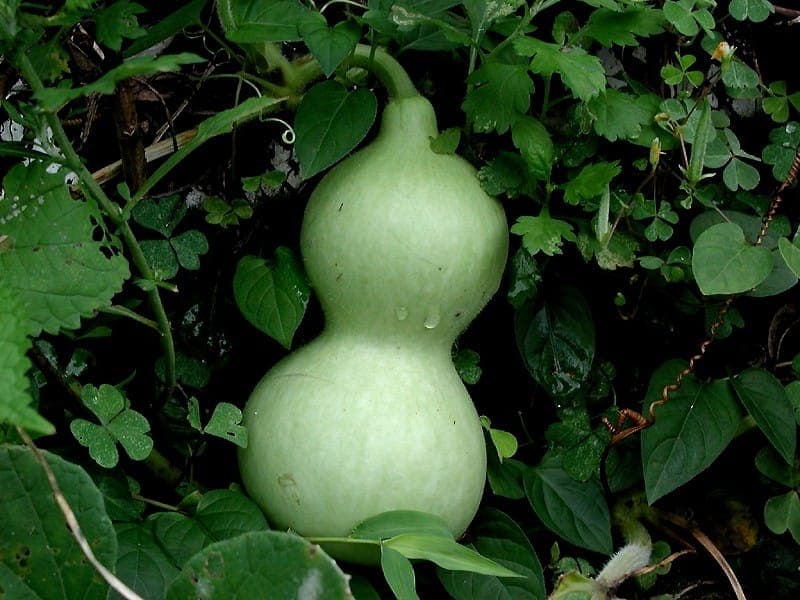
撮影者はカールおじさんです。 / CC BY-SA 3.0, via Wikimedia Commons
Lagenaria siceraria: complete guide
Lagenaria siceraria
¿Quieres ver Lagenaria siceraria: complete guide en tu jardín?
1 minuto, sin tarjeta de crédito
Overview
Lagenaria siceraria, commonly called calabash, bottle gourd, or opo squash, is a vigorous annual climbing plant from the Cucurbitaceae family (squash relatives). Native to tropical Africa, this plant produces large, distinctively shaped fruits utilized by numerous cultures as containers, serving dishes, and musical instruments. The plant can also be cultivated purely for ornamental garden appeal.
Appearance and Bloom
Calabash grows as a robust climber with tendrils reaching significant heights. Large, triangularly lobed green leaves provide dense foliage. White, sweetly fragrant flowers open nocturnally (primarily) and attract numerous insect pollinators, particularly night-flying species. Following bloom, fruit development proceeds through July-October. Mature fruits reach 20-100 cm length depending on cultivar, varying from spherical to distinctly bottle-shaped forms.
Ideal Location
Calabash thrives in full sun exposures providing 8+ hours daily direct sunlight. The plant demands substantial warmth and proves frost-intolerant. Wind-protected locations support heavy fruit development effectively. South- or west-facing walls prove ideal in temperate climates.
Soil
This plant prefers nutrient-rich, well-draining substrates with pH 6.0-7.5. Soil enriched with abundant organic matter (3-5 cm compost incorporation) stimulates vigorous growth and exceptional productivity. The plant cannot tolerate waterlogged, compacted soil conditions. Sandy loam compositions prove optimal.
Watering
Calabash demands substantial water, particularly during active growth and fruit development. Water regularly and thoroughly, allowing excess drainage. Allow soil surface to dry slightly between waterings (top 2-3 cm) but avoid complete desiccation. Generous mulching improves moisture retention. In arid climates, daily irrigation may prove necessary.
Pruning
Minimal pruning is required, though main runners can be shortened if space constraints dictate. Lateral shoots develop freely, as these produce most fruit. Remove dead or damaged foliage systematically. Flowers can develop uninterrupted into fruits, or early flowers can be removed to redirect energy toward fewer, larger fruits.
Diseño gratis
¿Quieres ver Lagenaria siceraria: complete guide en tu jardín? Crea un diseño gratis ahora.
Maintenance Calendar
- May-June: Seed sowing and seedling phase, transplanting to garden position
- June-July: Rapid vegetative growth and vine extension
- July-August: Flowering and initial fruit set
- August-October: Fruit development and maturation
- October-November: Harvesting and curing mature fruits
- November-March: Dormancy and seed collection
Heat Requirements
Calabash is a warm-season plant tolerating 15°C minimum but thriving above 20°C. Temperatures below 12°C inhibit growth and prevent flowering. In cooler climates, cultivate as a warm-season annual in protected positions. Nighttime protection using cloches or row covers aids establishment.
Companion Plants
Calabash combines excellently with:
- Nasturtium (Tropaeolum majus)
- Beans (Phaseolus) - vertically trained
- Wildflower borders
- Pollinator plants like Phacelia tanacetifolia
This combination creates a productive garden climbing zone.
Nutrition and Fertilization
Apply nitrogen-rich fertilizer monthly during initial growth (comfrey tea, seaweed extract). Once flowering initiates, switch to potassium-dominant formulas promoting fruit set. Phosphate additionally encourages blooming. Generous organic mulch application at season start supplies substantial nutrition throughout growth periods.
Harvesting and Curing
Mature fruits can be harvested October-November. Allow fruits 1-2 months drying in warm, arid locations before using as containers. This curing process hardens the shell, dramatically increasing storage longevity. Properly cured calabashes store for years, becoming increasingly decorative with age.
Closing Thoughts
Lagenaria siceraria transcends simple vegetable production - it enriches gardens with historical significance and practical yields. Substantial flowers attract pollinators, distinctive fruits offer crafting opportunities, and climbing vines provide gentle shade. At gardenworld.app, we guide you toward integrating this exotic species into your garden design. Explore gardenworld.app for comprehensive inspiration on incorporating productive and decorative calabashes into your landscape.
¿Quieres ver Lagenaria siceraria: complete guide en tu jardín? Crea un diseño gratis ahora.
Sube una foto, elige un estilo y obtén un diseño fotorrealista con lista de plantas en menos de un minuto.
Más de 10.000 jardines diseñados
Sin tarjeta de crédito


Plantas similares
Pumpkin and courgette: complete guide
Cucurbita pepo
Growing pumpkins and courgettes: practical guide to cultivating these popular summer vegetables in your garden.
Great pumpkin: complete guide
Cucurbita maxima
Discover how to grow Cucurbita maxima: ideal conditions, care tips, soil needs, and harvest timing. Perfect for gardeners aiming to grow giant pumpkins.