
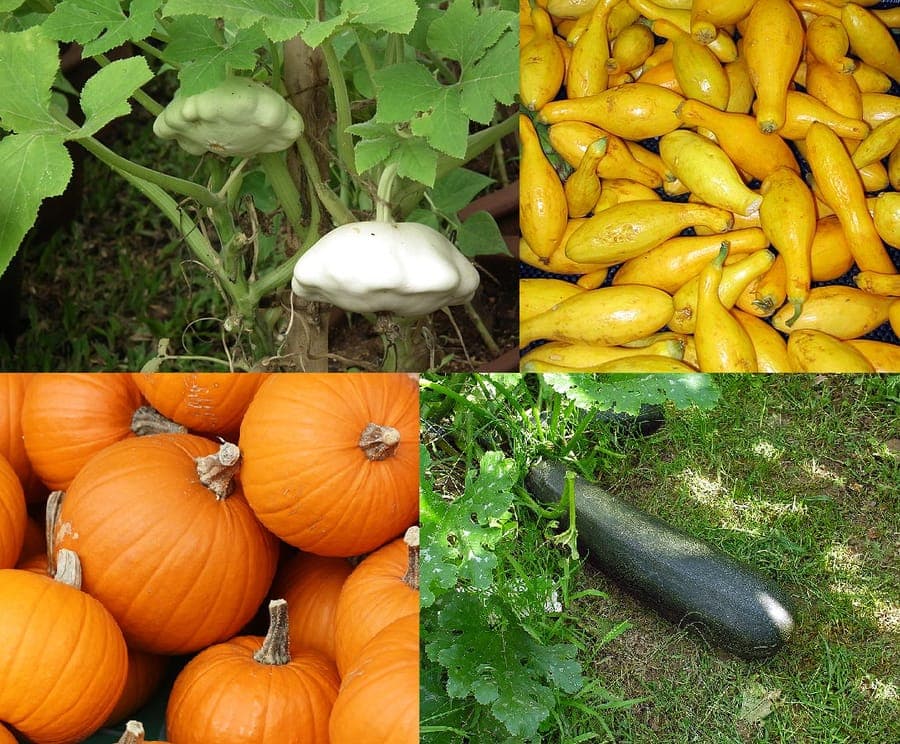
Various / CC BY-SA 1.0, via Wikimedia Commons
Pumpkin and courgette: complete guide
Cucurbita pepo
¿Quieres ver Pumpkin and courgette: complete guide en tu jardín?
1 minuto, sin tarjeta de crédito
Overview
Cucurbita pepo is the scientific name for a highly diverse group of cultivars, including pumpkins, courgettes, and patty pans. This species originated in Mexico and is one of the world's most important food crops. In Britain, we know this plant mainly through its fruits: the courgette for everyday eating and the pumpkin for autumn decoration and food.
The plant is annual and belongs to the Cucurbitaceae family. It grows rapidly and delivers a generous harvest within a short time. For many gardeners, this is an absolute classic: easy to grow, productive, and versatile.
Appearance & bloom cycle
Cucurbita pepo grows as a compact, low-spreading plant or as a climbing form depending on the variety. Courgettes are compact, pumpkins more vinelike. The leaves are large, heart-shaped to kidney-shaped, and can be 15-40 cm wide.
Flowers are large, yellow to orange, and very showy – 5-8 cm across. Notably, male and female flowers are separate on the same plant. The female flower sits directly on a small developing fruit.
Fruits vary enormously in shape, size, and colour depending on variety. Courgettes are harvested young (20-25 cm) and may be green, yellow, or striped. Pumpkins grow much larger and can be orange, white, green, or grey. Harvest runs from July (courgettes) through October (pumpkins).
Ideal location
Choose a sunny spot with at least 6-8 hours of direct sunlight daily. The plant grows in less sunny positions but yields drop considerably.
Wind protection is important – heavy fruits can snap in strong winds. In windy gardens, position the plant with some shelter.
Allow sufficient space: courgettes need at least 60 cm spacing, pumpkins preferably 1-1.5 metres. Climbing varieties can be trained up a support structure to save space.
Soil requirements
Cucurbita pepo demands fertile soil. A good, moisture-retentive, humus-rich soil is essential. Before planting, work in generous compost or well-rotted manure (10-15 litres per plant).
PH should be neutral to slightly acidic (6.5-7.5). Sandy soils benefit from added humus. Heavy clay soils improve with compost and sand. Waterlogging must be avoided.
Drainage is important – poor drainage causes root rot. Chronically wet spots benefit from raised beds or compost mounds.
Watering
Courgettes and pumpkins need plenty of water, especially during growth and fruiting. In dry summers, water at least 2-3 times weekly; in extreme heat, daily. A mature pumpkin patch requires enormous amounts of water.
Water at the base, not over foliage, to prevent fungal disease. Water early morning or late evening. A 5-8 cm mulch layer of compost or straw helps retain moisture and suppress weeds.
In very wet periods, excessive water can actually be harmful – ensure good drainage.
Diseño gratis
¿Quieres ver Pumpkin and courgette: complete guide en tu jardín? Crea un diseño gratis ahora.
Pruning
Pruning isn't essential but can be beneficial. For climbing varieties, pinching out side shoots encourages a stronger main stem – more productive plants overall.
With courgettes, removing flower sheaths can prevent flowers being shed. Regularly remove damaged or diseased foliage.
If the plant becomes very dense, creating conditions for fungal disease, carefully remove some leaves to improve air circulation.
Maintenance calendar
April-May: Sow seeds directly outdoors in May after the last frost. Alternatively, sow indoors in April and transplant in May. Direct outdoor sowing is most practical.
June: Peak growth period. Water regularly. Install supports if needed.
July-August: Flowering and fruiting. Harvest courgettes frequently (every 2-3 days) to maintain production. Monitor for pests and diseases.
September-October: Harvest pumpkins just before first frost. Allow them several weeks to ripen in a warm, dry location.
November-December: Plant dies after frost. Compost or process plant material.
Winter hardiness
Cucurbita pepo is not winter hardy in the UK. It's strictly annual, thriving only in warm seasons. Temperatures below 10°C are damaging; frost kills it outright.
Protection is ineffective. Replant each year.
Companion plants
Courgettes and pumpkins pair well with maize and beans (the "Three Sisters" planting system). Maize provides support, beans add nitrogen. Basil near courgettes is also beneficial.
Low-flowering plants like calendula encourage pollination. Ensure they don't become shaded by the pumpkin foliage.
Seeds and seedlings are widely available from garden centres. Online seed merchants offer excellent variety selection.
Final thoughts
Cucurbita pepo is an absolute garden classic. Simple to grow, fast-growing, and productive. Whether you grow courgettes or pumpkins, this plant delivers results – provided you maintain consistent watering and feeding.
On gardenworld.app you can commission a vegetable garden design that perfectly suits your growing ambitions. From small urban plots to spacious country gardens, our designers know how to incorporate these popular vegetables.
With practice, growing Cucurbita pepo becomes almost foolproof. Start with a few plants and expand as confidence grows.
¿Quieres ver Pumpkin and courgette: complete guide en tu jardín? Crea un diseño gratis ahora.
Sube una foto, elige un estilo y obtén un diseño fotorrealista con lista de plantas en menos de un minuto.
Más de 10.000 jardines diseñados
Sin tarjeta de crédito


Plantas similares
Kiwano: complete guide
Cucumis metuliferus
Everything about growing kiwano: location, soil, watering, and harvesting this striking African horned cucumber with spiny orange fruits.
Sponge gourd: complete guide
Luffa aegyptiaca
Full guide to growing sponge gourd (Luffa aegyptiaca): sowing, care, harvesting edible fruits and drying natural loofah sponges in your garden.
Cucumis prophetarum: complete guide
Cucumis prophetarum
Wild cucumber is a fascinating climbing plant with remarkable spiky fruits. Learn how to grow this exotic annual from seed to harvest for decorative interest.