
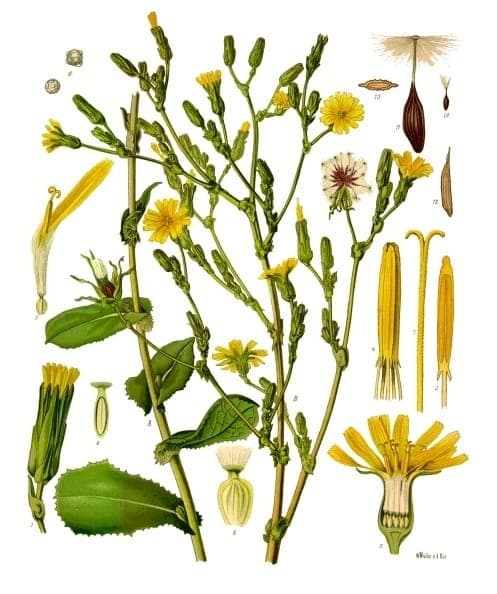
Franz Eugen Köhler, Köhler's Medizinal-Pflanzen / Public domain, via Wikimedia Commons
Lactuca virosa: complete guide
Lactuca virosa
¿Quieres ver Lactuca virosa: complete guide en tu jardín?
1 minuto, sin tarjeta de crédito
Overview
Lactuca virosa, commonly called acrid lettuce or greater lettuce, is a biennial plant from the Asteraceae family. Native to Europe, North Africa, and Mediterranean regions, this remarkable plant derives its name from the milky sap containing alkaloid compounds. Despite its toxicity to humans, this species serves valuable ecological roles and thrives in more moisture-retentive conditions than related species.
Appearance and Bloom
Acrid lettuce develops strong, upright stems reaching 50-120 cm. The pinnately divided leaves display smooth or finely toothed margins. The plant produces bright yellow flowers blooming from June through September in profusion. A distinctive feature is the blue-grey foliage with pronounced purple staining along the midveins, particularly visible during active growth. Following bloom, the plant develops numerous seed heads with characteristic feathery dispersal structures.
Ideal Location
This species thrives in full sun to partial shade positions. Acrid lettuce tolerates less drought stress than Lactuca serriola and performs better on moisture-retentive sites. Wind-protected locations are preferable as tall stems remain vulnerable to physical damage. Morning sun with afternoon shade benefits plants in extremely hot climates.
Soil
This plant favors slightly moister soils than related species. Calcareous soil with pH 6.0-7.5 proves optimal. Acrid lettuce thrives on moderately fertile soils and benefits from modest organic matter incorporation. Unlike Lactuca serriola, this species cannot tolerate extremely impoverished substrates and actually performs better with reasonable soil nutrition.
Watering
Consistent moisture management is essential for acrid lettuce. The plant demands regular water, especially during growth and flowering periods. Maintain equilibrium: soil should remain moist but never waterlogged. Apply mulch to improve moisture retention. During dry spells, daily irrigation may prove necessary, while rainy seasons reduce supplemental watering requirements.
Diseño gratis
¿Quieres ver Lactuca virosa: complete guide en tu jardín? Crea un diseño gratis ahora.
Pruning
Pruning remains optional but encourages compact growth. Pinch growing tips when plants reach 20-30 cm to stimulate branching, resulting in fuller specimens with increased flowering. Remove weak or damaged foliage throughout the season to prevent disease incidence.
Maintenance Calendar
- April-May: Direct seeding and germination phases
- June: Rapid vegetative growth and leaf development
- June-September: Peak flowering with brilliant yellow display
- July-August: Maximum pollinator activity
- September-October: Seed ripening and wind dispersal
- November-March: Dormancy period (mild regions)
Winter Hardiness
Acrid lettuce exhibits hardiness to USDA zone 4 (-30°C). In severe winters, overwintering plants may sustain damage. Throughout the Netherlands, Belgium, and France this species typically survives outdoors, particularly in protected positions. In Germany and northern regions, winter protection aids survival or treating as an annual proves more practical.
Companion Plants
Acrid lettuce combines elegantly with:
- Globe thistle (Echinops ritro)
- Wild marjoram (Origanum vulgare)
- Yarrow (Achillea millefolium)
- Fleabane (Erigeron species)
- Sunflower varieties (Helianthus)
This combination creates Mediterranean garden character with substantial botanical interest.
Closing Thoughts
While acrid lettuce remains unsuitable for consumption, this plant offers invaluable ecological benefits. Yellow flowers attract butterflies, bees, and beneficial insects supporting garden health. At gardenworld.app, we help you design ecologically responsible gardens incorporating wild plants like Lactuca virosa while maintaining safety for children and pets. Discover how this fascinating plant transforms ordinary landscapes into thriving wild ecosystems.
¿Quieres ver Lactuca virosa: complete guide en tu jardín? Crea un diseño gratis ahora.
Sube una foto, elige un estilo y obtén un diseño fotorrealista con lista de plantas en menos de un minuto.
Más de 10.000 jardines diseñados
Sin tarjeta de crédito


Plantas similares
Lactuca serriola: complete guide
Lactuca serriola
Prickly lettuce grows wild across Europe and Asia. This hardy plant tolerates dry conditions and provides food for wildlife while supporting pollinators.
Lettuce (Lactuca sativa): complete growing guide
Lactuca sativa
Learn how to grow fresh lettuce at home with this comprehensive guide. Tips for continuous harvesting, ideal growing conditions, and popular varieties for spring to fall production.