
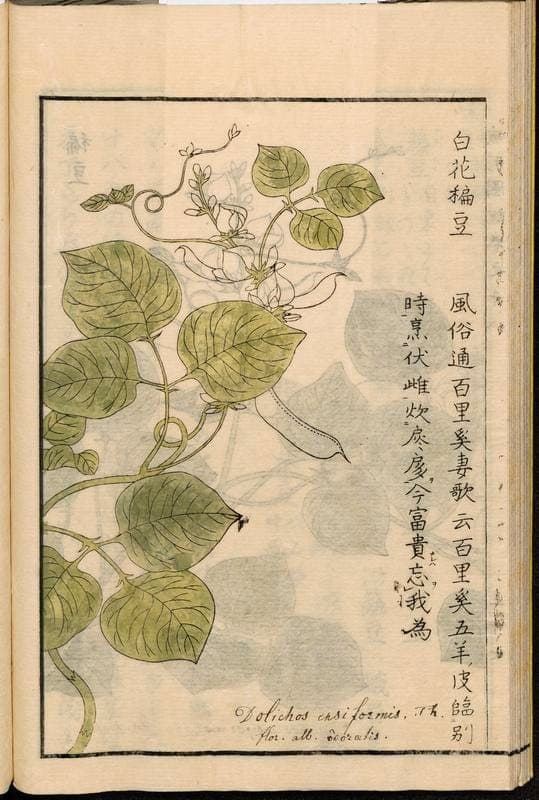
AnonymousUnknown author / CC BY 4.0, via Wikimedia Commons
Lablab bean: complete guide
Lablab purpureus
¿Quieres ver Lablab bean: complete guide en tu jardín?
1 minuto, sin tarjeta de crédito
Overview
Lablab purpureus, also known as Lablab bean, Egyptian bean, or Hyacinth bean, is a nutritious and decorative climbing plant native to Africa. Belonging to the Fabaceae family, this plant is widely cultivated for its edible pods and seeds. With its characteristic purple flowers and elegant climbing growth, Lablab purpureus forms both a functional and aesthetically valuable addition to vegetable gardens.
This plant is extensively grown in tropical and subtropical regions for its nutritional value. In temperate climates, it can be successfully cultivated as an annual crop if sown early and you have a warm growing season.
Appearance and Bloom
Lablab purpureus grows as a climbing plant that increases significantly in length. The plant forms hairy stems with trifoliate leaves. The leaves are dark green and visibly ribbed, giving the plant a robust appearance.
Flowers appear in clusters along the stem and are striking purple to violet in color. These small pea-like flowers are highly decorative and provide beautiful visual interest. After flowering, long, flattened pods form that are initially green and become purple when mature.
The pods contain round seeds suitable for consumption. Both green pods and ripe seeds have nutritional and culinary value.
Ideal Location
Lablab purpureus grows best in full sun. At least six to seven hours of direct daily sunlight is needed for optimal flowering and fruiting. The plant appreciates warmth and moisture retention.
Provide a climbing frame or trellis where the plant can climb. Lablab is excellent for pergolas, fences, and screens where you want to produce both shade and food simultaneously. In northern Europe, the plant grows best against a south-facing wall where significant warmth is absorbed.
The plant is also valuable for pergolas above seating areas where the foliage provides shade while the food crop remains visible.
Soil
Lablab purpureus grows in moderately to well-fertilized soil. A well-prepared vegetable bed with compost is ideal. A pH value between 6.0 and 7.5 is recommended. This plant values nutrient-rich soil with adequate humus content.
When planting, work plenty of garden compost or planting soil into the bed to increase nutrients. The plant also grows in poorer soil but will be stronger and more productive with adequate nutrition.
Depleted soils can be enriched with organic matter, bokashi, or compost at planting time. Well-draining soil is essential to prevent root rot.
Diseño gratis
¿Quieres ver Lablab bean: complete guide en tu jardín? Crea un diseño gratis ahora.
Watering
Lablab purpureus must be watered regularly, especially as it develops into a large climbing plant. Consistently moist soil is important for flowering and fruiting. The plant cannot tolerate dried-out soil.
Water at the plant's base, not over the foliage. In hot summers, daily watering may be necessary. Overhead watering can cause leaf disease. Mulching around the base helps retain soil moisture.
During dry periods, you can water more, but always ensure good drainage to prevent root rot. Container-grown lablab needs more frequent watering.
Pruning
Lablab purpureus requires light pruning to keep the plant in shape and encourage more side shoots. Trim growth if the plant becomes too long, or cut it back if you want to remove excess foliage.
Remove dead leaves and damaged shoots. Tip-pinching encourages bushy growth and results in more flowers and fruits.
If you're keeping the plant tight against walls or fences, prune regularly for control. Pruning can be done after flowering without negative effects on the next season.
Maintenance Calendar
May: Sow seeds under glass or in warm beds.
June to July: Plant seedlings after frost danger passes. Water regularly.
August to September: Flowering period. Fruit setting likely. Support may be needed.
October: Harvesting of mature pods begins. Green pods can be picked for consumption.
November to December: Seed harvest. Plant dies back after frost.
Winter Hardiness
Lablab purpureus is not winter hardy in northern Europe. The plant dies back after frost. It's grown as an annual crop and seed is saved for the next season. In warm areas, it may overwinter in very mild winters, but this is unreliable.
You can keep seed indoors at approximately 15 degrees Celsius in a dry place. The same seeds can be sown again the following season.
Companion Plants
Lablab works well in mixed vegetable gardens. With its climbing habit, it pairs perfectly with tomato or bean cages. Other vegetables like cucumbers, melons, and squash can grow around it.
Floral companions like calendula and sunflowers attract pollinators and support the lablab harvest. Basil at the base encourages insect activity.
In ornamental vegetable gardens, lablab works perfectly as a backdrop climbing plant alongside roses or other climbing flowers.
Closing
Lablab purpureus offers both food and ornamental value. With its decorative purple flowers and edible pods, it forms a unique addition to vegetable gardens in temperate climates.
Seed is available from specialized seed companies. For advice about local cultivars and seed quality, consult specialist suppliers. Prefer seed from strong sources.
Growing lablab requires some warmth and planning, but the nutritional value makes it worthwhile. Visit gardenworld.app for more inspiration on vegetable gardens and nutritious plants.
¿Quieres ver Lablab bean: complete guide en tu jardín? Crea un diseño gratis ahora.
Sube una foto, elige un estilo y obtén un diseño fotorrealista con lista de plantas en menos de un minuto.
Más de 10.000 jardines diseñados
Sin tarjeta de crédito


Plantas similares
Tall Silky Lupine: complete guide
Lupinus elatus
Tall silky lupine is a fast-growing Californian perennial with silvery foliage and blue-purple flower spikes, ideal for a prairie-style garden.
Garfield Lupine: complete guide
Lupinus garfieldensis
The Garfield lupine is a rare, fast-growing American perennial for alkaline, dry grassland gardens, with striking blue flower spikes.
Lupinus elegans: complete guide
Lupinus elegans
Lupinus elegans, the elegant lupine, is a spectacular blooming plant from Mexico with blue flower spikes. Care, cultivation and garden use.