
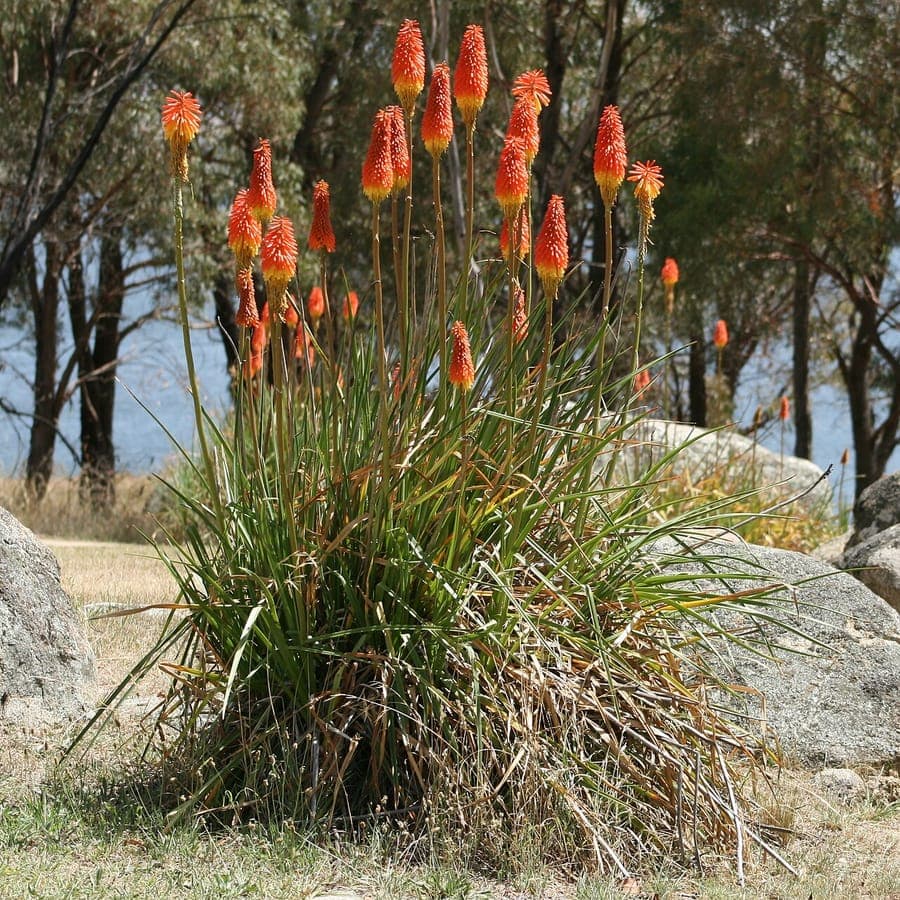
Kniphofia_uvaria.jpg: Toby Hudson derivative work: 99of9 (talk) / CC BY-SA 3.0, via Wikimedia Commons
Kniphofia uvaria: complete guide
Kniphofia uvaria
¿Quieres ver Kniphofia uvaria: complete guide en tu jardín?
1 minuto, sin tarjeta de crédito
Overview
Kniphofia uvaria, commonly known as red-hot poker or torch lily, is a spectacular South African ornamental plant with characteristic red-to-yellow tubular flowers. This plant is renowned for striking blooms attracting hummingbirds and insects. The red-hot poker is semi-hardy in temperate regions and thrives in warm, sunny locations.
The plant reaches 60-120 centimeters height, forming dense flower clusters lasting months. Red-hot poker is truly an eye-catching feature in modern and tropical garden styles. With protection, this plant grows satisfactorily in temperate climates.
Appearance and bloom
Red-hot poker forms dense rosettes of long, narrow, blue-green leaves. The foliage reaches 40-60 centimeters length with stiff, architectural character. The leaves create an attractive foundation for flowering.
Flowers appear August-October as distinctive tubular blooms in dense spikes. The flowers display characteristic red-orange-to-yellow coloring, earning the common name red-hot poker. Each individual flower measures 3-4 centimeters long. The flowering period extends 8-10 weeks, providing valuable late-season color.
Ideal location
Red-hot poker thrives in full sun. The plant requires minimum 6-8 hours direct sunlight daily. In partial shade, flowering diminishes and growth slows. Provide sheltered location as tall flower stems can break in strong winds.
Plant on elevated terraces or in well-drained containers ensuring water doesn't stagnate. Protection from harsh autumn wind benefits bloom stability.
Soil
Red-hot poker performs best in well-drained, sandy to loamy soils. The plant tolerates dry conditions better than wet feet. Heavy clay soils require amendment with sand and compost.
The plant prefers pH between 6.0 and 7.5. Adding organic matter improves moisture retention without causing waterlogging. Fine gravel beneath plants aids drainage.
Diseño gratis
¿Quieres ver Kniphofia uvaria: complete guide en tu jardín? Crea un diseño gratis ahora.
Watering
Red-hot poker has moderate moisture needs. Water regularly during growing season (March-September) but prevent waterlogging. After flowering, reduce watering substantially.
Winter watering remains minimal. The plant is drought-tolerant but grows better with regular moisture during growth season. Mulching helps regulate soil moisture.
Pruning
Red-hot poker requires no pruning for shape. Remove faded flower spikes after blooming to encourage additional flowers. In spring, remove withered foliage.
Late in season, the entire plant may be cut back to 15-20 centimeters above ground. This stimulates more compact growth in following season.
Maintenance calendar
May-July: Growing period with regular watering. August-October: Flowering period with consistent moisture. October-March: Rest period with minimal water. March: Apply balanced fertilizer (low nitrogen). June: Remove old foliage.
Winter hardiness
Red-hot poker is semi-hardy to -10 degrees Celsius. In harsh frost, plant parts may freeze. In Northern Europe, winter protection is recommended. Mulch plant base with leaves or jute.
Young plants need protection first winter. Mature plants better tolerate freezing. In very cold regions, grow in containers that can be moved indoors.
Companion plants
Red-hot poker pairs beautifully with blue flowers like delphiniums, agapanthus, and salvia. Yellow flowers create striking contrasts. Ornamental grasses add textural interest.
Avoid high-feeding plants as red-hot poker prefers drier conditions. Row plantings of successive colors create dramatic effects.
Closing thoughts
Red-hot poker offers dramatic summer blooming with exotic charm. This semi-hardy plant transforms gardens into tropical paradises. Visit gardenworld.app for more exotic plant ideas and subtropical garden designs. With proper care, this plant flourishes season after season, providing unforgettable color and structure.
¿Quieres ver Kniphofia uvaria: complete guide en tu jardín? Crea un diseño gratis ahora.
Sube una foto, elige un estilo y obtén un diseño fotorrealista con lista de plantas en menos de un minuto.
Más de 10.000 jardines diseñados
Sin tarjeta de crédito


Plantas similares
Aloe castanea: complete guide
Aloe castanea
Discover Chestnut aloe, a South African succulent. Growth, nutrition, and garden integration for warm climates and container culture.
Aloe pratensis: complete guide
Aloe pratensis
Learn how to grow Meadow aloe, a South African succulent. Nutrition, propagation, and front yard integration for warm climates or containers.
Pretoria aloe: complete guide
Aloe pretoriensis
Discover Aloe pretoriensis, an elegant South African succulent with striking red blooms. Learn care tips, ideal conditions, and companion planting for this hardy, drought-tolerant plant.