
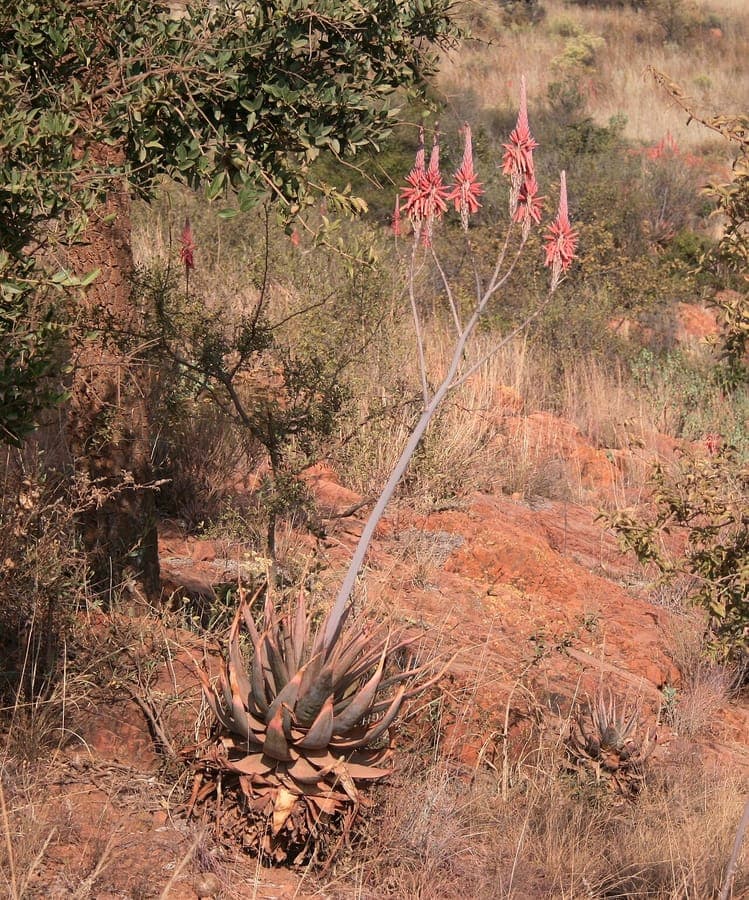
JMK / CC BY-SA 4.0, via Wikimedia Commons
Pretoria aloe: complete guide
Aloe pretoriensis
¿Quieres ver Pretoria aloe: complete guide en tu jardín?
1 minuto, sin tarjeta de crédito
Overview
Pretoria aloe (Aloe pretoriensis) is a stunning succulent native to the mist belt regions of South Africa, Zimbabwe, and Eswatini. This plant is renowned for its robust growth habit and spectacular red flowers that appear in spring. If you are seeking a low-maintenance plant with Mediterranean charm, Aloe pretoriensis is an excellent choice. The plant thrives in warm climates and can be successfully grown in containers for cooler regions.
Appearance and bloom
Aloe pretoriensis grows into a distinctive tree-like succulent with a prominent trunk and a crown of tightly packed, grey-green leaves. The leaves are long, narrow, and pointed, forming dense rosettes at the branch tips. In the wild, the plant can reach 3-5 meters tall, but in cultivation it typically remains smaller. The most characteristic feature is the stunning red to orange flowers that appear in dense spikes. These blooms attract birds and usually appear between February and May in the northern hemisphere. The flowering period lasts several weeks, providing a spectacular display that transforms the garden.
Ideal location
Position your Aloe pretoriensis in a very sunny spot. At least 6-8 hours of direct sunlight daily is essential for healthy growth and optimal flowering. In extremely hot areas, light afternoon shade can be beneficial, but generally this plant cannot receive too much sun. If growing indoors, place it near a very bright south or west-facing window. Outdoors, an open position without shade from trees or dense shrubs is ideal. The more light, the more robust the growth and the better the flower production.
Soil
Soil composition is crucial for Aloe pretoriensis success. Use well-draining cactus or succulent compost. Many gardeners create their own mix by amending standard potting soil with 40-50 percent sand, perlite, or volcanic rock. This ensures rapid water drainage, which is essential to prevent root rot. In garden beds, use raised mounds or amend native soil with coarse sand and gravel. A neutral to slightly acidic pH (6.5-7.5) is ideal.
Watering
Aloe pretoriensis is extremely drought-tolerant and requires far less water than most plants. Follow the "soaking dry" principle: water thoroughly until it drains from the pot, then wait 2-3 weeks before watering again. In winter, extend this interval to 4-6 weeks. Allow soil to dry completely between waterings. Overwatering is the leading cause of death for this plant, so it is better to underwater than overwater. In very rainy areas, you may not need to water at all during wet seasons.
Diseño gratis
¿Quieres ver Pretoria aloe: complete guide en tu jardín? Crea un diseño gratis ahora.
Pruning
Pruning is generally unnecessary, but you can remove lower leaves as they wither or yellow. This gives the plant a neater appearance and improves air circulation. Remove dead flower spikes just below the rosette to conserve energy. If the plant becomes too large, you can carefully shorten lower branches, though this is not recommended as it disrupts the natural form.
Maintenance calendar
Spring: Check the plant for signs of fungal issues. Begin watering more frequently as temperatures rise. This is when the most spectacular blooms appear. Start feeding once monthly with diluted cactus fertilizer. Summer: Water minimally and feed only if the plant is actively expanding. Monitor for sunscald if moving outdoors. Fall: Gradually reduce watering frequency as temperatures drop. Stop feeding. Winter: Minimal water; dry conditions are now beneficial. Protect from frost in areas where temperatures drop below 5 degrees Celsius.
Winter hardiness
Aloe pretoriensis is less hardy than some other aloe species. In areas where temperatures fall below -2 degrees Celsius, protection is essential. In southern Netherlands, the plant usually survives winter outdoors in well-draining raised beds when protected from wet conditions. In colder regions, bring the plant indoors in autumn. If keeping it outside, ensure a dry microclimate with protective mulch and possibly a protective frame. Frost periods with wet soil are far more dangerous than frost with dry soil.
Companion plants
Aloe pretoriensis grows well alongside other Mediterranean and succulent plants. Combine with: Echeveria species for contrasting rosettes; Kleinia petraea (string of pearls) for grey foliage and yellow blooms; Gazania for early summer color; Lavandula (lavender) for fragrance and texture; Santolina for fine foliage and yellow ball flowers; Carpobrotus (ice plant) for groundcover contrast. These combinations work beautifully in Mediterranean gardens and create a cohesive aesthetic.
Closing
Pretoria aloe is a fantastic plant for gardeners seeking low-maintenance, drought-tolerant succulents. With its impressive flowers and minimal care requirements, this is a plant that makes an impact without fuss. Purchase your specimen from quality suppliers for expert advice. On gardenworld.app, find inspiration for integrating succulent gardens into your landscape design. Follow these simple care guidelines and your Aloe pretoriensis will provide years of beauty and blooms.
¿Quieres ver Pretoria aloe: complete guide en tu jardín? Crea un diseño gratis ahora.
Sube una foto, elige un estilo y obtén un diseño fotorrealista con lista de plantas en menos de un minuto.
Más de 10.000 jardines diseñados
Sin tarjeta de crédito


Plantas similares
Aloe castanea: complete guide
Aloe castanea
Discover Chestnut aloe, a South African succulent. Growth, nutrition, and garden integration for warm climates and container culture.
Aloe pratensis: complete guide
Aloe pratensis
Learn how to grow Meadow aloe, a South African succulent. Nutrition, propagation, and front yard integration for warm climates or containers.
Purple aloe: complete guide
Aloe purpurea
Discover Purple aloe. Learn how to care for this plant in your garden.