
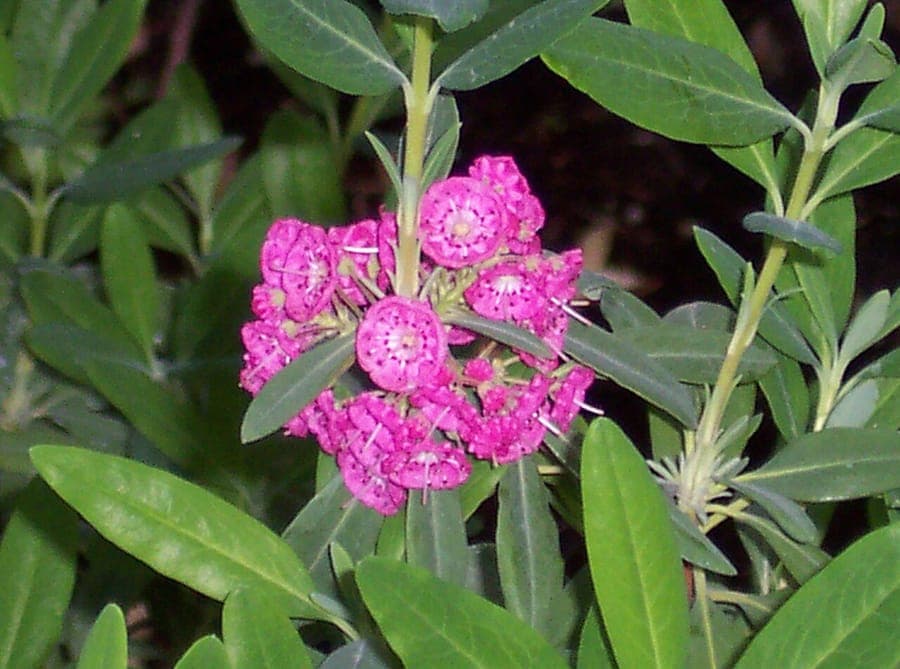
A. Barra / CC BY 3.0, via Wikimedia Commons
Sheep Laurel: Complete Guide
Kalmia angustifolia
¿Quieres ver Sheep Laurel: Complete Guide en tu jardín?
1 minuto, sin tarjeta de crédito
Overview
Sheep laurel (Kalmia angustifolia), also known as lambkill or dwarf-laurel, is a low-growing evergreen shrub from the cool woodlands of eastern North America, ranging from Labrador through the Appalachian region to Georgia. This compact 60-90 cm shrub is prized for its profuse pink flowers and exceptional winter hardiness. It thrives in acidic, moist soils where many other plants struggle.
Appearance & Bloom
The shrub forms a dense, compact mound with narrow, linear leaves arranged opposite along the stems, creating a refined appearance. Foliage is deep green, assuming darker bronze tones in winter. The flowers are the highlight: small, rose-pink to red, arranged in dense terminal clusters blooming May-June. Blooming is profuse, creating a spectacular display when established.
Ideal Location
Plant in full sun to part shade for optimal flowering. Heavy shade significantly reduces bloom production. This species is extremely hardy and tolerant of windy sites. Ensure good air circulation and moderate humidity; it dislikes desiccating winds. In continental climates, position where summer heat remains moderate.
Soil
This is one of the most acid-loving shrubs available. Essential requirement: strongly acidic soil with pH 4.0-6.0. Use naturally acidic substrates: sandy soils, peaty soils, or heathland-type earth. Work in substantial peat or sphagnum moss at planting. Lime-rich soils require major amendment or are unsuitable.
Watering
Sheep laurel loves moist, well-draining soils and cannot tolerate desiccation. Water regularly, especially during dry periods. Root systems are shallow, necessitating vigilant moisture monitoring. Apply generous mulch with heathland compost or peat to retain moisture. In temperate maritime climates, supplemental water is needed only during extreme droughts.
Diseño gratis
¿Quieres ver Sheep Laurel: Complete Guide en tu jardín? Crea un diseño gratis ahora.
Pruning
This species requires minimal pruning. Remove spent flowers (deadheading) post-bloom to encourage secondary flowering. Clear dead wood in spring. Heavy formative pruning damages the plant more than it helps; the shrub naturally develops an attractive form.
Maintenance Calendar
- March-April: Remove winter-damaged growth; apply acid fertilizer
- May-June: Enjoy flowering; deadhead faded blooms
- July-August: Monitor and maintain soil moisture
- September-October: Check root collar health; add organic matter as needed
Winter Hardiness
Exceptionally hardy (USDA zones 3-7, tolerating temperatures to -35°C / -31°F). In temperate regions, this shrub thrives without protection. Extreme continental winters may stress young plants, but mature specimens are bulletproof.
Companion Plants
Sheep laurel pairs beautifully with other acid-loving plants: heathers (Calluna), heaths (Erica), rhododendrons, and azaleas. Combining with wintergreen ferns creates dynamic textural contrast. For heathland garden design ideas, visit gardenworld.app.
Conclusion
Sheep laurel merits greater recognition in gardens with acidic soil. Its vibrant pink flowers, compact form, and minimal maintenance needs make it an excellent choice for moist heath gardens and woodland edges. Plants are readily available from specialist nurseries. With proper acidic soil preparation and consistent moisture, you'll enjoy years of spectacular blooming from this remarkable shrub. For integrated heathland garden design, explore gardenworld.app.
¿Quieres ver Sheep Laurel: Complete Guide en tu jardín? Crea un diseño gratis ahora.
Sube una foto, elige un estilo y obtén un diseño fotorrealista con lista de plantas en menos de un minuto.
Más de 10.000 jardines diseñados
Sin tarjeta de crédito


Plantas similares
Zenobia pulverulenta: complete guide
Zenobia pulverulenta
Everything about Zenobia pulverulenta (honeycup): siting, acid soil, pruning and the fragrant white bells, in this complete care guide.
Dwarf huckleberry: complete guide
Gaylussacia dumosa
Everything about dwarf huckleberry (Gaylussacia dumosa): acidic soil, partial shade, pruning and care for this compact North American berry shrub.
Drooping leucothoe: complete guide
Leucothoe fontanesiana
Everything about drooping leucothoe (Leucothoe fontanesiana): shade tolerance, soil, watering, pruning, hardiness and companion plants.