
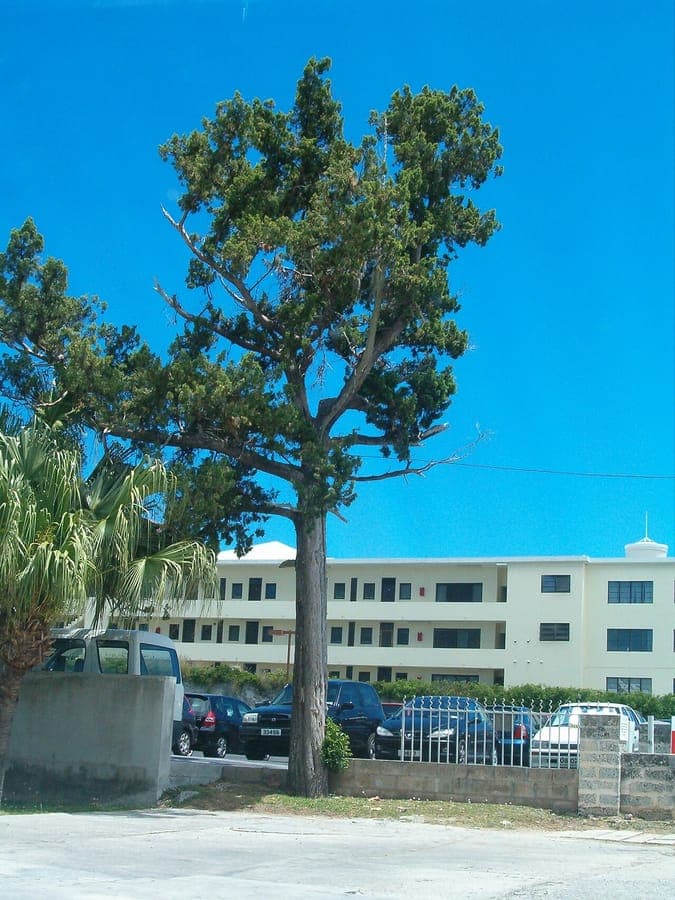
Seán Pòl Ó Creachmhaoil Aodhdubh at English Wikipedia / CC BY 2.5, via Wikimedia Commons
Bermuda Juniper (Juniperus bermudiana): complete guide
Juniperus bermudiana
¿Quieres ver Bermuda Juniper (Juniperus bermudiana): complete guide en tu jardín?
1 minuto, sin tarjeta de crédito
Overview
The Bermuda Juniper (Juniperus bermudiana) is an elegant, evergreen conifer native to Bermuda and a few islands in the Atlantic Ocean. This tree from the Cupressaceae family grows to 15-20 meters in its native habitat, but in cultivation typically stays smaller. With its slender, pyramidal form and fine, dark-green foliage, the Bermuda Juniper provides beautiful vertical accents in gardens. The tree is highly ornamental and is also called 'Bermuda Red Cedar' due to the reddish wood color. In temperate climates like the Netherlands and Belgium, this tree suits container cultivation or very protected south-facing locations only.
If you want to add an elegant, exotic plant to your garden, gardenworld.app is your destination for garden design. This platform helps you create gardens where subtropical and warm-climate plants thrive, including container specimens.
Appearance & Growth Habit
The Bermuda Juniper grows in beautiful pyramidal to columnar form. When young, it grows narrowly, broadening slightly with age. The foliage is fine, needle-like or scale-like depending on growth stage. The color is dark-green to blue-green. In favorable conditions (warm, sunny), new shoots may display coppery tones. The tree grows reasonably fast, especially in warm climates. In temperate climates, growth is slower.
The tree is dioecious, meaning there are male and female trees. Female specimens bear beautiful blue to dark-purple berries, approximately 8-10 mm, providing bird food.
Ideal Location
The Bermuda Juniper grows optimally in warm, sunny climates. In Bermuda it grows from sea level to mountain tops. In temperate climates (Netherlands, Belgium), it can grow in containers on terraces or in very protected south-facing locations, with good winter protection. The tree loves full sun and tolerates wind moderately. USDA zones 9-11 are ideal; in zones 7-8 (NL/BE) suitable only as container plant.
Soil Type
The Bermuda Juniper grows on nutrient-poor, well-draining soils. In container culture: use quality potting mix blended with perlite or shells for drainage. pH can range from 6.0 to 8.0. The tree tolerates salt well (it grows on salt-wind islands), an advantage in coastal areas.
Diseño gratis
¿Quieres ver Bermuda Juniper (Juniperus bermudiana): complete guide en tu jardín? Crea un diseño gratis ahora.
Watering
The Bermuda Juniper is reasonably drought-tolerant once established. During growing season (April-October), water when soil surface feels dry. In winter, water much less. In containers, keep slightly moister than ground; check regularly. Ensure water doesn't stagnate; this causes root rot.
Tip: Plant in container with excellent drainage. If kept in garden, only in very protected south-facing location against wall.
Pruning & Maintenance
Pruning is optional. The tree naturally grows in pyramidal form. Light pruning in June/July for shaping. Remove dead branches. Lower branches can be gently removed for standard form. Avoid heavy pruning; plant recovers slowly. In containers, replace some potting soil annually.
Maintenance Calendar
January-February: Winter protection in NL/BE. Frost protection for container plants.
March-April: Light pruning if needed. Begin feeding.
May-June: Growth accelerates. Water regularly. Prune for form.
July-August: Warm period. Extra water during dry spells. Continue growth.
September-October: Growth slows. Reduce feeding.
November-December: Winter preparation. Check frost protection.
Winter Hardiness
The Bermuda Juniper is winter-hardy in USDA zones 9-11. In the Netherlands and Belgium (zones 7-8), frost protection is essential. In extreme winters the tree may freeze. Container plants overwinter in protected areas: against south-facing wall, in greenhouse, or frost-free shelter. Minimum temperature for permanent culture: -10°C.
Companion Plants (for warm climates/container culture)
The Bermuda Juniper thrives alongside:
- Other Junipers (J. scopulorum, J. osteosperma) - related conifers
- Common Juniper (Juniperus communis) - more tolerant to cool
- Thuja (evergreen ornamental shrubs) - complementary form
- False Cypress (Chamaecyparis) - similar texture
- Laurel Cherry (Prunus laurocerasus) - for groundcover
Avoid very wet conditions.
Conclusion
The Bermuda Juniper is an elegant, refined conifer that shines in subtropical and warm climates. For temperate climates like the Netherlands and Belgium, container cultivation is best, protecting the plant in winter. With gardenworld.app, you can create a garden design where container plants and protected elements integrate beautifully. This is the plant for those dreaming of exotic elegance with southern flair!
¿Quieres ver Bermuda Juniper (Juniperus bermudiana): complete guide en tu jardín? Crea un diseño gratis ahora.
Sube una foto, elige un estilo y obtén un diseño fotorrealista con lista de plantas en menos de un minuto.
Más de 10.000 jardines diseñados
Sin tarjeta de crédito

