
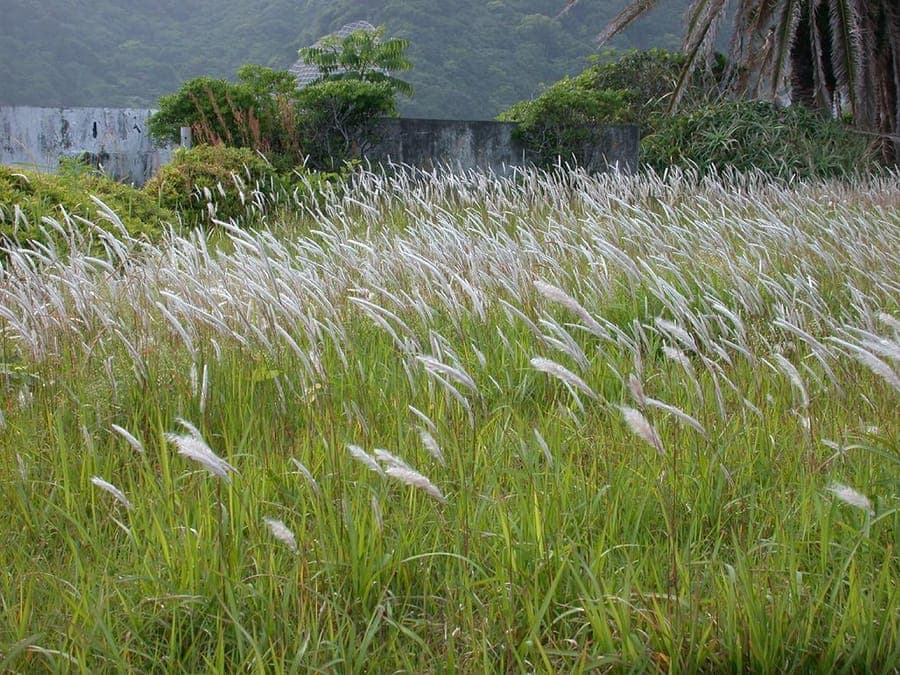
No machine-readable author provided. Keisotyo assumed (based on copyright claims). / CC BY-SA 3.0, via Wikimedia Commons
Imperata cylindrica: complete guide
Imperata cylindrica
¿Quieres ver Imperata cylindrica: complete guide en tu jardín?
1 minuto, sin tarjeta de crédito
Overview
Imperata cylindrica, better known as Japanese blood grass or cogon grass, is a refined ornamental grass native to the Mediterranean through Africa to Afghanistan. The cultivar 'Red Baron' is by far the most popular in gardens worldwide, featuring striking red-tinted foliage especially in spring and autumn. Standing 30 to 60 cm tall, this grass forms a dynamic accent in modern borders, prairie gardens, and container arrangements.
In gardenworld.app, Japanese blood grass is essential for anyone seeking movement, color, and refined texture in a single plant.
Appearance and Bloom
The most characteristic feature of Imperata cylindrica is color transformation through seasons. In spring and summer, foliage emerges green, but as temperatures drop (autumn), a stunning red to carmine-red hue appears at the blade tips. This reddening intensifies under full sun.
Flowering (panicles) occurs July through September as fine, silver-white to pink tones that glow beautifully in light. These panicles add extra movement to the plant. The leaves are narrow, linear, approximately 3-5 mm wide, and grow rigidly upright.
After frost, foliage turns mahogany-red, offering dramatic late-season appeal.
Ideal Location
Imperata cylindrica thrives best in full sun (at least 6 hours of direct daily sunlight). This is essential for optimal blade reddening. In partial shade, the plant grows, but red coloration remains much less intense. Position in an open, breezy spot where movement and light play well over the panicles.
The plant is hardy to at least -15 degrees Celsius, making it suitable for virtually all of the Netherlands, Belgium, and France.
Soil
Imperata cylindrica accepts diverse soils but thrives best on well-draining, not overly heavy ground. Slightly acidic to neutral (pH 5.5-7.0) is optimal. Avoid very wet, clayey soils.
The plant is frugal with nutrients. No special soil preparation needed. Add sand or gravel to improve drainage in heavy soils.
Diseño gratis
¿Quieres ver Imperata cylindrica: complete guide en tu jardín? Crea un diseño gratis ahora.
Watering
Imperata cylindrica is moderately drought-tolerant once established. After planting (first growing year: April through October), water regularly, especially during dry periods. Thereafter minimal water is needed.
Once established (after year 2), the plant accepts considerable drought. Only in extreme, prolonged dry spells (many weeks without rain) provide additional water.
Pruning
Pruning mainly consists of removing dead material. In late winter/early spring (March), remove all dead, brown foliage ("cutting down"). This stimulates fresh growth. Some use hedge shears, others prefer a pruning saw.
Take care not to damage the living white root stock (rhizome). Cut approximately 5 cm above ground level.
During the season, remove spent panicles for neater appearance.
Maintenance Calendar
March: Cut back dead material. April-May: Growing season starts, water regularly. June-August: Full growth, panicles appear, minimal maintenance. September-October: Reddening intensifies, fascinating. November-February: Red color persists, turns dark after frost. February-March: Prepare plant for cutting.
Winter Hardiness
Imperata cylindrica is hardy to -15 to -20 degrees Celsius in good drainage conditions. The plant regrows from its root stock even after frost. No protection needed in the Netherlands, Belgium, or France.
In very wet winters, water accumulation can cause problems. Ensure good drainage.
Companion Plants
Pair Imperata cylindrica with complementary plants:
- Echinacea purpurea (coneflower) for purple contrast
- Sedum varieties for low accents
- Coreopsis for yellow brightness
- Agapanthus for blue-purple flowers
- Other ornamental grasses like Miscanthus for textural layering
- Heuchera for burgundy foliage at ground level
- Ornithogalum for white accents
Conclusion
Imperata cylindrica 'Red Baron' is the ultimate choice for anyone seeking color, movement, and refined grass texture in front borders and containers. The spectacular transformation from green to deep red throughout the growing season is botanical theater magic. With gardenworld.app, you integrate this Japanese masterpiece into modern prairie gardens and contemporary borders where color and movement take center stage.
Plant in May or June. Regular watering in the first growing year. Annual cutback in March. Pure grass elegance!
¿Quieres ver Imperata cylindrica: complete guide en tu jardín? Crea un diseño gratis ahora.
Sube una foto, elige un estilo y obtén un diseño fotorrealista con lista de plantas en menos de un minuto.
Más de 10.000 jardines diseñados
Sin tarjeta de crédito


Plantas similares
Sporobolus pungens: complete guide
Sporobolus pungens
Sporobolus pungens is a stoloniferous Mediterranean coastal grass with outstanding salt and drought tolerance, perfect for seaside and dry gardens.
Mediterranean aegilops: complete guide
Aegilops biuncialis
Everything about Aegilops biuncialis, a Mediterranean annual grass with ornamental spikes and outstanding drought tolerance for dry gardens.
Silver bluestem: complete guide
Bothriochloa saccharoides
Full guide to Bothriochloa saccharoides (silver bluestem): site, soil, watering, winter hardiness, pruning, and garden companions.