
Wikimedia Commons / CC BY-SA 3.0, via Wikimedia Commons
Spotted St. John's-wort: complete guide
Hypericum maculatum
¿Quieres ver Spotted St. John's-wort: complete guide en tu jardín?
1 minuto, sin tarjeta de crédito
Overview
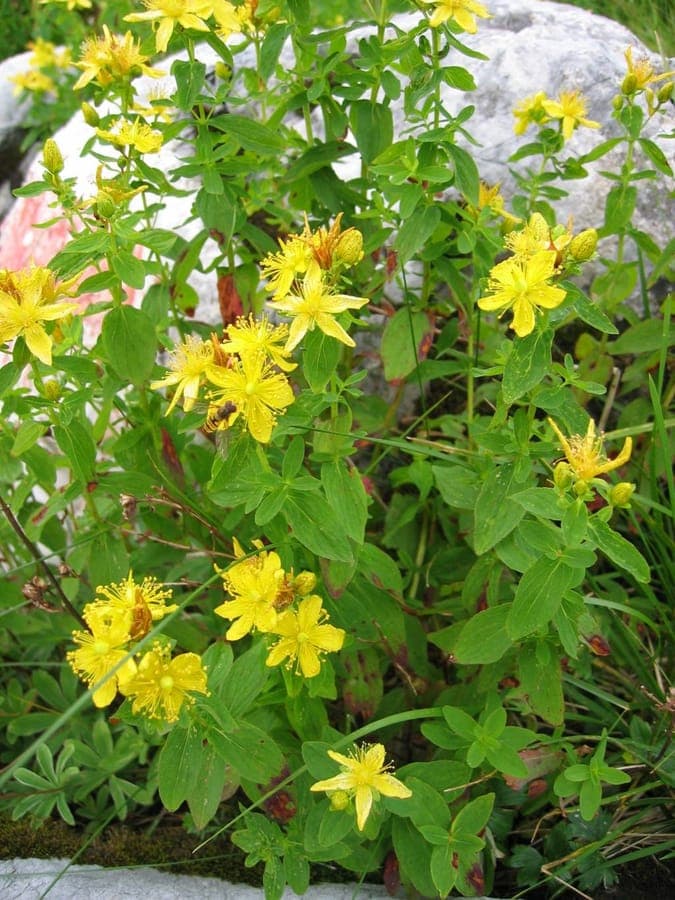
Spotted St. John's-wort (Hypericum maculatum) is a delightful, often overlooked perennial native to Europe through Central Siberia. Growing 40–60 cm tall, it fits perfectly into cottage gardens and naturalistic planting schemes. Its striking yellow blooms and distinctive reddish-brown spotted foliage create visual texture, while in autumn, the seed capsules turn a striking red. Winter-hardy in zones USDA 5–8, it thrives across the UK and northern Europe without protection.
On gardenworld.app, spotted St. John's-wort works as a mid-height perennial in mixed borders, particularly where you want reliable summer colour with minimal fuss. It partners beautifully with ornamental grasses, silver-leaved plants, and white-flowering companions.
Appearance & bloom cycle
The plant forms an upright, bushy mound with linear to lance-shaped leaves, 1.5–3 cm long. Foliage is dark green with characteristic reddish-brown speckles and punctations, most prominent on young growth. From June through September, abundant bright yellow flowers, about 2 cm across, appear in loose clusters. Blooms are distinctive thanks to long stamens with orange anthers.
Following flowers, attractive seed capsules develop, turning red then deep brown by autumn. Leave some stems standing for bird food and winter interest. Compact cultivars like 'Nanum' (30 cm) suit smaller gardens.
Ideal location
This plant thrives in full sun to partial shade (light level 8–9 out of 10). With a minimum of 5 hours direct sun daily, flowering is abundant. In deep shade, growth continues but blooming diminishes sharply. Avoid very exposed, windy positions where tall stems risk lodging. Plant along sunny borders, in gravel gardens, or at path edges for best effect.
On gardenworld.app, you can design sunny mixed borders where spotted St. John's-wort provides colour from June through October, bridging the gap between early-summer perennials and autumn bloomers.
Soil requirements
This species is exceptionally tolerant of poor soil. It thrives on infertile, sandy ground just as readily as moderately moist, loamy soil with a pH between 5.5 and 7.5. On heavy clay, incorporate sand and compost to improve drainage. The plant prefers well-drained, non-waterlogged conditions. On very rich soils, growth becomes lush but flowering suffers - nature's way of encouraging lean feeding.
At planting, work in sand and a little compost to encourage root establishment, especially on compacted ground.
Watering
Once established, spotted St. John's-wort is remarkably drought-tolerant, particularly in sunny sites. Young plants during their first growing season require regular watering, especially during dry spells. Mature plants need water only during prolonged drought (more than 2 weeks without rain). Excessive moisture invites root rot and reduces flowering.
Use drip irrigation or soaker hoses to keep foliage dry and prevent fungal issues. A thin mulch layer aids moisture retention without creating waterlogged conditions.
Diseño gratis
¿Quieres ver Spotted St. John's-wort: complete guide en tu jardín? Crea un diseño gratis ahora.
Pruning
Pruning is straightforward. In early spring (late March), remove the previous year's dead stems back to green wood. This encourages dense, upright growth. After flowering, cut back flower stems for a neater appearance if desired, though the developing seed capsules are ornamental in their own right.
In late season (October–November), cut stems back to 10 cm above ground to promote regeneration and keep the plant compact. Remove diseased or damaged foliage immediately.
Maintenance calendar
- January: Inspect for winter damage. Pruning possible until end of February.
- February: Perform spring pruning if not done earlier. Remove dead wood.
- March: Growth commences. No further action unless feeding desired.
- April: Monitor for pests. Apply balanced feed if soil appears depleted.
- May: Flowers form. Check watering during hot spells.
- June–August: Peak flowering. Deadhead flower clusters for continuous bloom if desired.
- September: Flowering subsides. Retain seed capsules for bird food.
- October: Plant begins senescence. Light cleanup of spent material.
- November: Prune back stems. Prepare for winter dormancy.
- December: Dormant. No action needed.
Winter hardiness
Spotted St. John's-wort is fully hardy to USDA zone 5 (minimum -30°C), making it reliable throughout the UK and northern Europe. Stems may die back to ground level in hard winters, but the plant regenerates vigorously from underground roots - a desirable characteristic as it promotes compact regrowth. In mild winters, foliage often remains partially evergreen.
Companion plants
Pair with ornamental grasses such as Festuca, Stipa, and Miscanthus for textural contrast. Yellow companions include Achillea 'Moonshine', Rudbeckia, and Heliopsis for continuity. White flowers such as Phlox and Gaura provide contrast. Silver-leaved partners like Artemisia and Santolina complement the spotted foliage beautifully. For a woodland edge, combine with pale Hydrangeas and Deutzia.
Avoid aggressive, space-hogging plants. Low groundcovers beneath planted as understory enhance the composition.
Closing
Spotted St. John's-wort deserves a place in every sunny, well-drained border. It delivers reliable yellow flowers and ornamental seed capsules for months with minimal care. Plant in full sun and lean, well-draining soil for best results. Available at garden centres in spring. Use gardenworld.app to plan mixed borders combining this perennial with grasses, late-summer bloomers, and silver foliage for a sophisticated, low-maintenance display.
¿Quieres ver Spotted St. John's-wort: complete guide en tu jardín? Crea un diseño gratis ahora.
Sube una foto, elige un estilo y obtén un diseño fotorrealista con lista de plantas en menos de un minuto.
Sin tarjeta de crédito


Plantas similares
Hypericum coris: complete guide
Hypericum coris
Complete guide to Hypericum coris, the heath-leaved St John's wort from the Alps: location, soil, watering and rock gardens.
St. Peter's-wort: complete guide
Hypericum crux-andreae
St. Peter's-wort is a low-growing North American shrub with yellow flowers, ideal for acidic, damp soil and naturalistic borders.
Hypericum densiflorum: complete guide
Hypericum densiflorum
Hypericum densiflorum is a dense-flowering American shrub with bright yellow summer blooms, well suited to damp gardens, rain gardens, and pollinator borders.