
St. Peter's-wort: complete guide
Hypericum crux-andreae
¿Quieres ver St. Peter's-wort: complete guide en tu jardín?
1 minuto, sin tarjeta de crédito
Overview
St. Peter's-wort (Hypericum crux-andreae) is a low-growing, semi-woody shrub in the St. John's wort family, Hypericaceae. The species occurs naturally across much of the eastern United States, from New York and Pennsylvania in the north down to Florida in the south and east Texas in the west. The plant typically grows in sandy pine flatwoods, damp heathland, and the margins of bogs and wetlands, where the soil tends to be acidic.
The botanical name crux-andreae refers to St. Andrew's cross, the X-shaped pattern that the four petals and sepals sometimes form together, a trait this group of St. John's wort species shares with the closely related Ascyrum species. Historically, this plant was even described under the name Ascyrum stans, before taxonomic revisions placed the species within the genus Hypericum.
In the United States, the species is also commonly called Atlantic St. Peter's-wort, a nod to its broad distribution along the east coast and southeastern states. Unlike many other American native plants, St. Peter's-wort remains relatively unknown in European gardens, making it an original choice for enthusiasts of unusual, naturalistic planting on damp, acidic ground. In gardens, this shrub is a valuable choice for anyone seeking a low, flowering ground cover for acidic, damp soil, such as a pond margin, a bog garden, or a shady border beneath conifers. The striking yellow flowers attract bees and other pollinators over a long summer season.
Appearance and bloom
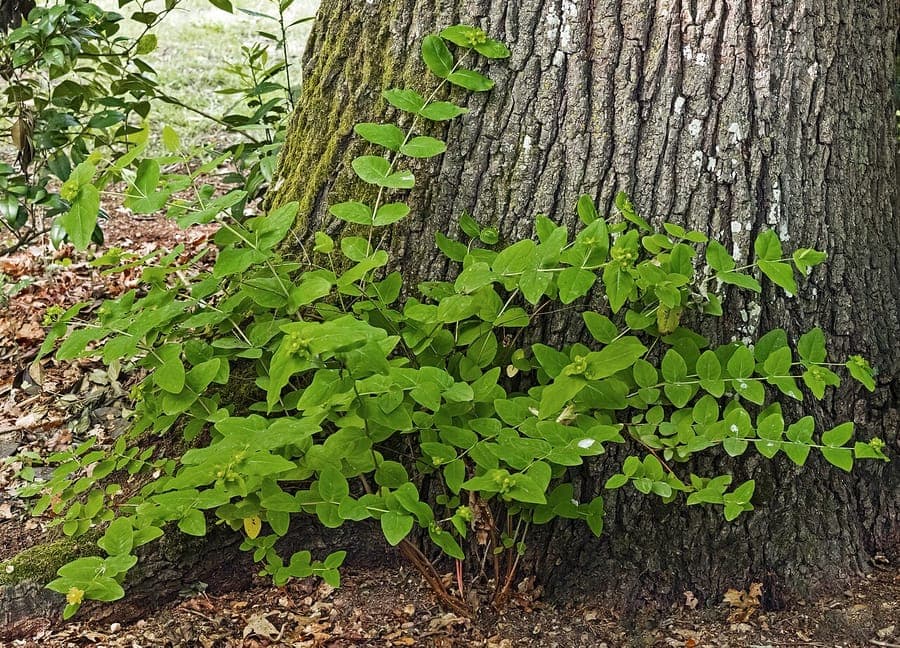
St. Peter's-wort grows as a compact, semi-woody subshrub to shrub, averaging 30 to 80 centimetres in height, with a moderate growth rate. The stems are often somewhat angled or winged, a trait typical of this section within the St. John's wort genus. The foliage has a medium texture, oblong to oval in shape, and remains present for much of the year in milder climates.
Flowers appear from summer onward and consist of four golden-yellow petals with a prominent cluster of stamens at the centre, a characteristic feature of St. John's wort. Unlike the more familiar Hypericum perforatum, which has five petals, St. Peter's-wort has only four, giving the plant a slightly different, more geometric flower shape. After flowering, small, inconspicuous seed capsules form.
Ideal location
This St. John's wort species tolerates both full sun and light partial shade, though flowering is more abundant in a sunnier spot. In its natural habitat, the plant often grows in open pine woodland where filtered light reaches the ground, meaning it also feels at home in the partial shade of deciduous or coniferous trees in the garden.
Because of its preference for damp to wet, acidic soil, this species is particularly suited to a pond margin, a low-lying part of the garden, or a purpose-built bog garden alongside rhododendrons and other acid-loving plants. Avoid alkaline, dry locations, as the plant will never thrive there.
Soil
The ideal soil for St. Peter's-wort is acidic to slightly acidic, with a pH between 4.6 and 7.0. The plant is naturally adapted to the lean, sandy, acidic soils of pine woodland and wetlands, and therefore tolerates acidic garden soil extremely well, such as that commonly found beneath conifers or in boggy parts of the garden.
Soil enriched with peat-free ericaceous compost, conifer needle mulch, or specialised rhododendron compost closely mimics the natural conditions. Avoid chalky or strongly alkaline soil, as the plant may develop chlorosis, yellowing leaves caused by iron deficiency, in such conditions. Good moisture retention matters more than rapid drainage for this species.
Diseño gratis
¿Quieres ver St. Peter's-wort: complete guide en tu jardín? Crea un diseño gratis ahora.
Watering
St. Peter's-wort thrives in evenly moist soil and tolerates temporarily wet conditions better than most other St. John's wort species. Provide extra water during dry summer spells, particularly if the plant grows in a sunny spot where the soil dries out faster.
In a bog garden or along a pond margin, the plant often needs little supplemental watering, since natural soil moisture is already sufficient. Avoid letting the root zone dry out completely, however, as this leads to leaf drop and reduced flowering.
Pruning
St. Peter's-wort requires little pruning maintenance. A light trim in early spring, cutting back older or damaged stems, keeps the plant compact and encourages fresh, flower-rich shoots for summer.
On older plants, a firmer prune every few years helps prevent excessive woodiness and keeps the plant looking fresh and vigorous. Never prune late in the season, as this can reduce that year's flowering. Always use clean, sharp pruning shears to prevent spreading disease between plants.
Maintenance calendar
March-April: light pruning to remove older stems; new shoots appear.
May-June: active growth; check for adequate soil moisture.
July-August: main bloom period with yellow flowers; plenty of pollinator activity.
September-October: flowering tapers off; seed capsules develop.
November-February: winter dormancy; in milder climates, some foliage persists.
Winter hardiness
St. Peter's-wort is hardy to USDA zone 6, corresponding to hardiness zones common across the Netherlands, Belgium, and most of Germany and France. In harsher winters, above-ground growth may partially die back, but the plant typically resprouts well from the base come spring.
A layer of mulch around the root zone during the first few winters after planting provides extra protection against severe frost, particularly in exposed locations. Once well established, the plant is reasonably hardy for a semi-woody species from a mild climate.
Companion plants
St. Peter's-wort pairs well with other acid-loving plants such as rhododendrons, azaleas, and Vaccinium species (blueberries), which share the same preference for acidic, damp soil. In a bog garden, the plant looks lovely alongside ferns and other moisture-loving companions.
For a naturalistic, North American planting scheme, St. Peter's-wort can be combined with other native St. John's wort species such as Hypericum kalmianum or Hypericum frondosum, which appreciate similar growing conditions but differ slightly in size and flowering habit. Grasses that tolerate damp, acidic soil, such as purple moor grass (Molinia caerulea), create a lovely textural contrast with the leaves and yellow flowers of St. Peter's-wort. Planting in small clusters alongside these grasses and heathland species produces a varied, naturalistic display that stays interesting throughout the season.
Closing
St. Peter's-wort is an underappreciated St. John's wort species that, with its striking yellow flowers and compact growth form, offers valuable interest in acidic, damp parts of the garden where many other flowering plants struggle. Visit GardenWorld to see how this shrub fits into a complete garden design, and check the GardenWorld plant database for further growing details.
¿Quieres ver St. Peter's-wort: complete guide en tu jardín? Crea un diseño gratis ahora.
Sube una foto, elige un estilo y obtén un diseño fotorrealista con lista de plantas en menos de un minuto.
Sin tarjeta de crédito


Plantas similares
Broombush: complete guide
Hypericum prolificum
Full guide to Broombush (Hypericum prolificum): location, soil, pruning, winter hardiness and companion planting for a sunny low-maintenance garden.
Hypericum kalmianum: complete guide
Hypericum kalmianum
Complete guide to Hypericum kalmianum, Kalm's St John's wort: location, soil, pruning and hardiness of this reliable shrub.
Hypericum frondosum: complete guide
Hypericum frondosum
Golden St. John's-wort is a compact shrub with brilliant yellow flowers and fine foliage. Easy-care and hardy garden plant.