
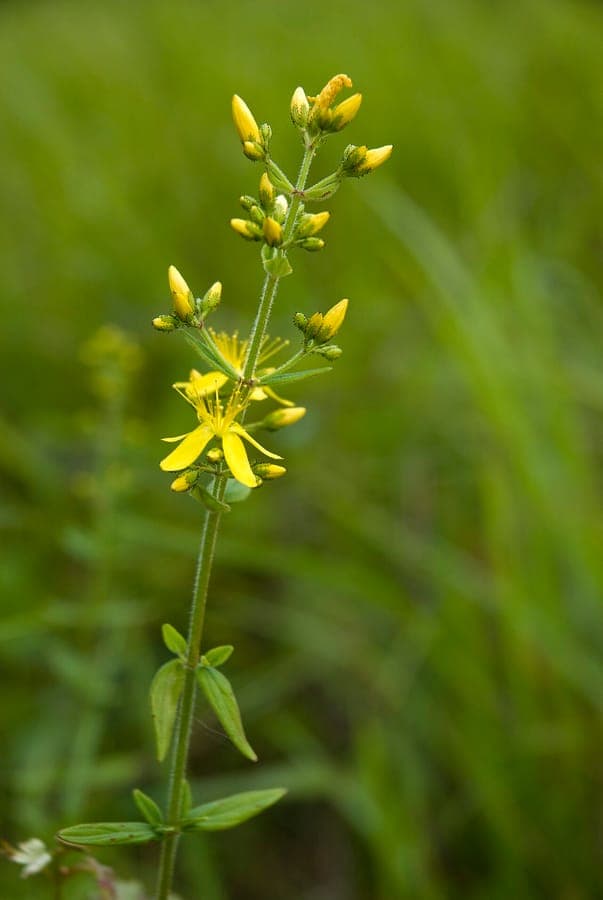
Olivier Pichard / CC BY-SA 3.0, via Wikimedia Commons
Hairy St. John's-wort: complete guide
Hypericum hirsutum
¿Quieres ver Hairy St. John's-wort: complete guide en tu jardín?
1 minuto, sin tarjeta de crédito
Overview
Hypericum hirsutum, commonly known as hairy St. John's-wort or hairy hypericum, is a charming herb from Europe extending to Xinjiang and northern Iran. This hairy upright herb belongs to the Hypericaceae family and is recognized for its downy texture and yellow flowers. Hairy St. John's-wort is far less known than many larger hypericum species but offers a unique addition to natural gardens, woodland margins, and borders where bird seed and insects are attracted.
Want to create a garden with ecosystem value? Visit gardenworld.app to design gardens that integrate natural plants like hairy St. John's-wort to attract birds, bees, and butterflies. This plant brings wild beauty and ecological value to your outdoor space.
Appearance & bloom
Hairy St. John's-wort grows into an upright herb 30-60 cm tall with slender growth. Stems are square, green, and distinctly hairy with short, silky hairs. Leaves are opposite, linear to lance-shaped, 1-3 cm long, and likewise covered with downy hair, giving the plant a soft, translucent texture.
Flowers are bright yellow, approximately 10-15 mm in diameter, with yellow stamens. They appear from July to September in small flower clusters at branch tips. Flowers open in the morning and close at night. With flowers for two months, the plant attracts many bees and flying insects.
Ideal location
Hairy St. John's-wort thrives in full sun to light dappled shade (at least 4 hours direct sunlight). It also grows well on semi-shaded woodland margins. The plant loves open, well-lit locations.
Soil
The plant grows well on dry to moderately moist soils. It prefers acidic to neutral soils (pH 5.5-7.0) with good drainage. It even thrives on poor soils and requires no special fertilization.
Diseño gratis
¿Quieres ver Hairy St. John's-wort: complete guide en tu jardín? Crea un diseño gratis ahora.
Watering
Once established, hairy St. John's-wort is drought-sensitive, especially during growth and flowering. Regular watering during the growing season helps keep the plant vigorous and promotes blooming. Avoid waterlogging.
Pruning & maintenance
Hairy St. John's-wort requires minimal pruning. If the plant becomes too tall, cut it back in spring. Remove dead stems in early spring to make room for new growth.
Maintenance calendar
- April-May: Plant develops; check for winter damage
- June-July: Preparation for flowering
- July-September: Flowering period; enjoy yellow flowers and insects
- October-November: Seed setting; leave seeds for bird food and self-seeding
- December-March: Plant dies back; clean up for spring
Winter hardiness
Hypericum hirsutum is cold-hardy in temperate zones (USDA zones 5-9). It grows primarily as an annual herb in much of Europe and the Netherlands and Belgium, though self-seeding can occur in favorable years.
Companion plants
Hairy St. John's-wort combines beautifully with other wildflowers: chamomile, purple coneflower, daisy, narrow mugwort, and other insect-friendly plants. Plant together for a wildflower meadow effect.
Final thoughts
Hypericum hirsutum (hairy St. John's-wort) is a subtle herb that attracts bird seed and insects, making it perfect for natural gardens and ecological approaches to gardening. With its hairy texture, yellow flowers, and adaptation to diverse growing conditions, it adds quiet beauty to gardens where wild nature is embraced. Leave seeds after flowering for bird food and next year's self-seeding. Discover more insect-friendly and bird seed-producing plants on gardenworld.app for a vibrant, ecologically valuable garden.
¿Quieres ver Hairy St. John's-wort: complete guide en tu jardín? Crea un diseño gratis ahora.
Sube una foto, elige un estilo y obtén un diseño fotorrealista con lista de plantas en menos de un minuto.
Más de 10.000 jardines diseñados
Sin tarjeta de crédito


Plantas similares
Hypericum coris: complete guide
Hypericum coris
Complete guide to Hypericum coris, the heath-leaved St John's wort from the Alps: location, soil, watering and rock gardens.
St. Peter's-wort: complete guide
Hypericum crux-andreae
St. Peter's-wort is a low-growing North American shrub with yellow flowers, ideal for acidic, damp soil and naturalistic borders.
Hypericum densiflorum: complete guide
Hypericum densiflorum
Hypericum densiflorum is a dense-flowering American shrub with bright yellow summer blooms, well suited to damp gardens, rain gardens, and pollinator borders.