
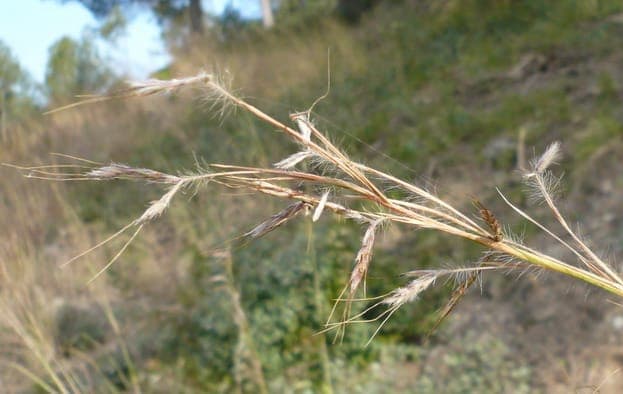
Pere prlpz / CC BY-SA 2.5, via Wikimedia Commons
Hyparrhenia hirta: complete guide
Hyparrhenia hirta
¿Quieres ver Hyparrhenia hirta: complete guide en tu jardín?
1 minuto, sin tarjeta de crédito
Overview
Hyparrhenia hirta, commonly known as South African bluestem or thatching grass, is a beautiful ornamental grass originating from Africa, Mediterranean regions, and Pakistan. This ornamental grass belongs to the Poaceae family and is recognized for its elegant, silky plumes and spectacular autumn coloring.
This grass is ideal for large, naturalistic gardens, meadow effects, and landscape designs needing drought tolerance and structure. Hyparrhenia hirta delivers year-round interest: summer growth, autumn plumes, and winter silhouette in dry gardens. The grass is low-maintenance and can tolerate diverse soils.
Appearance and Bloom
Hyparrhenia hirta grows as an upright bunchgrass to approximately 90-120 cm tall and wide, with slender leaves that bow upward. The leaves are narrow, linear, and dark green, with a rough feel due to hairy surface.
Flower spikes appear mid-summer through fall (July-October in temperate climates) with spectacular plumes that can reach 40-60 cm long. These plumes are soft, silky, and initially purple-brown, then golden-tan with maturity. The plumes persist on the plant into late winter, providing structure and movement.
Seed set is good and the grass can self-seed in warm climates, though this usually does not become problematic in temperate gardens.
Ideal Location
Hyparrhenia hirta must have full sun for optimal growth and plume development. A minimum of 6 hours of direct sunlight daily is essential. In very hot subtropical climates, light afternoon part shade can be beneficial.
This grass is very wind-tolerant and can thrive in exposed locations. In fact, wind adds movement to the plumes, which is highly decorative. Plant in large drifts for maximum effect in grassland or meadow-style gardens.
Soil
Hyparrhenia hirta is not fussy and can tolerate diverse soils: sand, loam, clay, and even acidic soils. The grass is drought-tolerant and actually thrives better in somewhat drier conditions than in very wet soils.
Ensure good drainage, especially in regions with high rainfall. Heavy clay soils should first be amended with sand and humus. This grass needs no special feeding once established.
Diseño gratis
¿Quieres ver Hyparrhenia hirta: complete guide en tu jardín? Crea un diseño gratis ahora.
Watering
Once established, Hyparrhenia hirta is very drought-tolerant and needs minimal watering. In the first growing season, water regularly to encourage root development. For established plants, water only during extremely dry periods.
In Mediterranean and dry climates, watering usually not needed after the first year. In more rainy regions, minimal supplemental water needed. Avoid persistently wet feet.
Pruning
This grass needs minimal pruning. For best results, cut the grass back to approximately 10-15 cm height in late spring (April-May) before new growth begins. This eliminates dead, last season's growth and encourages fresh, new growth.
Remove damaged or diseased leaves during growing season. Do not deadhead plumes unless you have a self-seeding problem; the dry plumes provide winter interest.
Maintenance Calendar
Spring (March-May): Cut back to 10-15 cm. Begin watering as growth starts. Minimal feeding.\nSummer (June-July): Enjoy growth. Water only if extremely dry. Monitor for pest problems (unlikely).\nFall (August-October): Enjoy plumes and autumn colors. Leave plumes on plant for winter interest.\nWinter (November-February): Enjoy structure of dry plumes. No maintenance needed.
Winter Hardiness
Hyparrhenia hirta is hardy in climate zones 7-11 (down to approximately -10 to -15 degrees Celsius for mature plants). Young plants are more sensitive.
In very cold climates (zone 6 and colder), treat this as an annual grass or protect soil with mulch to improve hardiness. In temperate zones, plant in protected, warm locations (such as against walls or near house).
Companion Plants
Create complementary grassland and meadow effects with:
- Other ornamental grasses: Miscanthus, Panicum, Festuca for tiered height effects
- Perennial wildflowers: Echinacea, Rudbeckia, Asclepias for color and pollen
- Small shrubs: Artemisia, Santolina for foliage contrast
- Allium: Ornamental onion families for poppoed color effects
Closing Thoughts
Hyparrhenia hirta is a perfect choice for drought-tolerant, low-maintenance gardens. With its spectacular autumn plumes, interesting foliage, and bird-seed attraction, the grass offers year-round interest and ecological value. Perfect for large, naturalistically designed gardens, meadow effects, and xeriscape projects.
Searching for this grass? Check grass-focused nurseries or Mediterranean plant suppliers.
¿Quieres ver Hyparrhenia hirta: complete guide en tu jardín? Crea un diseño gratis ahora.
Sube una foto, elige un estilo y obtén un diseño fotorrealista con lista de plantas en menos de un minuto.
Más de 10.000 jardines diseñados
Sin tarjeta de crédito


Plantas similares
Sporobolus pungens: complete guide
Sporobolus pungens
Sporobolus pungens is a stoloniferous Mediterranean coastal grass with outstanding salt and drought tolerance, perfect for seaside and dry gardens.
Mediterranean aegilops: complete guide
Aegilops biuncialis
Everything about Aegilops biuncialis, a Mediterranean annual grass with ornamental spikes and outstanding drought tolerance for dry gardens.
Silver bluestem: complete guide
Bothriochloa saccharoides
Full guide to Bothriochloa saccharoides (silver bluestem): site, soil, watering, winter hardiness, pruning, and garden companions.