
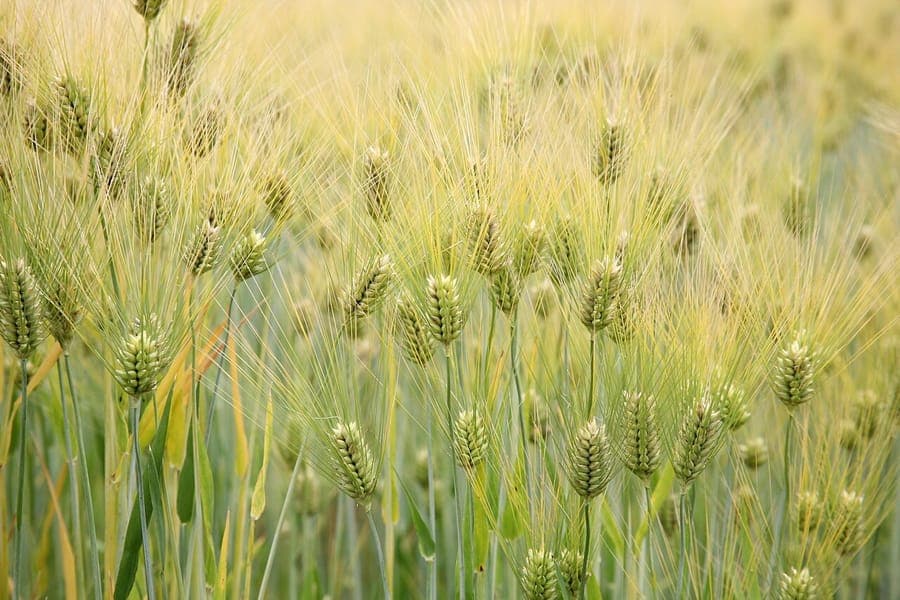
Cliff from Arlington, Virginia, USA / CC BY 2.0, via Wikimedia Commons
Barley: complete guide
Hordeum vulgare
¿Quieres ver Barley: complete guide en tu jardín?
1 minuto, sin tarjeta de crédito
Overview
Barley, scientifically known as Hordeum vulgare, is an essential cereal crop from the Poaceae family. This domesticated grass descended from wild relatives in the Middle East and has been a cornerstone of human nutrition and industry for millennia. With its characteristic golden ears and robust growth, Barley is one of the world's most important cereals for breweries, distilleries and animal feed.
Appearance and Bloom
Barley reaches heights of 50-100 cm and forms upright stems with light green leaves. Characteristic ears appear in May-June and are distinctly golden-yellow in color. Depending on the variety, ears can be two-rowed or six-rowed. Each ear is 8-15 cm long and bears awns. Flowering is inconspicuous, but the ripened grain kernels are highly valuable.
Ideal Location
Barley grows best in moderate full sun and in open gardens. This crop requires moderate temperatures and can grow without problems in temperate climates. Winter-hardy to USDA 6, suitable for Europe. Plant barley in locations with good visibility for the full effect of ripening.
Soil Composition
Barley grows optimally on moderately fertile, well-draining soils with neutral to slightly acidic pH. Chalky soils are suitable. Good preparation with composting improves results. The plant can grow at lower nutrient levels than wheat. Drainage is important.
Diseño gratis
¿Quieres ver Barley: complete guide en tu jardín? Crea un diseño gratis ahora.
Watering
Hordeum vulgare has moderate water needs. Ensure soil is well moist from sowing to growth. During flowering and ripening phases, reduce water. In dry spells, water regularly. After ripening, minimal water. Well-drained soil prevents fungi.
Pruning and Maintenance
Barley requires minimal maintenance as a crop. Early-stage weed control is important. Disease control is sometimes needed in wet weather. Normal insect damage is generally minimal. Harvest takes place when ears are fully golden and grain kernels are hard.
Maintenance Calendar
March-April: Sowing May: Growth and leaf development June: Flowering stage July: Grain filling August: Ripening and harvest September-October: Post-harvest and cleanup November-February: Rest period
Winter Hardiness
Barley is winter-hardy to -15°C (USDA 6). As an annual crop, it does not survive severe winters in growing state. Winter barley varieties can be sown in autumn for spring harvest. Frost after flowering can damage harvest.
Companion Plants
Barley grows well in crop rotation schemes after legumes and brassicas. Combination with wildflowers along edges creates habitat. Seed-eating birds benefit from remains. Traditionally cultivated with wheat in mixed crops.
Closing
Barley is a valuable crop for self-sufficient gardens and educational gardening projects. With moderate demands and high yields, it offers a rewarding growing experience. Discover how to integrate grain crops in your front yard via gardenworld.app. Create nourishment and education with traditional cereals via gardenworld.app.
¿Quieres ver Barley: complete guide en tu jardín? Crea un diseño gratis ahora.
Sube una foto, elige un estilo y obtén un diseño fotorrealista con lista de plantas en menos de un minuto.
Más de 10.000 jardines diseñados
Sin tarjeta de crédito


Plantas similares
Sporobolus pungens: complete guide
Sporobolus pungens
Sporobolus pungens is a stoloniferous Mediterranean coastal grass with outstanding salt and drought tolerance, perfect for seaside and dry gardens.
Mediterranean aegilops: complete guide
Aegilops biuncialis
Everything about Aegilops biuncialis, a Mediterranean annual grass with ornamental spikes and outstanding drought tolerance for dry gardens.
Silver bluestem: complete guide
Bothriochloa saccharoides
Full guide to Bothriochloa saccharoides (silver bluestem): site, soil, watering, winter hardiness, pruning, and garden companions.