
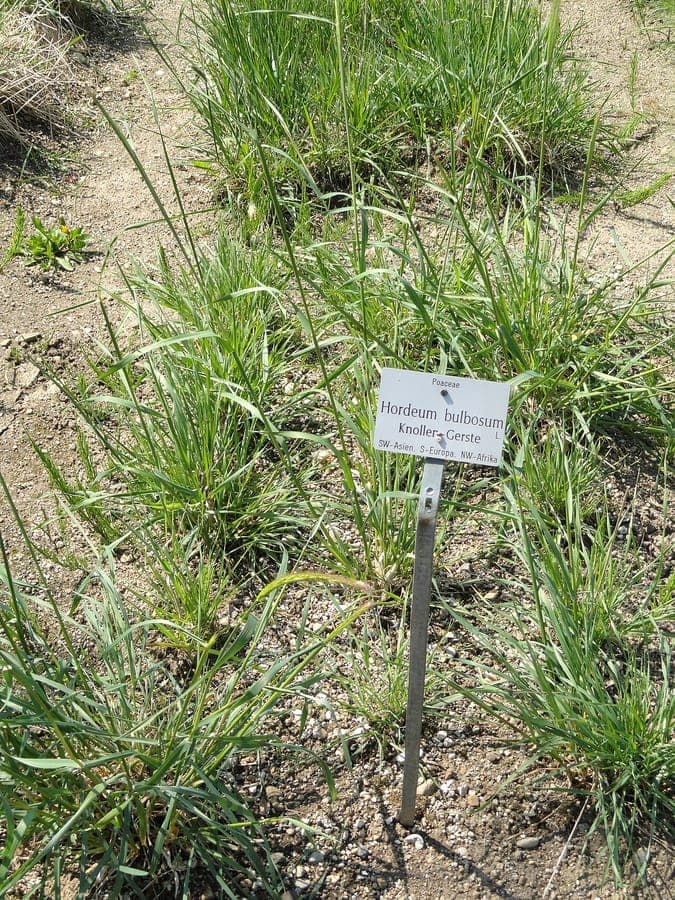
Daderot / Public domain, via Wikimedia Commons
Bulbous barley: complete guide
Hordeum bulbosum
¿Quieres ver Bulbous barley: complete guide en tu jardín?
1 minuto, sin tarjeta de crédito
Overview
Bulbous barley (Hordeum bulbosum) is an elegant ornamental grass from the Poaceae family, native to the Mediterranean and West and Central Asia. This plant is renowned for its characteristic bulbous root base and ornamental awns that appear in groupings. Reaching heights of 30 to 90 centimetres, bulbous barley creates a soft, moving texture in the landscape. The grass is extremely hardy and tolerates extreme weather conditions.
Appearance & bloom
Hordeum bulbosum is characterized by narrow, bluish-green leaves growing in neat tufts. The stems are straight and elegant, ending in characteristic awns with fine bristles. The flower heads have a golden to purplish colour and appear from May to June. The bristles of the grass refract light and create a shimmering effect when swaying in the breeze. After blooming, the awns remain attractive for a long time, providing interest until late in the growing season.
Ideal location
Bulbous barley grows optimally in sunny to lightly shaded locations receiving at least 4-6 hours of direct sunlight. The plant thrives in dry, open locations and is ideal for sunny slopes and borders. Ensure good air circulation to prevent fungal diseases. Plant in groups for maximum landscape effect. This grass is excellent for rock gardens, Mediterranean gardens and as groundcover in large gardens.
Soil
Hordeum bulbosum grows well in lean to moderately nutrient-rich soils and is not particular about pH. The plant tolerates even poor, dry soils where many other plants struggle. Ensure good drainage to prevent stagnation. In heavy clay soil, bulbils develop better with sand additions. The plant tolerates salt leaching and is suitable for coastal and dry regions.
Diseño gratis
¿Quieres ver Bulbous barley: complete guide en tu jardín? Crea un diseño gratis ahora.
Watering
Once established, bulbous barley requires only minimal watering. The plant is extremely drought tolerant and withstands prolonged dry periods. Water only during extreme drought or immediately after planting. Excessive moisture can lead to disease. Avoid watering in winter. In Mediterranean climates the grass can grow without supplementary water once established.
Pruning
Pruning is limited for Hordeum bulbosum. You can remove damaged leaves and stems. After winter, wilted parts can be cut back to ground level. Leave the awns standing late into the year for winter interest. Remove seed heads before they spread to prevent seedlings in unwanted locations.
Maintenance calendar
Spring (March-April): plant new specimens and cut back old ones. Late spring: check for diseases. June-July: appreciate the blooms. August-October: observe seed development. November-February: minimal maintenance; pruning can wait until March. Carefully remove wilted material in early spring.
Winter hardiness
Bulbous barley is extremely winter hardy and tolerates temperatures down to -25 degrees Celsius and lower. The plant survives harsh winters without protection in most European regions. Snow does not damage the plant. The plant is suitable for all gardens in zones 3-9 and even in very harsh climates.
Companion plants
Hordeum bulbosum pairs excellently with other hardy grasses and herbaceous plants. Combine with other ornamental grasses such as feather reed grass and red-hot poker. Group with lavender, sage and roses for colour mix. The plant works well with rock garden plants. Suitable in large groups or as an accent in borders.
Closing
Bulbous barley is a low-maintenance ornamental grass that brings movement and texture to any garden. Perfect for dry, sunny spots requiring minimal maintenance. Available at major garden centres in the UK. Visit gardenworld.app/en for more plant information and garden design. Discover how to integrate this grass into your front garden with our free design tool at gardenworld.app/en.
¿Quieres ver Bulbous barley: complete guide en tu jardín? Crea un diseño gratis ahora.
Sube una foto, elige un estilo y obtén un diseño fotorrealista con lista de plantas en menos de un minuto.
Más de 10.000 jardines diseñados
Sin tarjeta de crédito


Plantas similares
Sporobolus pungens: complete guide
Sporobolus pungens
Sporobolus pungens is a stoloniferous Mediterranean coastal grass with outstanding salt and drought tolerance, perfect for seaside and dry gardens.
Mediterranean aegilops: complete guide
Aegilops biuncialis
Everything about Aegilops biuncialis, a Mediterranean annual grass with ornamental spikes and outstanding drought tolerance for dry gardens.
Silver bluestem: complete guide
Bothriochloa saccharoides
Full guide to Bothriochloa saccharoides (silver bluestem): site, soil, watering, winter hardiness, pruning, and garden companions.