
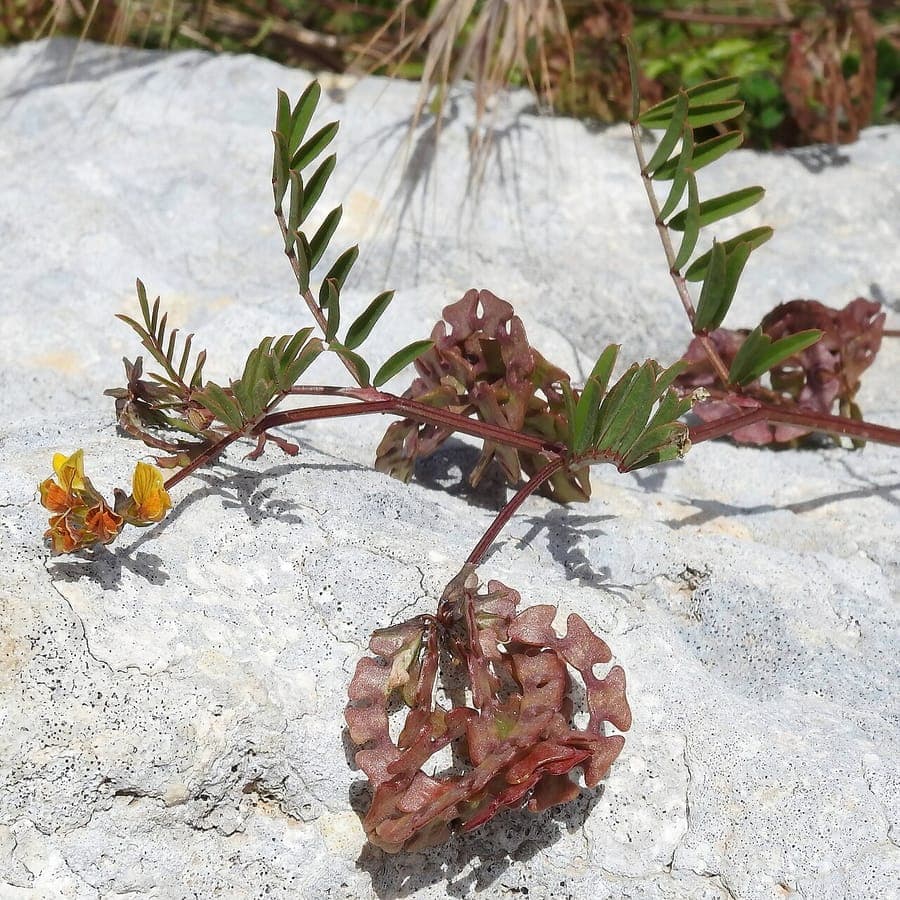
Robert Flogaus-Faust / CC BY 4.0, via Wikimedia Commons
Hippocrepis multisiliquosa: complete guide
Hippocrepis multisiliquosa
¿Quieres ver Hippocrepis multisiliquosa: complete guide en tu jardín?
1 minuto, sin tarjeta de crédito
Overview
Hippocrepis multisiliquosa, known as many-flowered horseshoe-vetch, is a delicate legume native to Mediterranean regions. This low-growing plant from the Fabaceae family is ideal for xeriscaping in Mediterranean and warm-temperate climates.
The common name refers to distinctive hooked seedpods resembling horseshoes. These unique structures make Hippocrepis multisiliquosa botanically and ornamentally fascinating. The plant grows as a prostrate groundcover with abundant small yellow flowers.
Appearance and Bloom
Hippocrepis multisiliquosa grows as a low, spreading plant rarely exceeding 8-16 inches (20-40 cm) in height. Thin, finely branched stems bear dense, finely pinnate foliage, creating an airy, delicate appearance.
Flowers are small but abundant: bright yellow, approximately 0.2-0.3 inches (5-8 mm), clustered in small yellow heads. Flowering occurs April through June, with possible repeat bloom in fall under favorable conditions. After flowering, characteristic coiled, hooked pods form in spirals.
Ideal Location
Place in full sun requiring six to eight hours of direct daily sunlight. In very hot Mediterranean climates, afternoon shade may be beneficial, but full sun is essential in cooler zones.
Perfect for rocky slopes, stone walls, and alpine troughs. The plant thrives in dry, well-draining locations. It even grows between stone crevices, making it valuable as a groundcover in rock gardens.
Soil
Require very well-draining soil. This plant tolerates even poor, rocky substrates better than rich soil. Add sand, small gravel, or perlite comprising at least 50% of the mix.
Optimal pH is neutral to slightly acidic (6.0-7.5). In clay-heavy soils, add substantial sand or create raised beds.
Avoid overfertilizing. This plant actually thrives in nutrient-poor conditions.
Watering
Once established, Hippocrepis multisiliquosa is highly drought-tolerant. During the first growing season, water regularly every two weeks until roots establish. Afterward, you can largely discontinue supplemental watering.
During severe drought, light watering is acceptable but unnecessary in areas with regular rainfall. Excessive water, especially in winter, proves harmful.
Diseño gratis
¿Quieres ver Hippocrepis multisiliquosa: complete guide en tu jardín? Crea un diseño gratis ahora.
Pruning
Minimal or no pruning is required. The plant naturally maintains a compact form without intervention. However, removing spent flower stems after blooming improves appearance.
If growth becomes rangy, carefully remove 20% of the plant mass after flowering, though this is rarely necessary.
Maintenance Calendar
Spring (March-May): Sow seeds or plant material, minimal feeding, water during drought.
Summer (June-August): Minimal maintenance, water only during extreme drought, no feeding.
Fall (September-October): Possible second bloom under favorable conditions.
Winter (November-February): Plant is dormant, no maintenance required.
Winter Hardiness
Hippocrepis multisiliquosa is hardy to approximately 23 Fahrenheit (-5 Celsius) under well-draining conditions. Winter moisture proves more problematic than cold. In northern zones, winter protection is advisable.
Ensure excellent drainage during winter. Moisture accumulation proves more damaging than frost. Plant on raised, well-draining sites.
Companion Plants
Combine with other drought-tolerant Mediterranean species:
- Thymus species: Matching drought tolerance, complementary purple-pink
- Origanum species: Mediterranean flair
- Lavandula: Classic Mediterranean combination
- Sedum species: Succulents for dry climates
- Grey foliage like Artemisia: Textural contrast
Closing Thoughts
Hippocrepis multisiliquosa is a botanical gem for creating authentic Mediterranean xeriscapes. This plant proves water-conservation gardens need not be monotonous. Its delicate yellow flowers and interesting fruit structures add character to rocky, dry gardens.
While less common in commerce than other xeriscaping species, this plant is certainly worth seeking out for specialist gardeners. In warm-temperate gardens, it serves as a valued ground element in rock walls and alpine troughs.
¿Quieres ver Hippocrepis multisiliquosa: complete guide en tu jardín? Crea un diseño gratis ahora.
Sube una foto, elige un estilo y obtén un diseño fotorrealista con lista de plantas en menos de un minuto.
Más de 10.000 jardines diseñados
Sin tarjeta de crédito


Plantas similares
Tall Silky Lupine: complete guide
Lupinus elatus
Tall silky lupine is a fast-growing Californian perennial with silvery foliage and blue-purple flower spikes, ideal for a prairie-style garden.
Garfield Lupine: complete guide
Lupinus garfieldensis
The Garfield lupine is a rare, fast-growing American perennial for alkaline, dry grassland gardens, with striking blue flower spikes.
Lupinus elegans: complete guide
Lupinus elegans
Lupinus elegans, the elegant lupine, is a spectacular blooming plant from Mexico with blue flower spikes. Care, cultivation and garden use.