
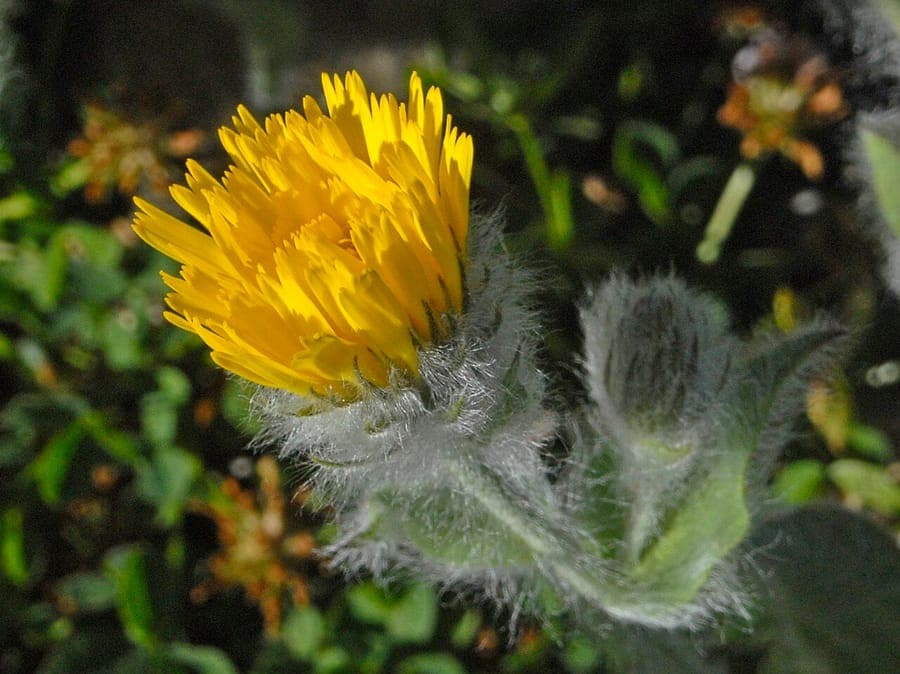
Hectonichus / CC BY-SA 3.0, via Wikimedia Commons
Hieracium villosum: complete guide
Hieracium villosum
¿Quieres ver Hieracium villosum: complete guide en tu jardín?
1 minuto, sin tarjeta de crédito
Overview
Hieracium villosum, commonly called woolly hawkweed, is a distinctive alpine plant from European mountain regions ranging from the Alps to the Balkans. This species is characterized by its densely hairy foliage and golden summer flowers, giving rise to its name (villosum = woolly).
Appearance & Bloom
This compact to medium-height perennial grows in tight rosettes. Most striking are the densely hairy, gray-white leaves with a woolly texture. Leaves reach up to 20 cm long and form dramatic, silvery foliage mounds. From July-September, numerous yellow flowers appear on hairy stems 30-60 cm tall. Each flower head measures approximately 2 cm across. The overall effect is architectural and striking.
Ideal Location
Woolly hawkweed thrives in full sun positions. Minimum 6-8 hours direct sun daily is essential for compact forms and optimal hairiness development. The plant adapts to rocky, scree-like, and well-drained mountain positions. Good air circulation prevents fungal issues. Perfect for rock gardens, alpine troughs, and mountainous simulations.
Soil
Well-drained, often rocky substrate is crucial. The plant grows in acidic to neutral soils (pH 5.5-7.0) and thrives in poor soils. Waterlogging is absolutely not tolerated. In containers use alpine/scree mix (60% sand/gravel, 40% peat/humus). Heavy clay leads to rapid root rot.
Watering
Once well-established, Hieracium villosum is extremely drought-tolerant. Water regularly during the first growing season for establishment. Mature plants endure long dry periods with minimal damage. Container plants require more regular watering. Avoid complete waterlogging; moderate moisture levels are appreciated.
Diseño gratis
¿Quieres ver Hieracium villosum: complete guide en tu jardín? Crea un diseño gratis ahora.
Pruning
Minimal pruning. Spent flowers can be removed for neatness but this limits seed production. Old foliage rosettes can be removed to make space for new growth. The plant spreads via self-seeding; young seedlings can be removed if they cause unwanted spread.
Maintenance Calendar
April-May: Division and sowing; soil preparation June-July: Water regularly if needed; weeding July-September: Flowering period; seed collection September-October: Seed dispersal; dead foliage removal November-March: Dormancy; minimal maintenance
Winter Hardiness
Hieracium villosum is extremely hardy (USDA zones 3-8). This mountain plant tolerates temperatures to -40°C. Snow cover provides protection in extreme winters. Foliage remains largely green in mild winters. Frost damage to flowers is unlikely given the high altitude blooming period.
Companion Plants
Woolly hawkweed combines well with:
- Veronica for blue accents
- Dianthus for pink texture
- Draba for white flowers
- Arabis for subtle details
- Silene for contrasting forms
Specialty alpine nurseries stock seeds and plants. Use gardenworld.app to design alpine rock garden combinations.
Conclusion
Hieracium villosum is a stately alpine plant with distinctive hairy foliage. With its golden summer flowers, extreme hardiness, and adaptation to challenging growing conditions, this mountain beauty is ideal for specialized rock gardens. Perfect for gardeners seeking drama and texture in alpine displays. Incorporate this exceptional mountain plant into your garden using gardenworld.app's design tools for specialized alpine plant combinations.
¿Quieres ver Hieracium villosum: complete guide en tu jardín? Crea un diseño gratis ahora.
Sube una foto, elige un estilo y obtén un diseño fotorrealista con lista de plantas en menos de un minuto.
Más de 10.000 jardines diseñados
Sin tarjeta de crédito


Plantas similares
Hieracium alpinum: complete guide
Hieracium alpinum
Hieracium alpinum is a hardy alpine perennial from the Asteraceae family. Yellow flowers, extremely cold-hardy, ideal for rock gardens.
Hieracium sabaudum: complete guide
Hieracium sabaudum
Hieracium sabaudum is a robust perennial from European mountain regions. Yellow flowers, vigorous self-seeding, ideal for naturalistic gardens.
Crepis aurea: complete guide
Crepis aurea
Golden hawksbeard blooms with vibrant yellow flowers on mountain meadows. Discover care, growing needs, and ideal planting locations for this alpine herb.