
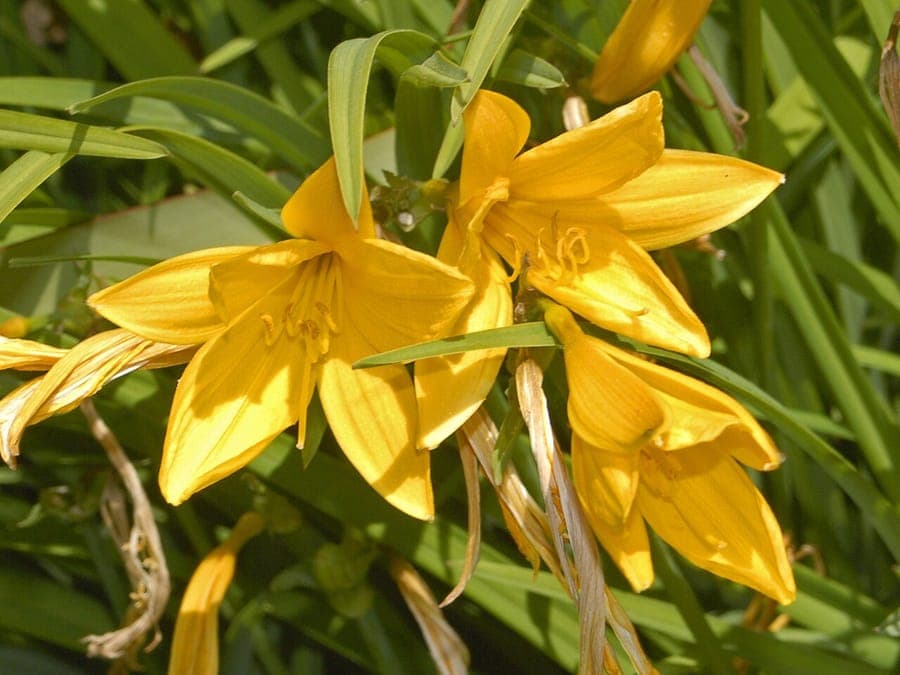
Hectonichus / CC BY-SA 3.0, via Wikimedia Commons
Citron Daylily: complete guide
Hemerocallis citrina
¿Quieres ver Citron Daylily: complete guide en tu jardín?
1 minuto, sin tarjeta de crédito
Overview
Hemerocallis citrina, called citron daylily or long yellow daylily, is a distinctive variant within the daylily genus. This Asian perennial (native to Russia, China, and Japan) differs from typical day-bloomers by its nocturnal flowering habit: blooms open late afternoon and remain open through the night, then fade by morning. Flowers are bright citron-yellow and intensely fragrant, especially at dusk. In garden design, it offers completely different character from day-bloomers, with added romantic appeal and mystery.
Appearance and Bloom
Citron daylily forms elegant, willowy clumps of long, strap-like foliage reaching 80 centimetres tall. Flowering stems reach similar heights. Each bloom is roughly 8-10 centimetres wide, pure citron-yellow with delicate, slender petals. Flowering runs from June to August, with peak activity at dusk. Flowers are intensely fragrant, considerably more so than day-blooming types. Each bloom lasts one night only, but dozens follow during two to three months of continuous display.
Ideal Location
Citron daylily grows best in full sun to light partial shade. Minimum five hours direct sunlight is essential for good flowering. The plant tolerates most conditions and is flexibly sited. For night-bloomers, visibility is sometimes limited, so position near seating areas or pathways where you can enjoy evening flowers, or near house doors where fragrance wafts inside.
Soil
Hemerocallis citrina thrives in virtually any soil, from acidic to alkaline. pH between 4.8 and 8 is acceptable. Heavy clay can be lightened with gravel, but the plant tolerates standard garden soil well. Add compost at planting, but fertilising is not critical; it grows in poor soil too. Drainage is preferred over waterlogging, though the plant shows better drought than excess-moisture tolerance.
Diseño gratis
¿Quieres ver Citron Daylily: complete guide en tu jardín? Crea un diseño gratis ahora.
Watering
In the first year, water regularly (two to three times weekly) to encourage deep rooting. Mature plants are extremely drought-tolerant and may rely entirely on rainfall in most European climates. In very dry springs or summers, you may need supplemental watering, especially if flowering lags. A soil moisture meter helps greatly.
Pruning
Citron daylily requires minimal pruning. Spent flowers naturally fall away; you may remove them for neater appearance, but it's optional. After the bloom period ends (September), cut back withered stems. In spring, new foliage emerges; old foliage can be carefully removed. No chemical pruning agents are needed.
Maintenance Calendar
April: Plant young specimens or divide existing clumps. Apply balanced fertiliser. May: New growth visible; water regularly. June-August: Night flowers open; enjoy evening fragrance. August: Flowering peaks. September: Bloom ends; cut back withered stems. October-March: Dormant season; monitor soil moisture in dry winters.
Winter Hardiness
Citron daylily is hardy to approximately -25 degrees Celsius, making it suitable for all Dutch and Belgian climates. In very southern regions, it may be nearly evergreen. No special winter protection is required.
Companion Plants
Citron daylily combines beautifully with other summer bloomers: Gaura lindheimeri, Salvia, and Monarda. Group with grasses like Stipa tenuissima or Pennisetum for texture. For night-blooming effect, pair with other evening-flowering plants such as Matthiola bicornis (night-scented stock) or Oenothera odorata (evening primrose).
Closing
Citron daylily adds a unique dimension to summer gardens through its night-blooming habit and delightful fragrance. Plant in groups of three to five for best effect. This plant is becoming increasingly popular through gardenworld.app and modern garden designers. Enjoy the magic of night-blooming flowers for two to three months.
¿Quieres ver Citron Daylily: complete guide en tu jardín? Crea un diseño gratis ahora.
Sube una foto, elige un estilo y obtén un diseño fotorrealista con lista de plantas en menos de un minuto.
Más de 10.000 jardines diseñados
Sin tarjeta de crédito


Plantas similares
Aloe castanea: complete guide
Aloe castanea
Discover Chestnut aloe, a South African succulent. Growth, nutrition, and garden integration for warm climates and container culture.
Aloe pratensis: complete guide
Aloe pratensis
Learn how to grow Meadow aloe, a South African succulent. Nutrition, propagation, and front yard integration for warm climates or containers.
Pretoria aloe: complete guide
Aloe pretoriensis
Discover Aloe pretoriensis, an elegant South African succulent with striking red blooms. Learn care tips, ideal conditions, and companion planting for this hardy, drought-tolerant plant.