
Wikimedia Commons / Public domain, via Wikimedia Commons
Soya: complete guide
Glycine max
¿Quieres ver Soya: complete guide en tu jardín?
1 minuto, sin tarjeta de crédito
Overview
Glycine max, better known as Soya or Edamame, is an annual legume plant from the Fabaceae family native to East Asia, particularly China. This food crop is of incredible nutritional value, yielding protein, oil, and fiber-rich fruits. Although traditionally grown in warm subtropical areas, modern cultivars can also thrive in temperate European climates. It's a perfect choice for home gardeners interested in sustainable food production.
Appearance and bloom
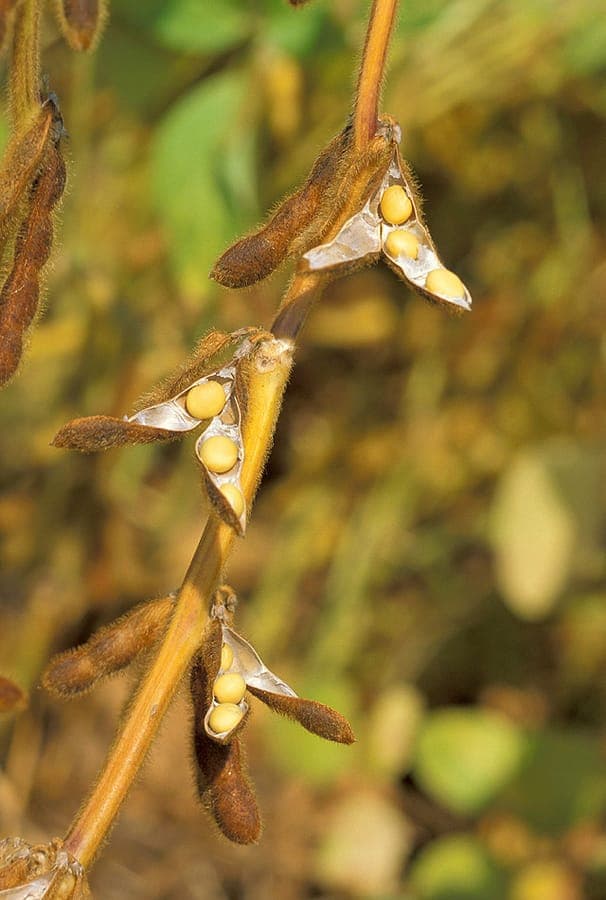
The soybean plant grows as an upright, bushy herb, typically 50 to 150 cm tall depending on variety and growing conditions. The plant has trifoliate compound leaves with characteristic hairiness. The flowers are small, blue, purple or white flowers appearing in July to August. After fertilization, pods form with typically 2-3 round seeds (beans) per pod. These seeds are what we know as soybeans. The entire plant becomes brownish at season's end.
Ideal location
Soya requires full sun: at least 7-8 hours of direct sunlight daily. Choose a light, warm location protected from strong winds. In cooler climates, a southward exposure is preferable. The plant thrives on warmth, so a well-warmed spot results in better yields. Ensure sufficient space for the plant to develop without shading from neighboring plants.
Soil
Soya thrives best in neutral to slightly alkaline soil (pH 6.0-7.5). The plant requires well-draining, fertile soil, but is fairly adaptive to various soil types. Incorporate compost or rotted manure for optimal growth. This is a nitrogen-fixing plant so it helps improve soil naturally. Heavy soils must be lightened with sand. Good soil preparation prior to planting is essential for good yields.
Diseño gratis
¿Quieres ver Soya: complete guide en tu jardín? Crea un diseño gratis ahora.
Watering
Soya requires regular watering, especially during pod formation. Maintain soil moisture at 60-70% of capacity. Deep watering 1-2 times per week is better than shallow daily spraying. Avoid waterlogging which causes rot. In rainy periods supplemental watering may be minimal. During dry spells yield can be significantly reduced.
Pruning
Minimal pruning needed. Some growers top plants in peak vegetative growth to encourage branching. Remove dead leaves at the bottom for better air circulation. Avoid over-pruning which can harm yields. The plant usually grows compact enough without much intervention.
Maintenance calendar
April-May: Seed preparation and soil preparation. May-June: Seeding and germination. June-July: Plant growth and nitrogen fixation. July-August: Blooming period. August-September: Pod development and ripening. October: Harvest preparation. October-November: Harvesting and drying.
Winter hardiness
Soya is not frost-hardy and must be grown as a summer annual crop in temperate climates. The plant dies at first frost. In cooler European regions seeding must occur after the last spring frost. The plant thrives best in seasons with warm growth, likely requiring 120-150 frost-free days.
Companion planting
In garden contexts soya can be cultivated with other summer vegetables. Avoid planting with allelopathic plants. Companion plants include carrots, cucumbers, and corn. Soya can be part of crop rotation to continue soil improvements.
Closing
Glycine max soya is a fantastic addition to the sustainable food gardener. With nutrient-dense harvests and relatively simple cultivation, it's perfect for beginners. Obtain healthy seeds from local seed suppliers. You can make homemade edamame and soya products! gardenworld.app/en
¿Quieres ver Soya: complete guide en tu jardín? Crea un diseño gratis ahora.
Sube una foto, elige un estilo y obtén un diseño fotorrealista con lista de plantas en menos de un minuto.
Más de 10.000 jardines diseñados
Sin tarjeta de crédito


Plantas similares
Tall Silky Lupine: complete guide
Lupinus elatus
Tall silky lupine is a fast-growing Californian perennial with silvery foliage and blue-purple flower spikes, ideal for a prairie-style garden.
Garfield Lupine: complete guide
Lupinus garfieldensis
The Garfield lupine is a rare, fast-growing American perennial for alkaline, dry grassland gardens, with striking blue flower spikes.
Lupinus elegans: complete guide
Lupinus elegans
Lupinus elegans, the elegant lupine, is a spectacular blooming plant from Mexico with blue flower spikes. Care, cultivation and garden use.