
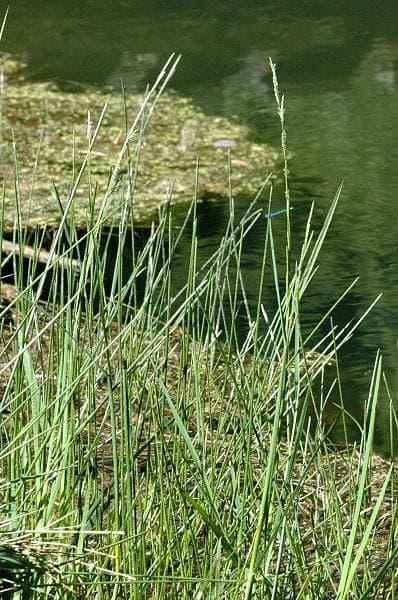
James K. Lindsey / CC BY-SA 3.0, via Wikimedia Commons
Water Mannagrass: complete guide
Glyceria fluitans
¿Quieres ver Water Mannagrass: complete guide en tu jardín?
1 minuto, sin tarjeta de crédito
Overview
Water Mannagrass (Glyceria fluitans) is an evergreen grass thriving along waterways, pond edges, and wetland environments. This elegant grass species produces graceful feathery plumes that elegantly arc over water. Native to Europe, this grass is valuable for water garden designs promoting aquatic ecosystems.
At gardenworld.app, we integrate Water Mannagrass into water garden designs bringing together fauna and flora.
Appearance & Growth
Water Mannagrass grows in tufts 60-100 cm tall with narrow, glossy green leaves. Stems are flexible and bend gracefully under their weight, especially when grown in waterside conditions. From June through September, characteristic plumes appear - graceful, feathery flower plumes in yellowish-brown.
The plant retains foliage through winter in mild climates, adding winter interest.
Ideal Location
Water Mannagrass thrives best in full sun to partial shade along waterbanks. It requires minimum 5-6 hours daily sunlight for optimal growth and plume production. Position it where roots remain constantly moist but waterbodies don't continuously submerge the plant.
Ensure good water quality without strong currents damaging young plants.
Soil & Water
Water Mannagrass thrives in aqueous environments with silt-rich soil. This grass prefers shallow wetland areas to 20-30 cm depth. The plant can be container-grown, filled with heavy clay and wetland soil mix. In natural waterbodies, add organic material to enhance nutrients and structure.
PH can range from acidic to neutral; the plant is flexible regarding water quality.
Watering
As an aquatic plant, Water Mannagrass requires permanently moist conditions. Ideal is permanent waterside growth with roots in water. In gardens without true water features, establish very marshy soils requiring regular flooding.
Ensure soil never completely dries.
Diseño gratis
¿Quieres ver Water Mannagrass: complete guide en tu jardín? Crea un diseño gratis ahora.
Pruning & Maintenance
Minimal care needed. In autumn (October-November), cut back withered foliage. This stimulates new growth in spring. Regularly remove damaged or rotting-looking foliage.
Every 3-4 years, divide large tufts to maintain vigor.
Maintenance Calendar
June-September: Flowering; plumes emerge October-November: Autumn cleanup; remove dead foliage December-March: Dormant period; minimal care April-May: Growth resumes; new shoots appear
Winter Hardiness
Water Mannagrass is hardy in zones 6-10, tolerant of temperatures to -15°C. In snowy regions, tops may die back, but roots survive. In mild areas, foliage remains evergreen.
Deep-water-situated plants are better protected from frost than shallow specimens.
Water Garden Companions
Pair Water Mannagrass with:
- Iris laevigata: Purple iris flowers
- Pontederia cordata: Pickerelrush with blue flowers
- Acorus gramineus: Fragrant grass in gold
- Schoenoplectus: Brownish-red stems
See gardenworld.app for water garden designs combining these species.
Ecological Benefits
Water Mannagrass plays useful role in aquatic ecosystems:
- Food source and shelter for waterfowl
- Nectar source for insects and bees in summer months
- Helps filter water pollution through nutrient uptake
- Stabilizes water bottoms against erosion
Final Thoughts
Water Mannagrass is essential for natural water gardens. With minimal care and great ecological benefits, it deserves place in every water garden design.
Find Water Mannagrass at garden centers specializing in water plants. For natural wetland gardens, recommend suppliers of aquatic plants.
¿Quieres ver Water Mannagrass: complete guide en tu jardín? Crea un diseño gratis ahora.
Sube una foto, elige un estilo y obtén un diseño fotorrealista con lista de plantas en menos de un minuto.
Más de 10.000 jardines diseñados
Sin tarjeta de crédito


Plantas similares
Sporobolus pungens: complete guide
Sporobolus pungens
Sporobolus pungens is a stoloniferous Mediterranean coastal grass with outstanding salt and drought tolerance, perfect for seaside and dry gardens.
Mediterranean aegilops: complete guide
Aegilops biuncialis
Everything about Aegilops biuncialis, a Mediterranean annual grass with ornamental spikes and outstanding drought tolerance for dry gardens.
Silver bluestem: complete guide
Bothriochloa saccharoides
Full guide to Bothriochloa saccharoides (silver bluestem): site, soil, watering, winter hardiness, pruning, and garden companions.