
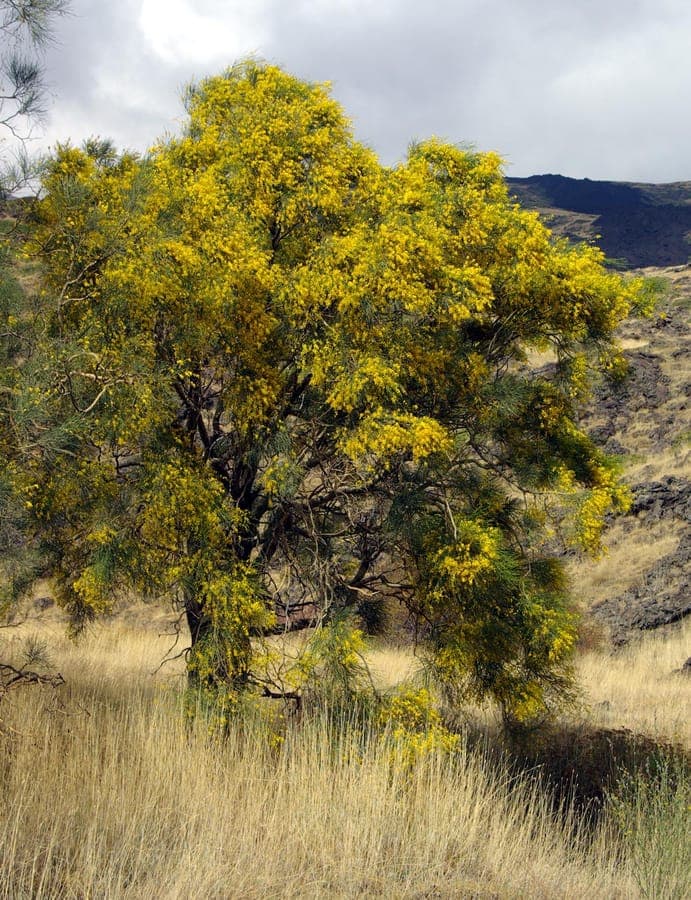
Velela / CC BY-SA 3.0, via Wikimedia Commons
Mount Etna Broom: complete guide
Genista aetnensis
¿Quieres ver Mount Etna Broom: complete guide en tu jardín?
1 minuto, sin tarjeta de crédito
Overview
Mount Etna Broom (Genista aetnensis), native to the Mediterranean islands of Sicily, Corsica and Sardinia, is a graceful shrub prized for its brilliant yellow flowers and feathery appearance. This Fabaceae family member typically reaches 3-4 meters with an elegant, transparent growth pattern. The plant is valued for exceptionally fine, scale-like foliage that makes it appear almost leafless much of the year, creating a refined, ethereal quality.
For gardenworld.app readers, Mount Etna Broom is ideal for Mediterranean gardens. The plant thrives with minimal care and excels in dry, sunny locations. Its distinctive architecture makes it an excellent specimen for contemporary and naturalistic gardens.
Appearance and Bloom
This broom is characterized by extremely fine, scale-like foliage appearing along green stems. Leaves are actually minute scales, making the plant appear almost leafless most of the year. This creates an elegant, almost ghostly quality unique among garden shrubs.
Flowers appear May through July at stem ends in racemes. Small bright-yellow flowers bloom profusely with pleasant sweet fragrance, attracting abundant bees and pollinators. Following bloom, thin seed pods develop. The overall effect is light, refined, and airy.
Ideal Location
Mount Etna Broom demands warm, full-sun positions with eight to ten hours daily direct light. The plant fails in shade, becoming thin and weak. South-facing facades and open areas are ideal. The plant tolerates warm, dry wind excellently and is highly wind-resistant.
Plant in elevated terrain where air circulation is good. The plant tolerates coastal and island wind conditions perfectly, making it ideal for seaside gardens. Exposed positions cause no damage and actually encourage robust form.
Soil
Mount Etna Broom is unpretentious about soil. The plant thrives in light, acid to neutral, very dry sandy or rocky terrain. Optimal pH is 4.5 to 5.0. The plant tolerates poor soil far better than rich soil. Excellent drainage is essential: avoid heavy clay and waterlogged conditions. Sand, gravel and stone are beneficial additions to heavy soils.
Fertilizer is unnecessary, as the plant fixes nitrogen from air through its root symbiosis. Poor, lean soils actually produce superior plants compared to over-fertilized specimens.
Diseño gratis
¿Quieres ver Mount Etna Broom: complete guide en tu jardín? Crea un diseño gratis ahora.
Watering
Once established, Mount Etna Broom is extremely drought-tolerant. In the first growth season, water regularly to establish good root systems. Afterward, watering can be reduced substantially. Under normal rainfall, the plant thrives without supplemental water.
In very dry periods or hot, arid climates, occasional watering helps. Never overwater: waterlogging causes root rot. Container-grown plants require more frequent watering than ground-planted specimens.
Pruning
Mount Etna Broom prunes well but requires minimal formal pruning. After bloom, lightly trim shoot tips to maintain form and encourage lateral branching. Avoid heavy pruning, which can damage the plant. Remove dead or damaged stems without hesitation.
For size control, make larger cuts in early spring, doing so gradually. The plant recovers quickly and grows rapidly.
Maintenance Calendar
Spring: Light pruning, water during dry conditions. Summer: Minimal water except extreme drought, enjoy blooms. Autumn: Reduce watering as rains increase. Winter: No supplemental water, no fertilizer, protection in very cold zones.
Winter Hardiness
Mount Etna Broom is fairly winter-hardy, tolerating temperatures to about -10 degrees Celsius, especially when fully ripened. In very cold-winter regions, young plants need protection. Mulch plant base with straw or leaves during severe frost periods.
In maritime climates, the plant is much hardier than in continental climates due to gradual temperature decline. Plant in well-drained locations to prevent root rot in wet winters.
Companion Plants
Mounts Etna Broom pairs beautifully with other Mediterranean drought plants: lavender, rosemary, sage, thyme. Bright-yellow flowers contrast nicely with blue delphiniums or agapanthus. Underplant with succulent low-growers like sedums and stonecrops.
Fine-textured ornamental grasses offer lovely contrast against Genista's delicate structure.
Final Notes
Mount Etna Broom is a fantastic, low-maintenance choice for Mediterranean gardens. On gardenworld.app, discover extensive inspiration for Mediterranean planting schemes. The plant is ideal for dry, sunny corners where other plants struggle.
Purchase young plants in spring and position in warm, sunny locations. The plant grows quickly and flourishes with minimal pruning or feeding. Expect impressive displays of fragrant yellow flowers and an architectural silhouette. With minimal care, this Mediterranean treasure rewards with years of refined beauty.
¿Quieres ver Mount Etna Broom: complete guide en tu jardín? Crea un diseño gratis ahora.
Sube una foto, elige un estilo y obtén un diseño fotorrealista con lista de plantas en menos de un minuto.
Más de 10.000 jardines diseñados
Sin tarjeta de crédito


Plantas similares
Tall Silky Lupine: complete guide
Lupinus elatus
Tall silky lupine is a fast-growing Californian perennial with silvery foliage and blue-purple flower spikes, ideal for a prairie-style garden.
Garfield Lupine: complete guide
Lupinus garfieldensis
The Garfield lupine is a rare, fast-growing American perennial for alkaline, dry grassland gardens, with striking blue flower spikes.
Lupinus elegans: complete guide
Lupinus elegans
Lupinus elegans, the elegant lupine, is a spectacular blooming plant from Mexico with blue flower spikes. Care, cultivation and garden use.