
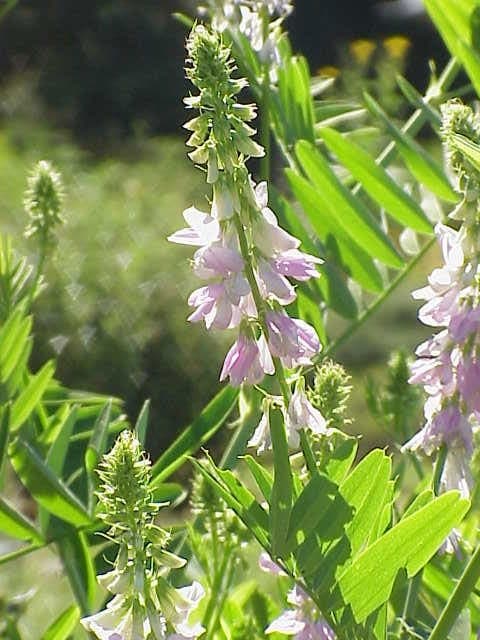
Wikimedia Commons / CC BY-SA 3.0, via Wikimedia Commons
Galega officinalis: complete guide
Galega officinalis
¿Quieres ver Galega officinalis: complete guide en tu jardín?
1 minuto, sin tarjeta de crédito
Overview
Galega officinalis, commonly known as goat's-rue, is a sturdy perennial from the legume family (Fabaceae). The plant gets its name from the fact that goats refuse to eat it due to its bitter taste. In gardens, it is valued for its numerous purple and white flowers that bloom throughout the summer.
Appearance & Bloom
Goat's-rue grows to approximately 60-90 cm tall with a spread of 45-60 cm. The plant develops feathery leaves that are fresh green in color. The flowers appear in dense clusters and are typically purple or white, sometimes a combination of both colors. The flowering period extends from June to September, making this plant highly valuable in the garden calendar. Bees and butterflies eagerly visit the blooms.
Ideal Location
Goat's-rue grows best in full sun to partial shade. At least 4-6 hours of direct sunlight daily is needed for optimal blooming. The plant is highly versatile and thrives in borders, hedges, and wetland areas. It is also suitable for cutting gardens as the flower spikes are long-lasting in a vase.
Soil
This plant is very forgiving regarding soil composition. It grows in virtually any garden soil, from poor to moderately fertile. Goat's-rue feels at home in both dry and moist soil, although it performs better in wetter conditions. Well-draining soil is essential; waterlogging must be avoided. pH can be neutral to slightly acidic.
Watering
Once established, goat's-rue is very drought-tolerant and self-sufficient. During the growing period in the first year, water regularly until the plant is well-rooted. Later, water only during prolonged dry periods. The plant obtains its own nutrition from the soil through root nodules that fix nitrogen.
Diseño gratis
¿Quieres ver Galega officinalis: complete guide en tu jardín? Crea un diseño gratis ahora.
Pruning
Goat's-rue requires minimal pruning. Spent flowers can be removed to encourage further blooming. After flowering, the plant can be cut back to approximately 20 cm height to maintain a more compact form. In spring, dead stems can be removed.
Maintenance Calendar
March-April: Remove dead parts and support plant with stakes if needed. May-June: First flowers appear. Check regularly for adequate moisture. July-August: Peak flowering period. Remove spent flowers for extra blooms. September: Flowering ends. Gradually reduce watering. October-November: Foliage colors. Plant can be cut back. December-February: Dormancy period. Soil can be supplemented with compost.
Winter Hardiness
Galega officinalis is very winter-hardy (USDA zone 3-8) and survives the cold season without special protection. The plant is native to Southern and Central Europe through West Pakistan, indicating its robustness against freezing.
Companion Plants
Goat's-rue grows well alongside other perennials that demand similar growing conditions:
- Rudbeckia (black-eyed Susan) - for yellow flowers
- Salvia (sage) - for complementary colors
- Lythrum (loosestrife) - for wet areas
- Helianthus (sunflower) - for extra height
- Achillea (yarrow) - for fine texture
Goat's-rue is an underrated plant for the English garden. For more inspiration and designs, visit gardenworld.app to transform your front yard. Discover more plant information and care advice at gardenworld.app.
¿Quieres ver Galega officinalis: complete guide en tu jardín? Crea un diseño gratis ahora.
Sube una foto, elige un estilo y obtén un diseño fotorrealista con lista de plantas en menos de un minuto.
Más de 10.000 jardines diseñados
Sin tarjeta de crédito


Plantas similares
Tall Silky Lupine: complete guide
Lupinus elatus
Tall silky lupine is a fast-growing Californian perennial with silvery foliage and blue-purple flower spikes, ideal for a prairie-style garden.
Garfield Lupine: complete guide
Lupinus garfieldensis
The Garfield lupine is a rare, fast-growing American perennial for alkaline, dry grassland gardens, with striking blue flower spikes.
Lupinus elegans: complete guide
Lupinus elegans
Lupinus elegans, the elegant lupine, is a spectacular blooming plant from Mexico with blue flower spikes. Care, cultivation and garden use.