
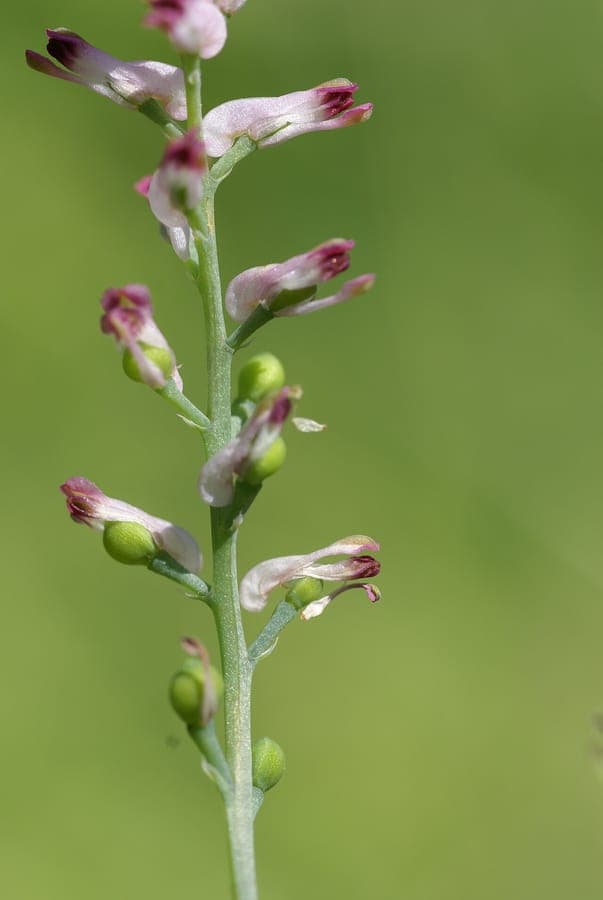
Rolf Engstrand / CC BY-SA 3.0, via Wikimedia Commons
Fumaria vaillantii: complete guide
Fumaria vaillantii
¿Quieres ver Fumaria vaillantii: complete guide en tu jardín?
1 minuto, sin tarjeta de crédito
Overview
Fumaria vaillantii, commonly known as few-flower fumitory, is a graceful annual that prefers nutrient-poor terrain. This European species is a true natural pioneer and brings an airy wildness to gardens. With its fine leaves and numerous small white flowers, it appears as though the plant drifts on the wind.
Appearance and Bloom
Few-flower fumitory grows to about 30-40 cm tall and forms a delicate, branched plant. The leaves are very finely divided, almost feathery, giving the plant an almost ephemeral appearance. Flowers appear from May to July in long, slender spikes and are predominantly white to very pale pink. Each flower is small and marked with a dark tip, providing contrast against the bright-white base.
Ideal Location
Few-flower fumitory grows best in full sun to partially shaded spots. This is not a plant that loves dark corners. The plant thrives excellently in poor locations where other plants struggle. It's perfect for that corner where you can't get anything else to grow.
Soil Requirements
Few-flower fumitory is not fussy about soil, as long as it drains well. The plant feels most at home in calcareous, nutrient-poor soil. Clay is less ideal, but with good drainage it works. The plant even tolerates very poor, contaminated soil. This is a true pioneer.
Watering
Once established, few-flower fumitory needs virtually no water. In extremely dry periods, you can water, but the plant is very drought-resistant. Too much water is more likely to cause problems (fungal diseases) than too little. A thin mulch layer can help, but is not essential.
Diseño gratis
¿Quieres ver Fumaria vaillantii: complete guide en tu jardín? Crea un diseño gratis ahora.
Bloom and Seed Production
The blooming period is approximately 6-10 weeks. After flowering, small seed pods form that become greenish-red. Let the seeds ripen and fall to the ground, or collect them. This plant self-seeds very easily, so you don't need to do anything.
Maintenance Calendar
April: Sow directly in border after last frost May-June: Flowering period begins; no maintenance needed July: Peak flowering; seeds begin to form August: Plant dies back; seeds ripen September: Seeds fall and accumulate in soil October-April: Seed overwinters in ground
Winter Hardiness
Few-flower fumitory is an annual. In previous years, seed from a mild previous autumn can sometimes emerge early in spring. In warm regions, a long sowing period can lead to continuous flowering.
Companion Plants
Few-flower fumitory combines well with:
- Papaver rhoeas (common poppy)
- Eschscholzia californica (California poppy)
- Silene coeli-rosa (rose-of-heaven)
- Gilia tricolor (three-color gilia)
- Consolida regalis (delphinium)
- Limnanthes douglasii (meadowfoam)
This plant transforms nutrient-poor areas into wild flower abundance. Discover on gardenworld.app how to incorporate delicate self-seeders into your garden design. For advice on nutrient-poor terrain, consult gardenworld.app.
Final Thoughts
Few-flower fumitory is the ultimate plant for those wanting to create a wild garden without much effort. With its fine structure, white flowers, and virtually zero maintenance requirements, it brings pure garden magic to any border. This is the plant for true nature lovers.
¿Quieres ver Fumaria vaillantii: complete guide en tu jardín? Crea un diseño gratis ahora.
Sube una foto, elige un estilo y obtén un diseño fotorrealista con lista de plantas en menos de un minuto.
Más de 10.000 jardines diseñados
Sin tarjeta de crédito

