
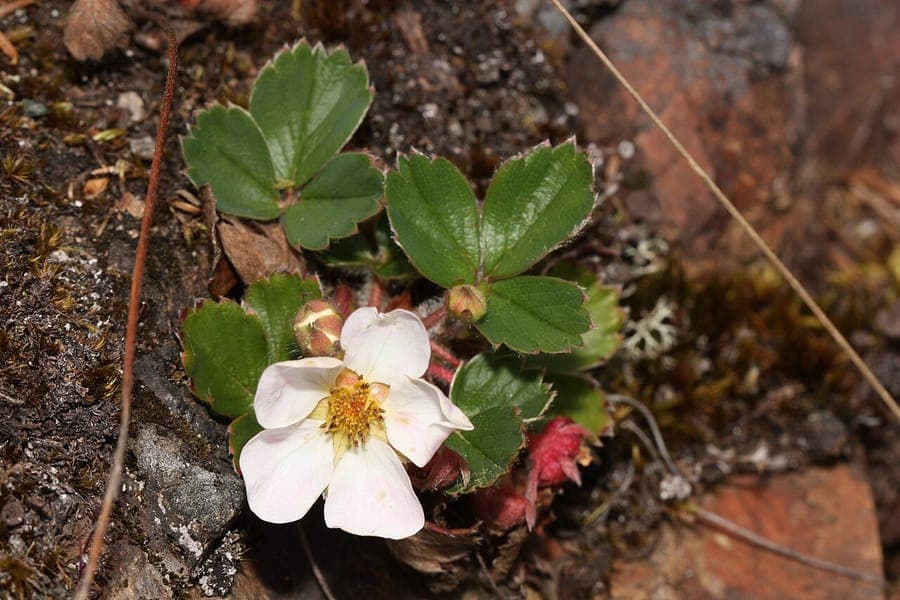
Walter Siegmund (talk) / CC BY-SA 3.0, via Wikimedia Commons
Scarlet strawberry: complete guide
Fragaria virginiana
¿Quieres ver Scarlet strawberry: complete guide en tu jardín?
1 minuto, sin tarjeta de crédito
Overview
Scarlet strawberry (Fragaria virginiana) is an American native strawberry species from the Rosaceae family. The plant naturally occurs from Eastern Canada through North and Eastern America and North Mexico. The species distinguishes itself through wild strawberry appearance and is valued for refined flavor and nutritional merit.
Appearance & Bloom Cycle
Scarlet strawberry is a low, spreading plant forming groundcover. The plant reaches 15-30 cm height and spreads through running shoots (stolons) that readily root. Leaves are characteristically three-lobed (trifoliate), with serrated margins and fresh green appearance.
Blooming extends from April through June, with white flowers opening to yellow-centered blooms. Following bloom, red, glossy fruits appear reaching 1-2 cm diameter. Fruits ripen from June through July in temperate climates. Each plant produces hundreds of small strawberries.
Fruits are extremely small but intensely aromatic and sweet, vastly more flavorful than many modern strawberry cultivars. The plant remains green through mild winters.
Ideal Location
Scarlet strawberry excels in full sun to light shade. Provide minimum 5-6 hours direct sunlight daily for optimal fruiting and flavor. In very hot climates, light afternoon shade provides benefit.
This species is perfect for groundcover in borders, food gardens, and naturalization in wild areas. Also excellent for containers and hanging baskets. Low growth makes it ideal for foreground plantings.
Soil Requirements
Scarlet strawberry grows on diverse soils but prefers well-drained, fertile ground with moderate organic matter content. The plant accepts pH ranges of 5.5 to 7.5. Acidic soils are acceptable.
At planting preparation: blend 2-3 cm well-rotted compost or leaf mold into the top 15-20 cm of soil. This improves soil structure and water availability.
Watering
Water regularly throughout the growing season. The plant prefers consistently moist (but not waterlogged) conditions. Water when top 2-3 cm of soil feels dry. This is especially important during bloom and fruiting (May-July).
In containers water regularly, especially during warm periods. In winter, reduce watering in temperate climates, though the plant should not completely dry out.
Pruning & Maintenance
Minimal pruning required. In spring, remove dead leaves and stems from the previous summer. Also cut off abundant runners if not needed for expansion, as these divert energy from fruiting.
After harvest (July-August), clean the plant by removing dead foliage. This stimulates better bloom the following year.
Diseño gratis
¿Quieres ver Scarlet strawberry: complete guide en tu jardín? Crea un diseño gratis ahora.
Maintenance Calendar
March: Check overwintering; remove frost damage. Begin fertilization.
April-May: Bloom period. Water regularly. No pruning or fertilizing needed.
June-July: Fruiting. Harvest ripe berries regularly. Maintain water.
August-September: Post-harvest cleanup. Gradually form larger runners.
October-November: Growth slows. Winter preparation.
December-February: Dormancy in cold climates. Minimal care.
Winter Hardiness
Scarlet strawberry is very cold-hardy to approximately -15°C in well-drained soil. The plant suits USDA zones 3-8. In very cold regions provide light winter protection with leaves in October.
In containers, less hardy; move to protected locations in November or mulch with straw. The plant tolerates mild winters without protection.
Companion Plants
Scarlet strawberry pairs well with:
- Blueberry (Vaccinium) for woodland feel
- Alpine strawberry (Fragaria vesca) for diversity
- Wintergreen (Gaultheria) for color
- Structure plants like Heuchera
- Violets and primulas for color
Excellent for food gardens, wild food installations, and permaculture designs.
Practical Tips
Source plants in April-May from garden centers or strawberry specialists. Space 30-45 cm apart depending on available growth room. Newly planted strawberries produce full harvest in year two.
Runners form from May through September. For expansion: allow runners to grow and support with pegs so they contact soil. Roots develop within 3-4 weeks. Sever the runner from mother plant after rooting.
Propagation: via runners (easiest), or seed (slower, greater genetic variation). Fresh seed requires post-ripening stratification in refrigerator for 4-6 weeks before sowing under glass.
The plant remains highly productive for 3-4 years, declining afterwards. Renew plantings every 3 years.
Pest management: Mildew can be problematic in wet conditions. Ensure good air circulation. Caterpillars may occur; control by hand.
Pollination: Self-pollinating through insect activity. No hand-pollination needed.
Harvesting: Gently press ripe fruits that detach in 2 seconds. Many fruits are small; expect 200-300 g per plant per season.
Culinary uses: Eat fresh directly from plant, or make jam, compote, or liqueur. The intense flavor is unparalleled. Excellent for natural jam with minimal added sugar.
Visit gardenworld.app for additional plant guidance and design tips. Discover how other gardeners integrate wild food.
¿Quieres ver Scarlet strawberry: complete guide en tu jardín? Crea un diseño gratis ahora.
Sube una foto, elige un estilo y obtén un diseño fotorrealista con lista de plantas en menos de un minuto.
Más de 10.000 jardines diseñados
Sin tarjeta de crédito

