
Wikimedia Commons / Public domain, via Wikimedia Commons
Alpine strawberry: complete guide
Fragaria vesca
¿Quieres ver Alpine strawberry: complete guide en tu jardín?
1 minuto, sin tarjeta de crédito
Overview
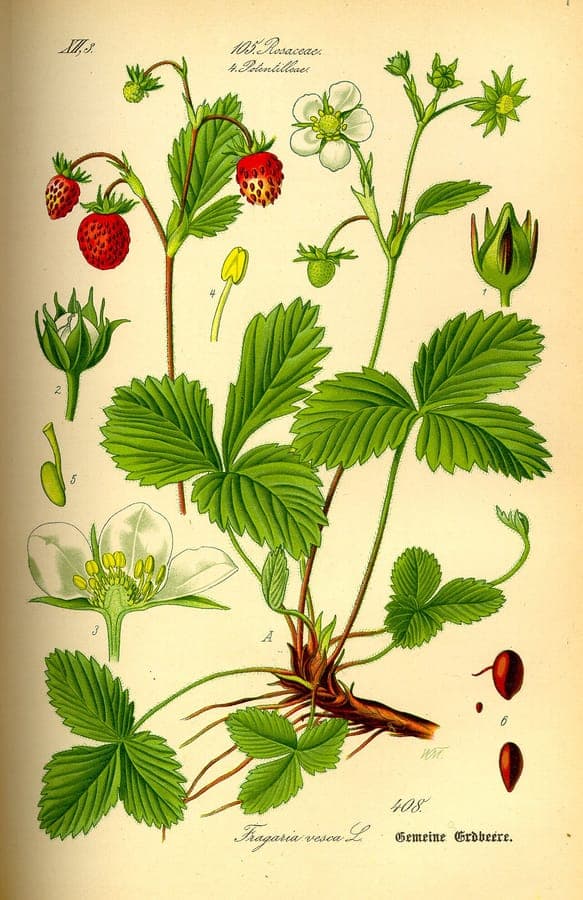
The alpine strawberry (Fragaria vesca) is nature's jewel - a wild ancestor of garden strawberries, native to Europe, North America, and the Caucasus. What it lacks in size, it makes up for in flavor: tiny berries, no larger than 1 cm, bursting with complex sweetness and hints of vanilla and forest fruit.
For centuries gardeners have cherished this plant. Medieval monks cultivated alpine strawberries in monastery gardens. Today, it thrives as a low-growing groundcover (15-20 cm tall), perfect for borders, rockeries, and hanging baskets.
Unlike garden strawberries, alpine varieties produce few runners, staying compact and tidy. They're ideal for gardeners who want abundance without constant maintenance.
Appearance & bloom cycle
Alpine strawberry forms a compact mound of fine, trifoliate (three-lobed) leaves - narrower and more delicate than garden strawberry. In May to June, numerous small white flowers appear, each with bright yellow stamens. Though individually tiny, they're borne in such profusion that the whole plant becomes a delicate display.
Fruit ripens June through July. Berries are vibrant red, smaller than a pea - typically 0.5-1 cm across. A single plant might produce dozens in a good season. The flavor is incomparable: tart, aromatic, with floral and vanilla notes.
The plant rarely throws runners, maintaining its neat, clumping habit throughout the growing season.
Ideal location
Alpine strawberry prefers partial shade, especially in warm regions. In cooler northern gardens, full sun is fine. Plant beneath light tree canopy or between other shade-making plants.
Avoid drip lines from overhead foliage - persistent leaf wetness invites fungal issues.
Soil requirements
This strawberry thrives in humus-rich, moisture-retentive soil with good drainage. Soil pH should be slightly acidic to neutral (6.0-7.0).
Work 5-7 cm of organic matter into sandy soils before planting. On heavy clay, incorporate sharp sand and compost to improve drainage. This investment pays dividends throughout the growing season.
Diseño gratis
¿Quieres ver Alpine strawberry: complete guide en tu jardín? Crea un diseño gratis ahora.
Watering
Consistent moisture is key. Water once weekly (twice in drought), keeping soil evenly damp but not waterlogged. Early morning watering reduces fungal issues.
Drip irrigation works well. In winter, ensure the root zone doesn't completely dry out, even under snow cover.
Pruning
Alpine strawberry needs minimal pruning. Remove dead leaves in spring after winter die-back. That's largely it.
Harvest ripe berries by hand in June-July, picking when fully red for peak sweetness.
Maintenance calendar
March: Remove winter debris, top-dress with compost
April-May: Water consistently as needed
May-June: Enjoy flowers and early harvests
June-July: Continue harvesting, maintain moisture
September: Divide overcrowded clumps
October-November: Mulch with leaf litter for winter
December-February: Minimal care required
Winter hardiness
Alpine strawberry is extremely hardy across Europe. USDA zones 3-8 cover the Benelux, France, Germany, and UK with ease. Temperatures of -15 °C present no problem.
Companion plants
Pair alpine strawberries with:
- Low conifers for structural backdrop
- Helleborus (Christmas roses) for early season color
- Bugula reptans (Creeping bugle) for leaf contrast
- Aubrieta for spring purple
- Sedum and sedges for structure
In vegetable gardens, tuck them between lettuce and greens. They take minimal space and deter few pests.
Conclusion
Alpine strawberries reward gardeners with beauty, flavor, and minimal fuss. Whether you grow them as an edible groundcover or simply for the joy of finding those tiny sweet fruits in summer, you'll understand why medieval monks considered them worthy of garden space.
Start your garden design at gardenworld.app and incorporate alpine strawberries into your layout. Discover more plant combinations and design ideas at gardenworld.app.
¿Quieres ver Alpine strawberry: complete guide en tu jardín? Crea un diseño gratis ahora.
Sube una foto, elige un estilo y obtén un diseño fotorrealista con lista de plantas en menos de un minuto.
Más de 10.000 jardines diseñados
Sin tarjeta de crédito


Plantas similares
Siberian crab apple: complete guide
Malus x robusta
Complete guide to the Siberian crab apple (Malus x robusta): location, soil, pruning, winter hardiness and the best companion plants for your garden.
Chinese flowering crabapple (Malus x spectabilis): complete guide
Malus x spectabilis
Meet the Chinese flowering crabapple (Malus x spectabilis): a classic spring bloomer with carmine buds and pink blossom.
Potentilla crassinervia: complete guide
Potentilla crassinervia
Potentilla crassinervia, the Corsican cinquefoil, grows wild on Corsica and Sardinia's peaks. Discover how to grow this hardy alpine rock garden gem.